Zaporizhzhia Under Siege: Russian Drones and Bombs Target Civilian Infrastructure
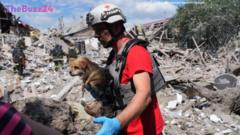
Residents of Zaporizhzhia, a major city in eastern Ukraine, are facing a dramatic escalation in Russian attacks, with civilian infrastructure becoming a primary target. Early morning strikes involving glide bombs and drones have become a grim reality for locals, shattering the peace and bringing the front lines closer than ever. The city, home to approximately 750,000 people, is situated just 24 kilometers from the active conflict zone, making the threat of war palpable.
Recent weeks have seen a surge in attacks, with numerous buses, petrol stations, schools, government buildings, and residential homes hit by Russian aerial assaults. IT specialist Anna Holovchenko described waking up to the sound of bombs and later witnessing a Shahed drone crash near her office, disrupting internet services. “That’s just another ordinary day in Zaporizhzhia,” she remarked, highlighting the normalization of such events amidst the ongoing conflict. The city serves as the administrative center for the Zaporizhzhia region, a territory Russia claims as its own.
In response to the intensifying threat, Zaporizhzhia’s city council convened in an underground shelter to address the worsening security situation. Acting Mayor Regina Kharchenko reported an increase in “terror against civilians, municipal transport, privately-owned buses, cars, residential buildings and even children.” Plans are underway to enhance city defenses, including the construction of more shelters, the deployment of additional anti-drone nets at vulnerable locations, and the application of anti-shatter film to windows in critical public buildings like schools and hospitals. Kharchenko herself admitted to experiencing fear, sometimes sleeping on the floor in her apartment due to the proximity of the conflict.
While Ukrainian forces have managed to push Russian troops back several kilometers from the city, the attacks have paradoxically intensified. Experts suggest this is due to Russia’s deployment of advanced tactics, including the use of longer-range “mothership” drones that release smaller, more lethal first-person-view (FPV) drones. These advanced drones, coupled with mesh networking technology that makes them harder to jam, can cover greater distances and strike targets previously out of reach. A potential reduction in Ukrainian electronic warfare capabilities, possibly due to a shift in focus, may also be contributing to Russia’s increased targeting of Zaporizhzhia. Local authorities reported intercepting nearly 900 Russian drones in a single week in late June, underscoring the scale of the aerial threat.
Key Takeaways
- Russian forces are intensifying attacks on Zaporizhzhia, targeting civilian infrastructure including buses, schools, and residential buildings.
- New drone technology, including FPV drones and mesh networking, is enabling Russia to strike targets further from the front lines.
- Local authorities are implementing defensive measures such as increased shelters and anti-drone nets, while residents grapple with the daily threat of war.
Editor’s Analysis & Impact
The escalating attacks on Zaporizhzhia highlight a concerning shift in Russian military tactics, moving beyond direct front-line engagements to systematically targeting civilian life and infrastructure. The increased reliance on advanced drone technology, particularly FPV drones and sophisticated networking, presents a significant challenge for Ukrainian air defenses and underscores the evolving nature of modern warfare. This strategy aims to demoralize the population, disrupt essential services, and potentially pressure Ukraine into concessions. The implications extend beyond Zaporizhzhia, suggesting a broader pattern of asymmetric warfare designed to inflict maximum disruption with minimal direct territorial gain. The effectiveness of these tactics will depend on Ukraine’s ability to adapt its defensive strategies and counter these technological advancements.
Frequently Asked Questions
Q: What is Zaporizhzhia's strategic importance?
A: Zaporizhzhia is the administrative capital of the Zaporizhzhia region in southeastern Ukraine. Its proximity to the front lines and the presence of Europe's largest nuclear power plant (located in Russian-occupied territory within the region) make it a strategically significant area in the ongoing conflict.
Q: What new drone technologies are being used in the attacks?
A: Recent attacks have involved the use of first-person-view (FPV) drones, which are small and highly maneuverable, and 'mothership' drones that can deploy multiple smaller drones. Russia is also reportedly employing mesh networking technology, which enhances the range and resilience of these drones against jamming efforts.
Q: What measures are being taken to protect civilians in Zaporizhzhia?
A: Local authorities are focused on increasing the number of public shelters, deploying anti-drone nets in vulnerable areas, and applying protective film to windows in schools, hospitals, and public buildings. Residents are also advised to seek shelter during air raids.
AI Disclosure: This article is based on verified data and official reports. Our Team and AI have cross-referenced every financial detail with primary sources to ensure total accuracy.
More from this Category