Amazon’s $200 Billion AI Gamble: Betting Big on Long-Term Infrastructure
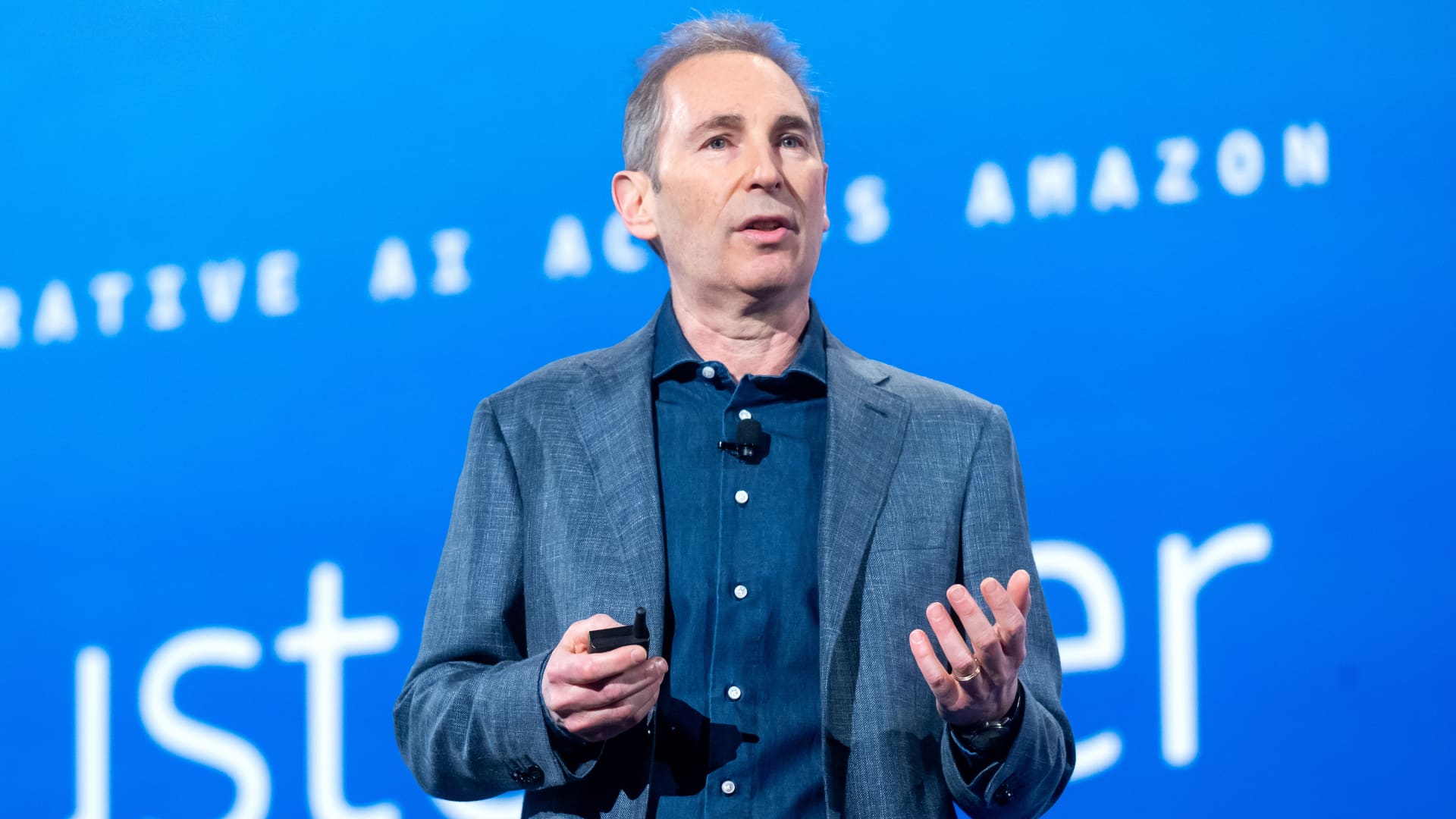
Amazon is aggressively accelerating its artificial intelligence strategy, signaling a firm commitment to long-term market leadership despite concerns over immediate capital expenditure. CEO Andy Jassy has defended a projected $200 billion investment for the year, a nearly 60% increase from previous spending levels. This massive capital allocation is primarily directed toward expanding data center capacity, enhancing networking capabilities, and scaling the production of specialized hardware required to support the rapidly growing demand for AI compute resources.
While some investors have expressed caution regarding the impact of such high spending on short-term profitability, leadership maintains that the current technological shift represents a generational opportunity. The company is already seeing significant traction in its AI-related services, which have reached a $15 billion annual run rate. Furthermore, Amazon’s custom silicon division—encompassing its Graviton processors, Trainium chips, and Nitro architecture—has experienced triple-digit growth, now exceeding a $20 billion annual revenue run rate.
Beyond immediate cloud services, Amazon is integrating its AI ambitions with broader infrastructure projects, such as a $12 billion investment in Mississippi data centers and critical power grid upgrades. By drawing parallels to the company’s early expansionist philosophy, Jassy is positioning Amazon to absorb current cash flow pressures in exchange for sustained market dominance. The company’s roadmap suggests that these investments are designed to yield significant returns by 2027 and 2028, effectively securing its role as a foundational provider in the global AI ecosystem.
Key Takeaways
- Amazon is increasing its annual capital expenditure by nearly 60% to $200 billion to prioritize AI infrastructure and data center expansion.
- The company's custom silicon business and AI-focused cloud services are both generating multi-billion dollar annual revenue run rates.
- Leadership is adopting a long-term growth strategy, aiming for significant monetization of its AI investments by the 2027-2028 timeframe.
Editor’s Analysis & Impact
Amazon’s $200 billion commitment to AI infrastructure represents a high-stakes strategy that defines the current ‘arms race’ in the technology sector. By aggressively scaling proprietary chip production and data center capacity, Amazon is moving toward vertical integration, which aims to reduce third-party hardware dependency and improve long-term margins. While market skepticism regarding the immediate capital drain is valid, Jassy’s focus on a 2027-2028 horizon suggests a multi-year play for dominance. If AI compute demand continues to outpace supply, these early, heavy investments will likely create a significant competitive moat. However, the company remains exposed to macroeconomic volatility and potential fluctuations in AI adoption rates, which could transform these massive capital expenditures into substantial financial liabilities if the market fails to scale as projected.
Frequently Asked Questions
Q: Why is Amazon investing $200 billion in capital expenditures?
A: The investment is primarily focused on building the necessary infrastructure for artificial intelligence, including data centers, specialized AI chips, and networking equipment to maintain a competitive edge in cloud computing.
Q: When does Amazon anticipate seeing full returns on these AI investments?
A: While the company is already generating revenue from its AI and custom silicon segments, leadership has indicated that a substantial portion of these capital expenditures is expected to be fully monetized by 2027 and 2028.
AI Disclosure: This article is based on verified data and official reports. Our Team and AI have cross-referenced every financial detail with primary sources to ensure total accuracy.
More from this Category