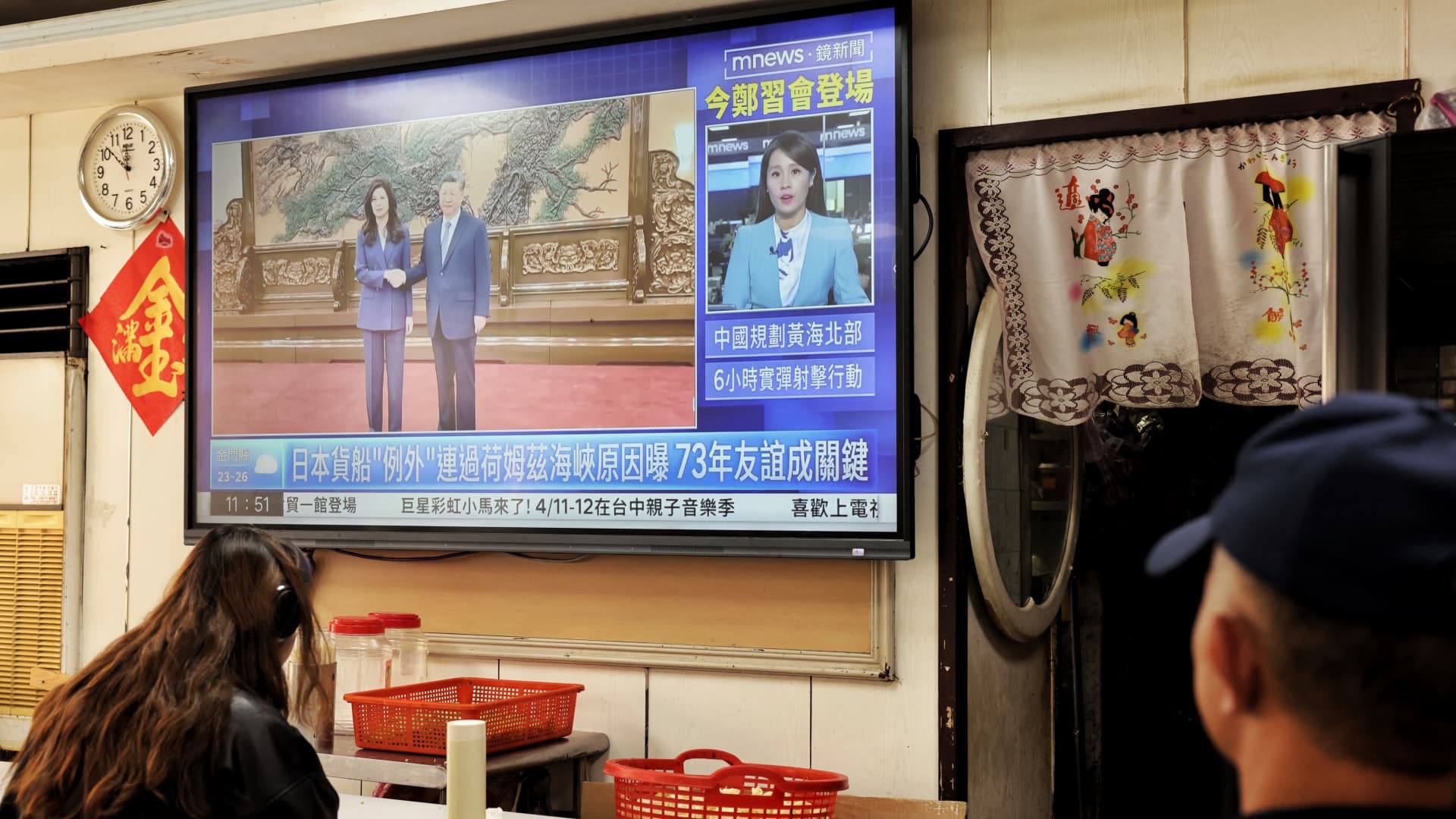
Xi Jinping Holds Rare High-Level Talks with Taiwan Opposition Leader
In a significant diplomatic development, Chinese President Xi Jinping met with Kuomintang (KMT) party chair Cheng Li-wun in Beijing this past Friday. This encounter represents the first direct dialogue between the Chinese head of state and a sitting Taiwanese opposition leader in nearly ten years, signaling a notable shift in the current approach to cross-strait communication.
During the discussions, President Xi reiterated the ‘One China’ principle as the fundamental prerequisite for any future engagement. He characterized ‘Taiwan independence’ as the most significant threat to regional stability, calling for a unified stance against separatism and foreign interference. However, the meeting also featured a conciliatory undertone, with Xi expressing a willingness to explore pathways for peaceful development and suggesting that increased economic, trade, and cultural exchanges could serve as a mechanism to rebuild political trust.
For the KMT, the meeting is a calculated move to establish the party as a diplomatic intermediary ahead of Taiwan’s 2028 presidential election. Cheng, who assumed leadership of the KMT last October, promoted a strategy of ‘deterrence through dialogue.’ She emphasized the necessity of moving beyond political gridlock to prevent conflict, proposing that a KMT-led government would prioritize the restoration of tourism and broader cross-strait cooperation.
The meeting has sparked intense debate within Taiwan, with the ruling Democratic Progressive Party criticizing the KMT for potentially undermining national security and misrepresenting the will of the Taiwanese public. Global observers are watching the situation closely, as the dialogue suggests that Beijing may be prioritizing long-term influence and soft-power strategies over immediate military escalation as the regional political landscape continues to evolve.
Key Takeaways
- President Xi Jinping met with KMT leader Cheng Li-wun, marking the first such high-level dialogue in nearly a decade.
- The KMT is advocating for a 'deterrence through dialogue' strategy, aiming to restore economic and cultural ties if they win the 2028 election.
- While Beijing maintains its firm stance on the 'One China' principle, the meeting suggests a potential shift toward prioritizing long-term influence over immediate military action.
Editor’s Analysis & Impact
The meeting between Xi Jinping and Cheng Li-wun represents a sophisticated calibration of Beijing’s Taiwan policy. By engaging with the KMT, Beijing is attempting to bypass the current ruling administration to cultivate a more favorable political environment for the 2028 election cycle. This move indicates that China is currently favoring a strategy of ‘influence operations’ and economic integration over the risks associated with military escalation. For the KMT, the challenge lies in balancing this diplomatic outreach with the domestic political reality in Taiwan, where public sentiment remains wary of Beijing’s intentions. The broader implication is a period of ‘managed tension,’ where both sides utilize dialogue as a tool to prevent accidental conflict while simultaneously preparing for a long-term geopolitical struggle over the island’s future status.
Frequently Asked Questions
Q: Why is this meeting considered significant?
A: It is the first direct meeting between the Chinese President and a sitting Taiwanese opposition leader in nearly ten years, signaling a rare attempt at high-level communication.
Q: What is the KMT's stated goal for these talks?
A: The KMT aims to position itself as a diplomatic bridge, advocating for 'deterrence through dialogue' to reduce tensions and restore economic and cultural exchanges.
AI Disclosure: This article is based on verified data and official reports. Our Team and AI have cross-referenced every financial detail with primary sources to ensure total accuracy.
More from this Category