U.S. Naval Blockade of Iran Disrupts Global Maritime Trade Routes
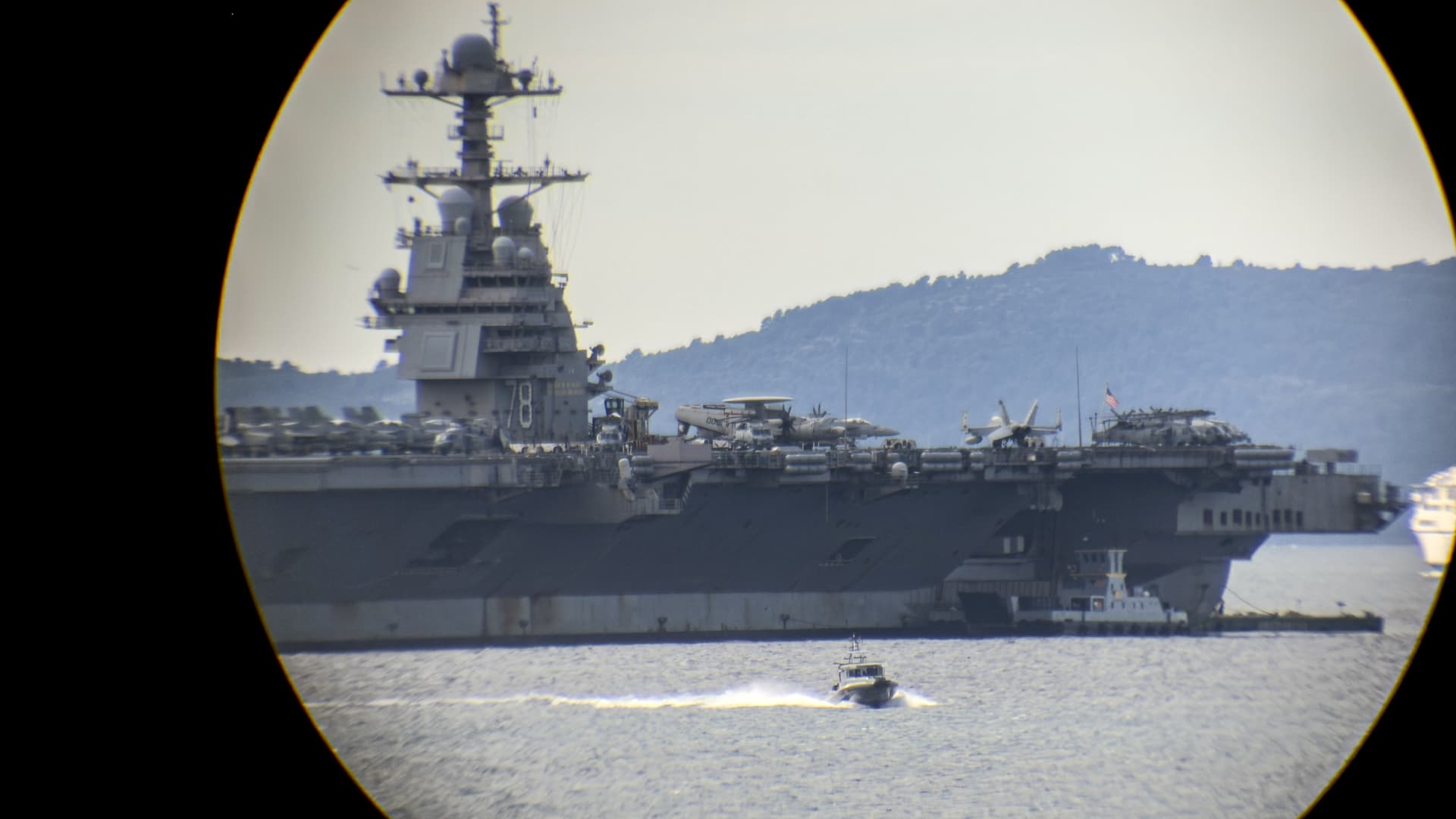
The United States has successfully established a comprehensive naval blockade surrounding Iranian ports, effectively cutting off the nation’s primary maritime trade channels. Executed within 36 hours of a presidential directive, the operation involves a massive mobilization of over 10,000 military personnel, supported by a fleet of Navy vessels and fighter jets strategically positioned throughout the Gulf of Oman and the Arabian Sea. This maneuver is designed to halt all commercial shipping activity in and out of Iran, targeting a country that relies on the Strait of Hormuz for the vast majority of its nearly $110 billion in annual seaborne trade.
While military officials maintain that the blockade is fully operational, early reports indicate minor challenges in total enforcement. Maritime intelligence data suggests that at least two vessels, including a Chinese-owned tanker, managed to navigate the Strait during the initial phase of the operation. Despite these isolated breaches, the blockade is already inflicting severe economic strain on the Iranian economy, with experts estimating daily losses of approximately $435 million. The presence of U.S. forces has caused widespread disruption, forcing numerous merchant ships to abandon their planned routes and retreat to port.
The geopolitical consequences of this blockade are significant, given the Strait of Hormuz’s role as a vital artery for global energy distribution. International criticism has been swift, with China labeling the blockade a dangerous escalation that risks regional instability. The economic fallout is already being felt on a global scale, as the International Monetary Fund has revised its 2026 global growth forecast downward to 3.1%. Concerns regarding sustained oil prices near $100 per barrel have introduced substantial volatility into energy markets, even as the White House hints at the possibility of future diplomatic engagement to resolve the standoff.
Key Takeaways
- The U.S. has deployed over 10,000 troops and significant naval assets to enforce a total maritime blockade of Iranian ports.
- The blockade is estimated to cost Iran roughly $435 million daily by disrupting its reliance on the Strait of Hormuz for trade.
- Global markets are reacting with volatility, and the IMF has lowered its 2026 growth forecast due to fears of sustained high oil prices.
Editor’s Analysis & Impact
The implementation of a full naval blockade in the Strait of Hormuz represents a major escalation in geopolitical tensions, with profound implications for the global energy market. Because the Strait is a critical chokepoint for global oil transit, any sustained restriction creates an immediate supply shock, driving up crude prices and fueling inflationary pressures worldwide. The downward revision of the IMF’s growth forecast underscores the fragility of the current economic climate, which is highly sensitive to energy costs. Looking ahead, the situation hinges on whether the blockade serves as a temporary leverage tool for diplomatic negotiations or a precursor to a more protracted regional conflict. If the blockade persists, we can expect further supply chain disruptions, increased insurance premiums for maritime shipping, and potential retaliatory measures that could further destabilize the Middle East.
Frequently Asked Questions
Q: Why is the Strait of Hormuz so important to the global economy?
A: The Strait of Hormuz is one of the world's most critical oil chokepoints, as a significant portion of the world's petroleum exports passes through this narrow waterway daily.
Q: What is the estimated economic impact of the blockade on Iran?
A: Analysts estimate that the blockade could cost Iran approximately $435 million per day due to the disruption of its international maritime trade.
AI Disclosure: This article is based on verified data and official reports. Our Team and AI have cross-referenced every financial detail with primary sources to ensure total accuracy.
More from this Category