Anthropic Unveils Claude Design to Simplify Visual Prototyping
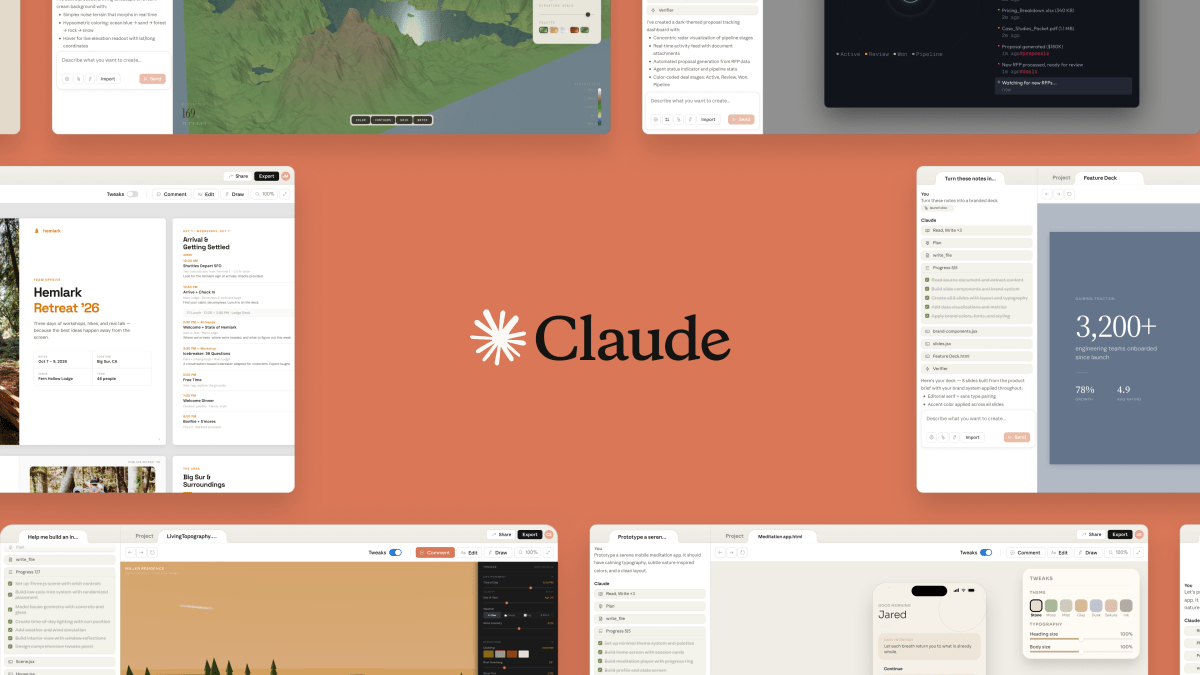
Anthropic has officially launched Claude Design, an experimental platform designed to lower the barrier to entry for professional-grade visual creation. By leveraging the power of the Claude Opus 4.7 model, the tool enables users to generate complex visual assets—such as presentation decks, product prototypes, and business one-pagers—simply by describing their vision in natural language. The platform is specifically tailored for non-designers, including startup founders and product managers, who need to translate abstract concepts into tangible visuals quickly.
The workflow is designed for iterative development. Users provide a descriptive prompt, such as requesting a mobile app interface with specific color palettes or typography, and Claude generates an initial draft. From there, users can refine the output through follow-up prompts or direct edits. Anthropic emphasizes that the tool is intended to serve as a complementary asset to existing design software rather than a direct replacement, focusing on the rapid conceptualization phase of project development.
Beyond basic generation, Claude Design includes robust integration features, such as the ability to export files as PDFs, URLs, or PPTX documents. A key highlight is the seamless interoperability with platforms like Canva, where exported designs remain fully editable. For enterprise users, the tool can ingest a company’s existing codebase and design files to ensure that all generated assets adhere to established brand guidelines and design systems. The research preview is currently available to subscribers of Claude Pro, Max, Team, and Enterprise tiers.
Key Takeaways
- Claude Design allows users to generate visual assets like prototypes and presentations using natural language prompts.
- The tool integrates with platforms like Canva and supports company-specific design systems for brand consistency.
- The feature is currently available in a research preview for Claude Pro, Max, Team, and Enterprise subscribers.
Editor’s Analysis & Impact
The introduction of Claude Design marks a significant shift in Anthropic’s strategy, moving beyond text-based LLM capabilities into the realm of visual productivity. By focusing on the ‘prosumer’ and enterprise segments, Anthropic is directly challenging the dominance of traditional design software suites that are currently racing to integrate generative AI. The ability to ingest proprietary design systems and codebase files is a strategic differentiator, as it solves the ‘brand consistency’ problem that often plagues AI-generated content in corporate environments. As Anthropic continues to roll out agentic tools like Claude Cowork, the company is positioning itself as a comprehensive operating system for the modern workplace. The long-term implication is a potential disruption of the middle-market design tool sector, where speed and ease-of-use are becoming more valuable than advanced manual editing features.
Frequently Asked Questions
Q: Do I need design experience to use Claude Design?
A: No, Claude Design is specifically engineered for individuals without formal design training, allowing users to create professional visuals through simple descriptive prompts.
Q: Can I edit the designs generated by Claude Design in other software?
A: Yes, the tool supports exports to formats like PPTX and PDFs, and offers seamless integration with platforms like Canva, where the designs remain fully editable.
AI Disclosure: This article is based on verified data and official reports. Our Team and AI have cross-referenced every financial detail with primary sources to ensure total accuracy.
More from this Category