Investigation Underway Following Serious Head-On Train Collision in Denmark
A major rail accident occurred in North Zealand, Denmark, on Thursday morning when two passenger trains collided head-on. The incident took place near a level crossing between the towns of Hillerød and Kagerup, triggering a large-scale emergency response. Authorities reported that 18 passengers were injured in the crash, with five individuals currently in critical condition. Emergency teams, including air ambulances, were dispatched to the scene to provide immediate medical stabilization before transporting victims to the National Hospital in Copenhagen.
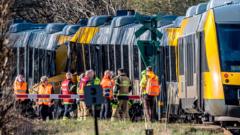
The collision occurred at approximately 06:29 local time, involving a total of 37 passengers. Photographs from the site show significant structural damage to the front carriages, which came to a stop in a wooded area near the tracks. Local officials, including Gribskov Mayor Trine Egetved, have expressed deep concern regarding the severity of the incident and have emphasized the necessity of a thorough investigation to prevent future occurrences.
Denmark’s Accident Investigation Board and local law enforcement have launched a formal inquiry to determine the cause of the crash. While officials stated it is too early to reach definitive conclusions, the investigation is focusing on potential human error or technical malfunctions. Specifically, experts are evaluating whether one of the trains proceeded past a stop signal, placing it on the wrong track. The probe will also examine the safety infrastructure of the Gribskov line, specifically the functionality of automated systems intended to prevent head-on collisions.
Key Takeaways
- A head-on collision between two passenger trains in North Zealand left 18 people injured, five critically.
- Emergency responders utilized air ambulances to transport the most severely injured victims to the National Hospital in Copenhagen.
- Investigators are currently examining the possibility of human error, specifically a potential failure to stop at a signal, and the reliability of existing safety systems.
Editor’s Analysis & Impact
The collision in North Zealand highlights critical vulnerabilities in regional rail infrastructure, particularly on lines that may lack modern, fully automated collision-avoidance systems. From an industry perspective, this incident will likely trigger a nationwide audit of signaling protocols and safety redundancies across Denmark’s secondary rail networks. The focus on whether a driver bypassed a stop signal underscores the ongoing tension between manual operation and the necessity for fail-safe technology in public transit. In the coming months, we expect to see increased pressure on transport authorities to accelerate the implementation of advanced train control systems. The broader implication is a potential shift in regulatory requirements, which could lead to significant capital expenditure for rail operators to upgrade aging infrastructure and minimize the risk of human error in high-stakes transit environments.
Frequently Asked Questions
Q: How many people were injured in the Denmark train crash?
A: There were 18 total injuries reported, with five of those individuals in critical condition.
Q: What is the focus of the current investigation?
A: Investigators are looking into the cause of the crash, specifically examining whether a train bypassed a stop signal and assessing the adequacy of automated safety systems on that specific line.
AI Disclosure: This article is based on verified data and official reports. Our Team and AI have cross-referenced every financial detail with primary sources to ensure total accuracy.
More from this Category