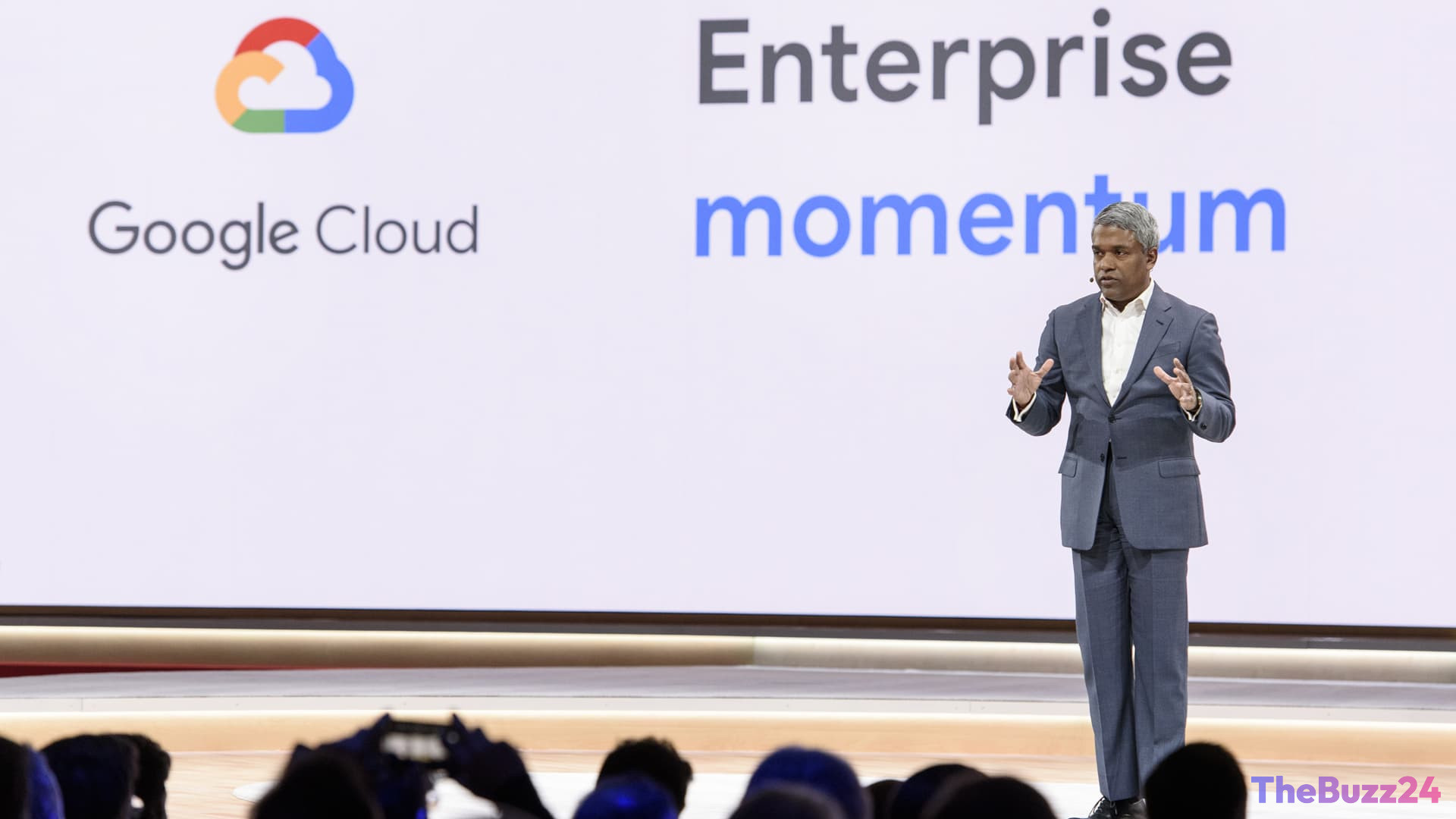
AI Surge Propels Cloud Giants to Record Growth as Google Leads the Charge
The global race for artificial intelligence dominance has triggered an unprecedented surge in cloud infrastructure spending, with the industry’s three major players—Google, Amazon, and Microsoft—all delivering first-quarter financial results that shattered market expectations. Total global cloud infrastructure spending for the quarter reached an estimated $129 billion, driven by corporate demand for AI model integration, specialized hardware, and scalable computing power.
Google emerged as the standout performer of the quarter, recording an astonishing 63% revenue growth for Google Cloud, which reached $20.03 billion. This represents the fastest expansion rate for the division since Google began disclosing its cloud-specific financials in 2020. Alphabet CEO Sundar Pichai highlighted that enterprise AI solutions have officially become the primary growth engine for Google Cloud, with revenue from products utilizing Google’s generative AI models skyrocketing by 800%. The company’s proprietary Gemini models and custom Tensor Processing Units (TPUs)—which serve as a key alternative to Nvidia’s hardware—are seeing rapid market adoption.
Meanwhile, market leader Amazon Web Services (AWS) posted a robust 28% revenue increase to $37.6 billion. Amazon CEO Andy Jassy noted that customer engagement with Bedrock, AWS’s platform for building AI applications, experienced massive growth, with token consumption hitting historic highs. This momentum is expected to continue following the integration of OpenAI models into the Bedrock ecosystem. Microsoft Azure also maintained strong momentum, reporting 40% growth in its cloud services. Microsoft CEO Satya Nadella revealed that the number of enterprise clients deploying Anthropic and OpenAI models via Azure doubled compared to the previous quarter.
Despite the stellar growth, maintaining this momentum requires massive capital commitments. The three tech giants have signaled to investors that their combined capital expenditures could approach $600 billion this year, primarily directed toward building out data centers and acquiring advanced AI chips. Furthermore, the traditional triumvirate faces emerging competition from specialized “neocloud” providers like CoreWeave and Nebius, which have collectively captured approximately 5% of the cloud infrastructure market by catering specifically to high-performance AI workloads.
Key Takeaways
- Google Cloud led the sector's growth with a record-breaking 63% revenue increase, driven by an 800% surge in generative AI product adoption.
- Amazon's AWS and Microsoft's Azure also beat expectations, posting 28% and 40% growth respectively, fueled by enterprise demand for AI platforms like Bedrock and OpenAI integrations.
- The cloud giants plan to spend nearly $600 billion collectively this year on capital expenditures to support the infrastructure required for advanced AI workloads.
Editor’s Analysis & Impact
The latest earnings reports underscore a fundamental shift in the cloud computing landscape: AI is no longer a speculative future driver but the primary engine of current revenue growth. Google’s massive 63% leap demonstrates that its heavy investments in Gemini and custom TPU hardware are paying off, allowing it to aggressively close the gap with AWS and Azure. However, this AI gold rush comes with an eye-watering price tag. The projected $600 billion in collective capital expenditure highlights the intense infrastructure war underway. While Wall Street has rewarded this growth, investors will eventually demand sustained profitability to justify these unprecedented spending levels. Additionally, the rise of specialized ‘neocloud’ startups holding a 5% market share indicates that the big three must remain agile to prevent niche players from carving out highly lucrative AI-specific market segments.
Frequently Asked Questions
Q: Why did Google Cloud experience such rapid growth compared to its competitors?
A: Google Cloud's 63% growth was primarily driven by its enterprise AI solutions, with revenue from products built on Google's generative AI models increasing by 800%. The adoption of its Gemini models and proprietary Tensor Processing Units (TPUs) also played a significant role.
Q: How much are the major cloud providers planning to spend on AI infrastructure?
A: Amazon, Google, and Microsoft have indicated that their collective capital expenditures could reach nearly $600 billion this year, focusing heavily on data centers, AI chips, and infrastructure.
Q: What are 'neocloud' providers, and how are they impacting the market?
A: Neoclouds are smaller, specialized cloud providers like CoreWeave and Nebius that focus specifically on high-performance AI workloads. They have collectively captured about 5% of the cloud infrastructure market, presenting new competition to the industry giants.
AI Disclosure: This article is based on verified data and official reports. Our Team and AI have cross-referenced every financial detail with primary sources to ensure total accuracy.
More from this Category