Blue Origin’s Endurance Lander Completes Rigorous NASA Space Simulation
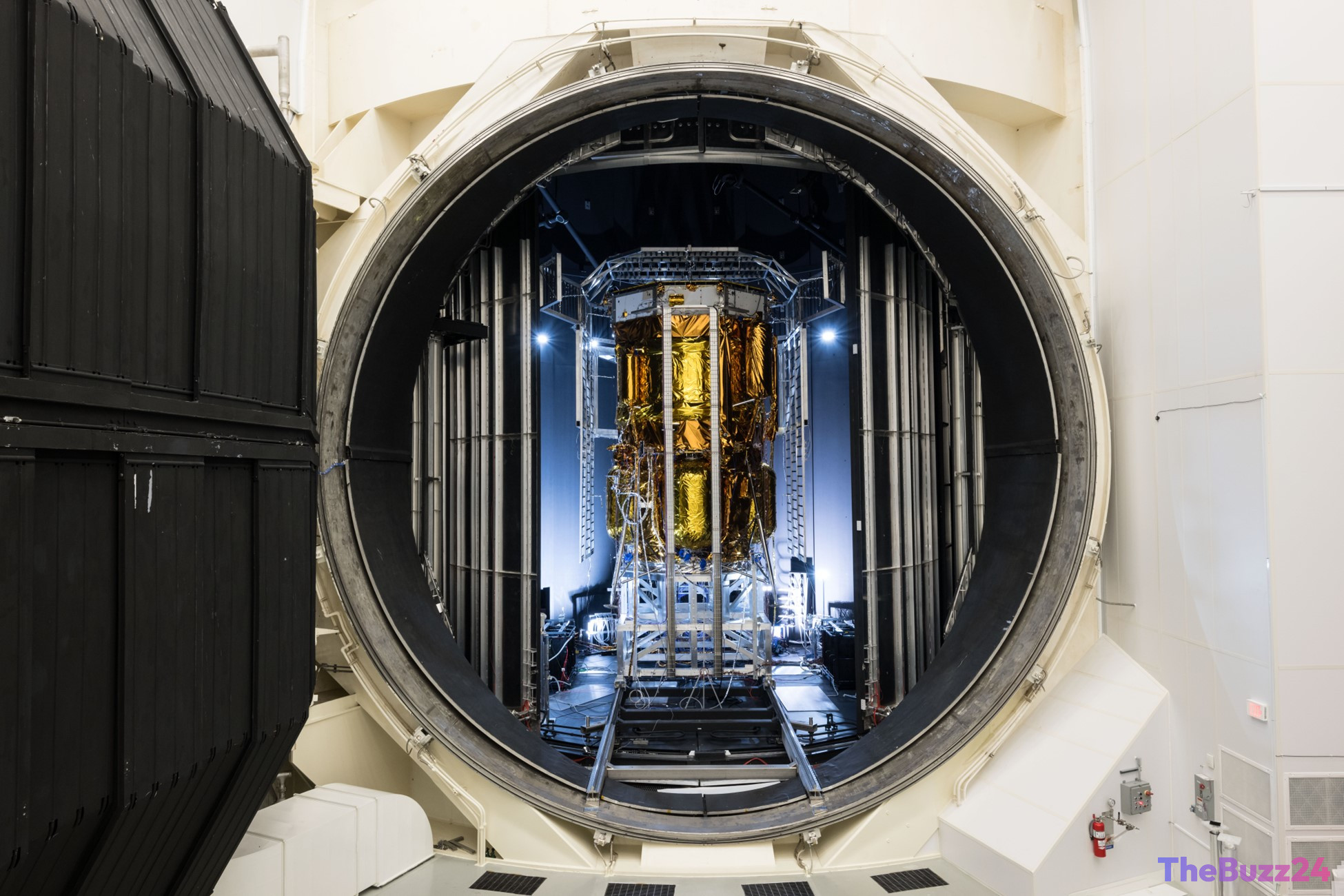
Blue Origin’s Blue Moon Mark 1 (MK1) lunar lander, also known as Endurance, has successfully concluded its environmental testing within Thermal Vacuum Chamber A at NASA’s Johnson Space Center in Houston. This significant milestone prepares the uncrewed cargo lander for its upcoming mission, designed as a commercial demonstration to advance Human Landing System capabilities crucial for NASA’s ambitious Artemis program.
The Endurance lander is engineered to showcase critical technologies, including precision landing, advanced cryogenic propulsion, and autonomous guidance, navigation, and control systems, all vital for future lunar surface operations. Beyond its primary objectives, MK1 will transport two NASA science and digital systems payloads to the lunar South Pole region later this year. These payloads, part of the Commercial Lunar Payload Services (CLPS) initiative, include high-resolution Stereo Cameras for Lunar Plume-Surface Studies to capture engine plume interactions during descent, and a Laser Retroreflective Array for precise orbital positioning.
The comprehensive testing conducted in NASA Johnson’s Chamber A, one of the world’s largest thermal vacuum test facilities, was instrumental in simulating the harsh vacuum of space and the extreme temperature fluctuations the spacecraft will encounter. By meticulously recreating these conditions on Earth, engineers were able to thoroughly evaluate system performance and verify the structural and thermal integrity of the lander before its launch. This collaborative effort exemplifies a robust public-private partnership, with Blue Origin undertaking this work through a reimbursable Space Act Agreement with NASA.
The insights gained from MK1’s design, integration, and testing phases will be directly applied to support NASA’s future Artemis missions, which aim to return American astronauts to the Moon. Furthermore, MK1’s development is a crucial step in maturing digital systems and reducing risks for future human-class systems, including the larger Blue Moon Mark 2 (MK2). MK2 is envisioned as a crewed landing system capable of safely transporting astronauts between lunar orbit and the surface, facilitating sustained human exploration, particularly in the Moon’s South Pole region. NASA’s “front door” approach, providing commercial partners access to its facilities and expertise, has been key to enabling this progress.
Key Takeaways
- Blue Origin's Blue Moon Mark 1 (MK1) lunar lander, "Endurance," has successfully completed rigorous environmental testing at NASA's Johnson Space Center.
- The uncrewed cargo lander will demonstrate critical technologies and deliver two NASA science payloads to the lunar South Pole as part of the CLPS initiative and Artemis program.
- Lessons learned from MK1's development and testing will inform future human-class lunar systems, including the larger crewed Blue Moon Mark 2 lander, supporting sustained human exploration.
Editor’s Analysis & Impact
The successful completion of environmental testing for Blue Origin’s MK1 lander marks a significant stride in the commercial space sector and NASA’s Artemis program. This milestone validates Blue Origin’s capabilities in developing lunar landing technology, intensifying competition among private aerospace firms vying for lucrative government contracts. The public-private partnership model, exemplified by the Space Act Agreement, is proving effective in leveraging commercial innovation for national space objectives. Looking ahead, MK1’s mission will provide invaluable data for future human-class systems like Blue Moon Mark 2, accelerating the timeline for sustained human presence on the Moon. This progress not only de-risks future crewed missions but also solidifies the foundation for a burgeoning lunar economy, with implications for resource utilization and scientific discovery.
Frequently Asked Questions
Q: What is the Blue Moon Mark 1 (MK1) lander?
A: The Blue Moon Mark 1, also known as Endurance, is an uncrewed cargo lunar lander developed by Blue Origin. It is designed as a commercial demonstration mission to advance human landing system capabilities for NASA's Artemis program.
Q: What was the purpose of the environmental testing at NASA?
A: The testing in NASA's Thermal Vacuum Chamber A simulated the extreme vacuum and temperature conditions of space. Its purpose was to evaluate the lander's system performance and verify its structural and thermal integrity before its mission to the Moon.
Q: What role does MK1 play in NASA's Artemis program?
A: MK1 will demonstrate crucial technologies like precision landing and cryogenic propulsion, and will deliver NASA science payloads to the lunar South Pole under the CLPS initiative. The insights gained will directly support the development of future human-class systems, including the crewed Blue Moon Mark 2, essential for returning astronauts to the Moon and establishing a sustained lunar presence.
AI Disclosure: This article is based on verified data and official reports. Our Team and AI have cross-referenced every financial detail with primary sources to ensure total accuracy.
More from this Category