The Quantum Shield: How Blockchains Are Preparing for the Next Era of Computing
The rapid evolution of quantum computing has shifted from a theoretical concern to a central focus for the blockchain industry. As quantum hardware matures, the cryptographic foundations that currently secure decentralized networks are facing increased scrutiny. Developers are now actively working to transition toward post-quantum cryptographic standards to safeguard the future of digital assets against potential decryption threats.
Most major blockchain networks, including Bitcoin, Ethereum, and Solana, rely on elliptic-curve cryptography to secure transactions. The primary concern involves Shor’s algorithm, which could theoretically allow a sufficiently powerful quantum computer to derive private keys from public keys. This would enable unauthorized actors to forge transactions. Security experts are particularly concerned with two attack vectors: ‘at-rest’ attacks, which target public keys already visible on the ledger, and ‘in-flight’ attacks, which aim to intercept data during the broadcast phase of a transaction.
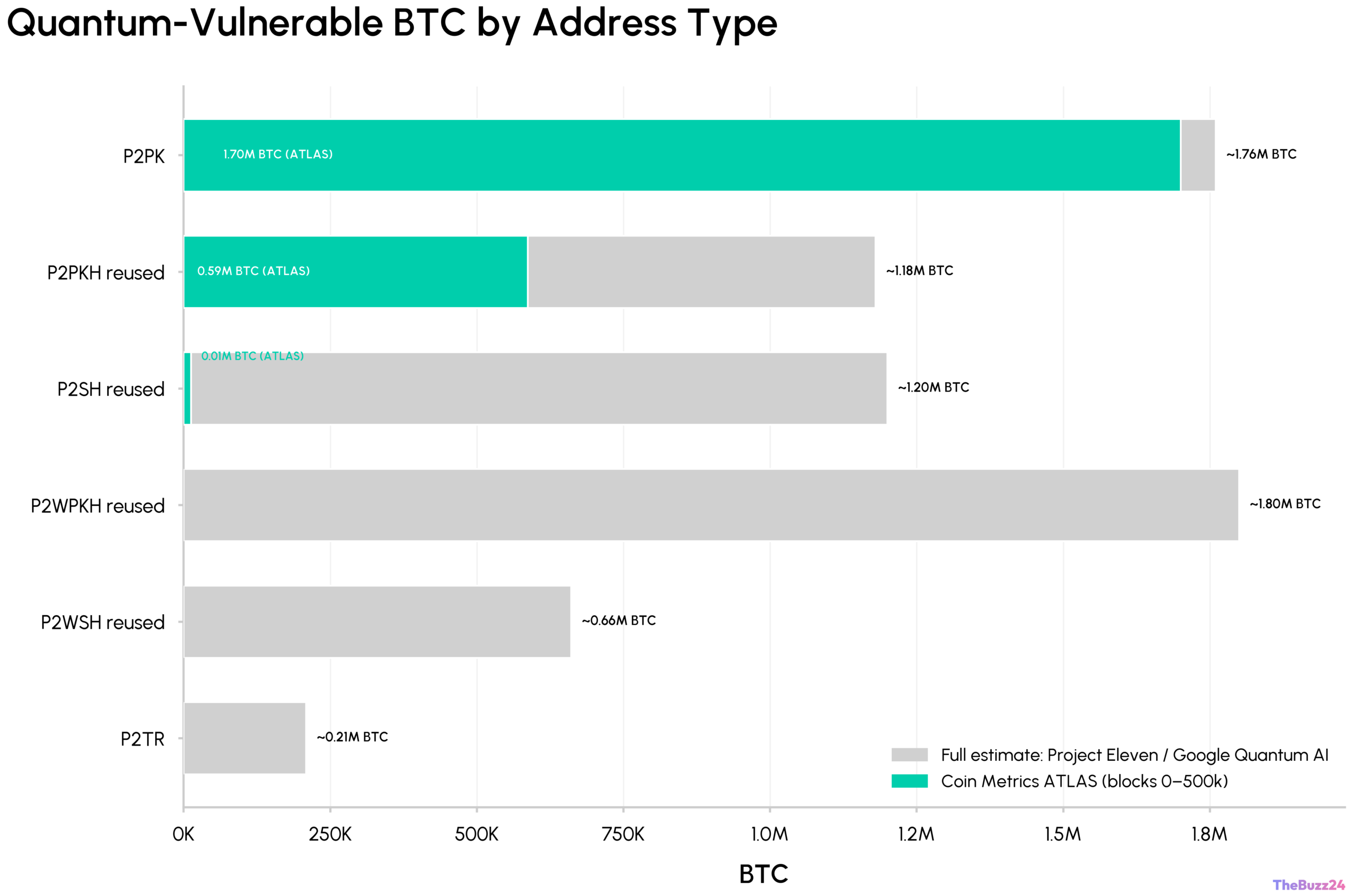
Bitcoin faces unique challenges due to its legacy infrastructure, particularly regarding early-mined coins stored in older address formats where public keys are exposed. The community is currently debating complex solutions, including potential fund freezes or rate-limiting, to protect these vulnerable assets. Conversely, newer protocols like SegWit and Taproot provide enhanced security by masking keys until a transaction is finalized.
Other ecosystems are taking a more modular approach to defense. Ethereum is utilizing its account abstraction roadmap to integrate advanced signature schemes, while Solana is investigating lattice-based standards like Falcon. While a full-scale quantum threat remains on the horizon rather than at the doorstep, the industry is prioritizing these migration paths to ensure the long-term viability and security of decentralized finance.
Key Takeaways
- Quantum computing threatens the elliptic-curve cryptography currently used by major blockchains like Bitcoin and Ethereum.
- Bitcoin's legacy address structures are particularly vulnerable, prompting discussions about drastic protective measures.
- Developers are proactively integrating post-quantum standards, such as lattice-based signatures, to ensure future network resilience.
Editor’s Analysis & Impact
The intersection of quantum computing and blockchain technology represents one of the most significant technical hurdles for the decentralized web. While the ‘quantum apocalypse’ is not an immediate danger, the industry’s proactive stance is essential for maintaining institutional trust. The primary market implication is a shift in development focus toward ‘cryptographic agility’—the ability for a network to swap out its underlying security protocols without requiring a total system overhaul. Networks that fail to integrate these upgrades will likely face significant valuation discounts as the threat matures. In the long term, we expect a bifurcation in the market where ‘quantum-resistant’ blockchains command a premium, while legacy chains that cannot adapt face existential risks or forced, contentious hard forks to protect user assets.
Frequently Asked Questions
Q: Are my current crypto assets at immediate risk from quantum computers?
A: No. Current quantum computers lack the processing power required to break the encryption used by major blockchains. This is considered a long-term security challenge rather than an immediate threat.
Q: What is the difference between 'at-rest' and 'in-flight' quantum attacks?
A: 'At-rest' attacks target public keys that are already visible on the blockchain ledger, while 'in-flight' attacks attempt to intercept a transaction while it is being broadcast to the network before it is finalized.
AI Disclosure: This article is based on verified data and official reports. Our Team and AI have cross-referenced every financial detail with primary sources to ensure total accuracy.
More from this Category