Beyond Software: How the AI Boom is Reshaping the Global Industrial Landscape
The artificial intelligence revolution has transitioned from a speculative technological trend into a foundational economic force, fundamentally altering market dynamics across a wide array of sectors. While initial interest focused heavily on software developers, the current expansion is creating a ripple effect that is significantly benefiting industrial, utility, and hardware manufacturing industries. This shift indicates that the AI-driven economic cycle is maturing into a long-term driver of growth that is expected to influence global markets well into 2026 and beyond.
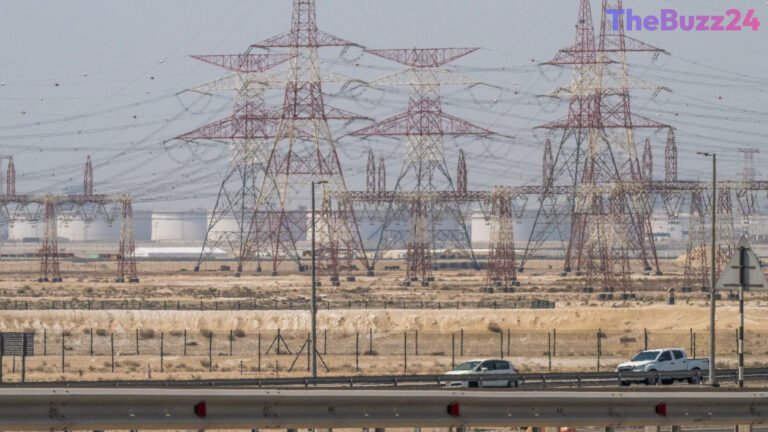
At the core of this expansion is the massive infrastructure required to sustain AI operations. The power sector has emerged as a critical beneficiary, with companies like Vistra, GE Vernova, and Constellation Energy experiencing surging demand to meet the electricity needs of modern data centers. This demand is further supported by the semiconductor industry, where leaders such as Nvidia, AMD, and Intel continue to provide essential processing capabilities, bolstered by specialized memory providers like Micron and Western Digital, as well as equipment manufacturers like ASML and Applied Materials.
Beyond chips and power, the physical infrastructure layer is seeing unprecedented investment. Firms such as Dell Technologies, Vertiv, and Eaton are providing the necessary hardware for server management, cooling, and electrical distribution, while networking specialists like Cisco Systems, Arista Networks, and Corning ensure the connectivity required for these complex systems. Additionally, industrial giants including Caterpillar and Cummins are playing a vital role by supplying essential backup power solutions to ensure continuous uptime for data-heavy operations.
At the top of this economic hierarchy, cloud computing providers like Amazon Web Services, Microsoft Azure, and Google Cloud remain the primary hosts for AI models. These platforms provide the foundation for the application layer, where tools like ChatGPT are being integrated into daily business and consumer workflows. This multi-layered integration across the industrial and technological landscape suggests that the current bull market is not limited to a single sector, but is instead fostering wealth creation across a diverse and interconnected ecosystem.
Key Takeaways
- The AI boom has expanded beyond software to become a major driver for the utility, industrial, and hardware manufacturing sectors.
- Energy demand for data centers is creating significant growth opportunities for power companies and backup power solution providers.
- The AI economy is structured in layers, ranging from physical infrastructure and networking to cloud hosting and end-user applications.
Editor’s Analysis & Impact
The transition of AI from a software-centric narrative to an industrial-infrastructure play marks a significant maturation of the sector. By moving beyond pure-play tech stocks, the market is signaling that AI is now a capital-intensive utility, similar to the build-out of the internet or the electrical grid. The reliance on power generation and physical hardware suggests that the ‘AI trade’ is becoming more defensive and grounded in tangible assets. Investors should look for companies that provide the ‘picks and shovels’ of this infrastructure, as they are likely to see more stable, long-term demand compared to the volatile application layer. The broader implication is a sustained period of capital expenditure that will likely support industrial and energy stocks, potentially decoupling them from traditional cyclical downturns as AI-driven productivity becomes a necessity rather than a luxury.
Frequently Asked Questions
Q: Why are utility companies considered key players in the AI boom?
A: Modern AI data centers require massive amounts of electricity to operate, leading to increased demand for power generation and grid infrastructure provided by utility companies.
Q: Is the AI market growth limited to software companies?
A: No, the current AI economic expansion is broad-based, encompassing semiconductor manufacturers, hardware infrastructure providers, networking firms, and energy companies.
AI Disclosure: This article is based on verified data and official reports. Our Team and AI have cross-referenced every financial detail with primary sources to ensure total accuracy.
More from this Category