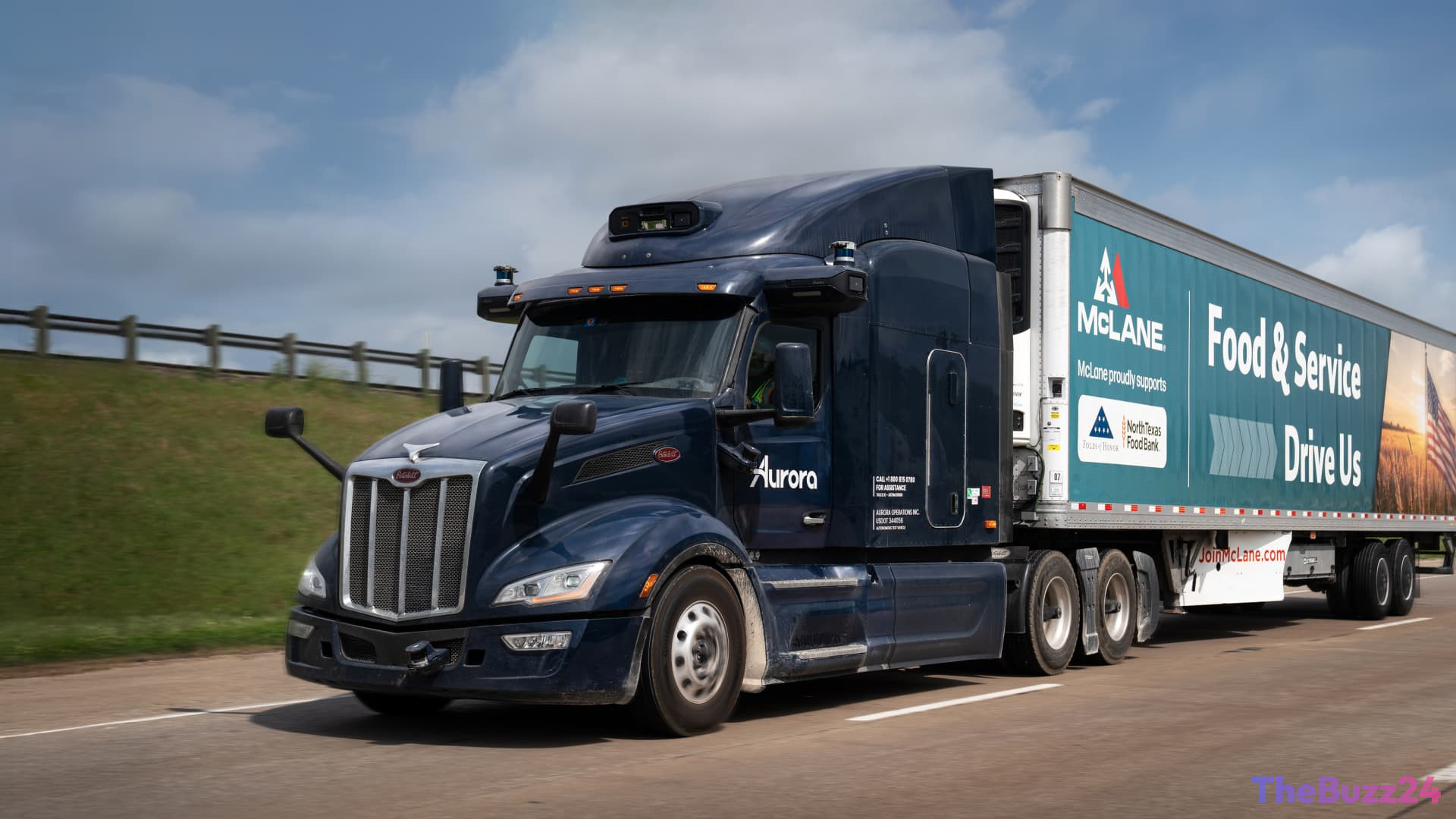
Autonomous Trucking Goes Prime Time: McLane and Aurora to Launch Driverless Freight Across the Sun Belt
Supply chain giant McLane Company, a subsidiary of Berkshire Hathaway, is preparing to launch fully driverless commercial truck routes across the U.S. Sun Belt by the end of this year. Partnering with autonomous vehicle technology firm Aurora Innovation, the initiative will transition from a supervised pilot program to fully autonomous operations. The initial rollout will focus on transporting goods, including perishable items, to major restaurant chains along key shipping corridors in Texas before expanding to other regional routes.
The transition to driverless operations builds on a successful pilot program initiated in 2023. Over the past year, autonomous trucks operating between Dallas and Houston logged more than 280,000 miles and successfully delivered 1,400 loads. Under the current system, autonomous software manages the “middle-mile” highway transit, while human drivers take over for the final local delivery phase. While current runs utilize a human safety observer in the cab, Aurora plans to deploy a new fleet of observerless trucks later this year, marking a significant milestone in commercial autonomous freight.
The Sun Belt has emerged as the premier testing ground and launchpad for autonomous trucking in the United States. The region’s massive freight volumes, combined with favorable weather conditions that eliminate hazards like snow and ice, make it ideal for self-driving systems. Industry experts view this shift as the beginning of a profound transformation in logistics. By automating long-haul highway routes, distribution companies aim to drastically improve supply chain efficiency and address chronic driver shortages, while keeping human operators focused on complex local deliveries.
Key Takeaways
- McLane is transitioning its autonomous trucking partnership with Aurora Innovation to fully driverless operations in the Sun Belt by the end of the year.
- The technology targets the 'middle mile' of logistics, allowing autonomous systems to handle long-haul highway driving while human drivers manage local, last-mile deliveries.
- The expansion follows a highly successful pilot program in Texas that logged 280,000 autonomous miles and delivered 1,400 loads since 2023.
Editor’s Analysis & Impact
The partnership between McLane and Aurora Innovation represents a pivotal moment for the commercialization of autonomous trucking. By focusing on the ‘middle mile’—the highly predictable, long-haul highway segments—the logistics industry is bypassing the complex urban navigation challenges that have slowed down passenger robotaxis. This strategy addresses critical pain points, including driver shortages, rising fuel costs, and strict hours-of-service regulations for human drivers. The Sun Belt’s favorable climate and high freight density make it the perfect launchpad. As Aurora prepares to deploy truly driverless fleets without safety observers, we expect a rapid scaling phase. This shift will likely pressure competitors to accelerate their own automation timelines, fundamentally reshaping global supply chains and establishing a new standard for freight efficiency over the next decade.
Frequently Asked Questions
Q: What is the difference between 'middle-mile' and 'last-mile' delivery in this context?
A: Middle-mile delivery refers to the long-haul transportation of goods between large distribution centers, which is highly suited for autonomous highway driving. Last-mile delivery involves navigating complex local streets to bring goods directly to the final customer, a task that remains under the control of human drivers.
Q: Will there be human drivers in these autonomous trucks?
A: While the initial pilot phases utilized human safety observers in the cab, the upcoming phase aims to deploy fully driverless trucks without any human occupants, starting with a new fleet of vehicles scheduled for release later this year.
Q: Why is the U.S. Sun Belt the primary focus for autonomous trucking?
A: The Sun Belt offers massive freight corridors with high shipping volumes and features favorable, consistent weather conditions. The absence of severe winter weather like snow and ice removes complex environmental variables, making it safer and easier to deploy autonomous driving software.
AI Disclosure: This article is based on verified data and official reports. Our Team and AI have cross-referenced every financial detail with primary sources to ensure total accuracy.
More from this Category