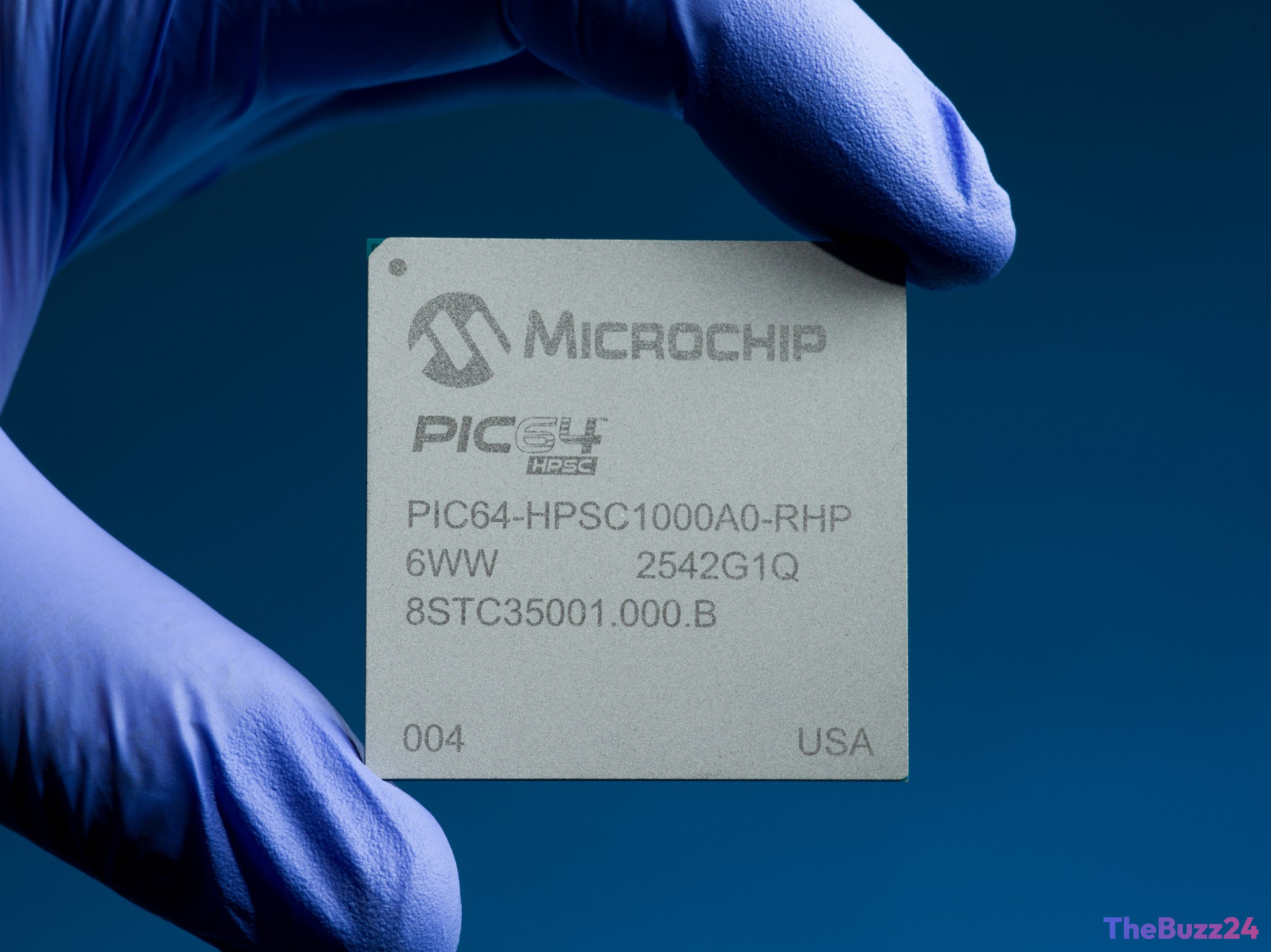
Revolutionizing Space Exploration: NASA and Microchip Unveil Next-Gen Computing Powerhouse
NASA has consistently pushed the boundaries of on-board spacecraft computing, a legacy that began with the pivotal Apollo Guidance Computers of the 1960s. For decades, radiation-hardened processors have been the unsung heroes, powering everything from Mars rovers operating in extreme conditions for years to numerous orbiters, capsules, and space telescopes, enabling some of the agency’s most significant achievements.
However, as future space missions grow in complexity and duration, the demand for vastly superior computing power, enhanced autonomy, and greater resilience has become critical. To address this evolving need, NASA has forged a public-private partnership with industry leader Microchip Digital systems Inc. This collaboration has culminated in the development of High-Performance Spaceflight Computing (HPSC), a groundbreaking solution designed to meet the challenges of the next era of space exploration.
At its core, HPSC is a next-generation system-on-chip that boasts over 100 times the computing capability of current space processors. By seamlessly integrating computing and networking into a single device, HPSC dramatically reduces system cost and power consumption. Its innovative scalable architecture allows unused functions to power down, optimizing energy efficiency for critical operations. The HPSC family includes distinct yet compatible technologies: a radiation-hardened version for geosynchronous, deep-space, and long-duration missions to the Moon, Mars, and beyond, and a radiation-tolerant version tailored for the commercial space sector, offering fault tolerance and cybersecurity for low Earth orbit satellites.
This advanced computing power enables spacecraft to process massive amounts of data onboard and make real-time autonomous decisions, such as guiding rovers at high speeds or filtering scientific images. Continuous system health monitoring and an integrated security controller ensure the safety and reliability of these complex operations. Beyond its space applications, HPSC’s design platform also holds significant potential for Earth-based uses. By leveraging the same high-performance computing, network switching, high-reliability, and cybersecurity technologies, these processors can empower mission-critical edge computing in industries like automotive, aviation, consumer electronics, industrial systems, energy grids, medical equipment, and artificial intelligence. This dual-use capability not only strengthens domestic industrial capabilities but also reduces risk and cost for both government and commercial users, reinforcing U.S. leadership in spaceflight computing and fostering a high-tech workforce.
Key Takeaways
- NASA and Microchip have partnered to develop High-Performance Spaceflight Computing (HPSC), a next-generation system-on-chip offering over 100 times the computing power of current space processors.
- HPSC features scalable architecture, integrated networking, and two versions: radiation-hardened for deep-space missions and radiation-tolerant for commercial low Earth orbit applications.
- Beyond space, HPSC technology is designed for critical Earth-based applications, including automotive, AI, energy grids, and medical equipment, strengthening domestic industrial capabilities.
Editor’s Analysis & Impact
The introduction of High-Performance Spaceflight Computing (HPSC) marks a pivotal advancement for both the space industry and terrestrial technology sectors. For space, it promises to unlock unprecedented capabilities for autonomous missions, complex data processing, and long-duration exploration, significantly reducing operational costs and risks. This innovation will likely accelerate the development of more ambitious deep-space ventures and enhance the reliability of the burgeoning commercial low Earth orbit economy. On Earth, HPSC’s adaptable architecture positions it as a critical enabler for next-generation edge computing, AI, and mission-critical systems across diverse industries. This dual-use potential not only reinforces national technological leadership and supply chain resilience but also fosters a highly skilled workforce, driving economic growth and innovation across multiple high-tech domains.
Frequently Asked Questions
Q: What is High-Performance Spaceflight Computing (HPSC)?
A: HPSC is a next-generation system-on-chip developed through a partnership between NASA and Microchip Digital systems Inc. It is designed to provide significantly enhanced computing power for space missions and has broad potential applications on Earth.
Q: How much more powerful is HPSC compared to current space processors?
A: HPSC delivers over 100 times the computing capability of existing space processors, enabling more complex, data-intensive, and autonomous operations in space.
Q: What are the primary applications of HPSC technology?
A: HPSC is designed for both deep-space, long-duration missions (using its radiation-hardened version) and commercial low Earth orbit satellites (using its radiation-tolerant version). Its core technology also has extensive applications in Earth-based industries such as automotive, aviation, AI, energy grids, and medical equipment.
AI Disclosure: This article is based on verified data and official reports. Our Team and AI have cross-referenced every financial detail with primary sources to ensure total accuracy.
More from this Category