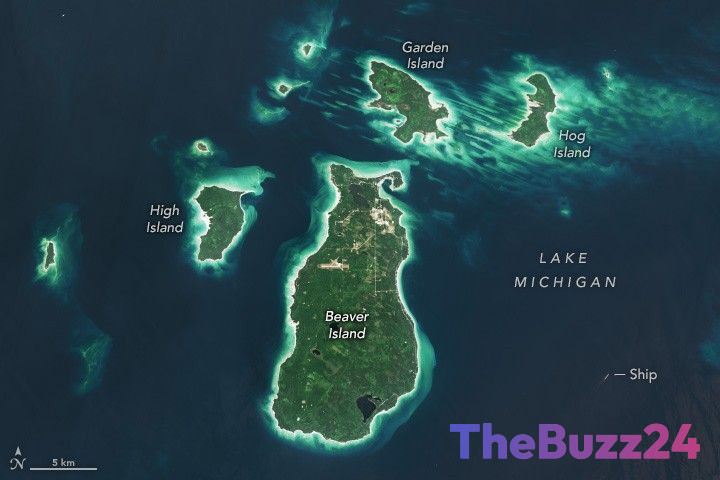
Beaver Island: A Glacial Legacy and Ecotourism Haven in Lake Michigan
Located in the northern reaches of Lake Michigan, the Beaver Archipelago serves as a living testament to the geological forces of the last Ice Age. Retreating glaciers once carved the lake floor into a complex network of ridges and valleys, eventually giving rise to the resilient rock formations that define this island chain. Today, the archipelago is characterized by a diverse landscape of shifting dunes, dense upland forests, and essential wetlands that provide a sanctuary for numerous rare species.
Beaver Island, the largest and most prominent of the group, is steeped in a cultural heritage that led to its reputation as ‘America’s Emerald Isle.’ During the mid-19th century, settlers from County Donegal, Ireland, established a thriving community centered on agriculture and commercial fishing. While the island once served as a primary hub for the freshwater fish trade, it has since transitioned away from industrial extraction, focusing instead on preserving its maritime history and natural beauty. The Beaver Island Harbor Light, a fixture for over 150 years, continues to stand as a vital landmark for vessels navigating the shipping lanes between Chicago and the Straits of Mackinac.
In the modern era, the island has successfully pivoted toward ecotourism, drawing visitors interested in kayaking, cycling, and stargazing. Its remote geography and commitment to minimal light pollution have earned it the status of an International Dark Sky Sanctuary, ensuring the preservation of its night skies. Meanwhile, the surrounding islands, such as High and Hog Island, remain largely undisturbed, protecting old-growth forests and rare flora like the Pitcher’s thistle. These protected areas are crucial for maintaining the ecological health of the Great Lakes, serving as vital spawning grounds and wildlife refuges.
Key Takeaways
- Beaver Island's unique topography was shaped by glacial activity during the last Ice Age.
- The island's cultural identity was heavily influenced by 19th-century Irish immigrants from County Donegal.
- The archipelago is now a designated International Dark Sky Sanctuary, prioritizing the protection of its natural night environment.
Editor’s Analysis & Impact
The transition of Beaver Island from a resource-dependent fishing hub to a protected ecotourism destination reflects a wider economic shift across the Great Lakes region. As traditional industries decline, remote locales are increasingly capitalizing on their geological and historical uniqueness to foster sustainable growth. The International Dark Sky Sanctuary designation is a strategic move that aligns with the rising demand for ‘dark sky’ tourism, a niche market that emphasizes environmental stewardship and light pollution control. Moving forward, the primary challenge for the archipelago will be managing the tension between increased visitor traffic and the rigorous preservation standards required to maintain its fragile ecosystems. The long-term success of this region depends on its ability to market its status as an undisturbed wilderness while simultaneously upgrading infrastructure to meet the needs of modern, environmentally conscious travelers.
Frequently Asked Questions
Q: How did Beaver Island acquire the nickname 'America’s Emerald Isle'?
A: The nickname stems from a significant wave of Irish immigrants from County Donegal who settled on the island during the mid-19th century.
Q: What does the International Dark Sky Sanctuary designation mean for Beaver Island?
A: This designation confirms that the island possesses exceptionally dark night skies with minimal light pollution, making it a premier destination for stargazing and astronomical research.
AI Disclosure: This article is based on verified data and official reports. Our Team and AI have cross-referenced every financial detail with primary sources to ensure total accuracy.
More from this Category