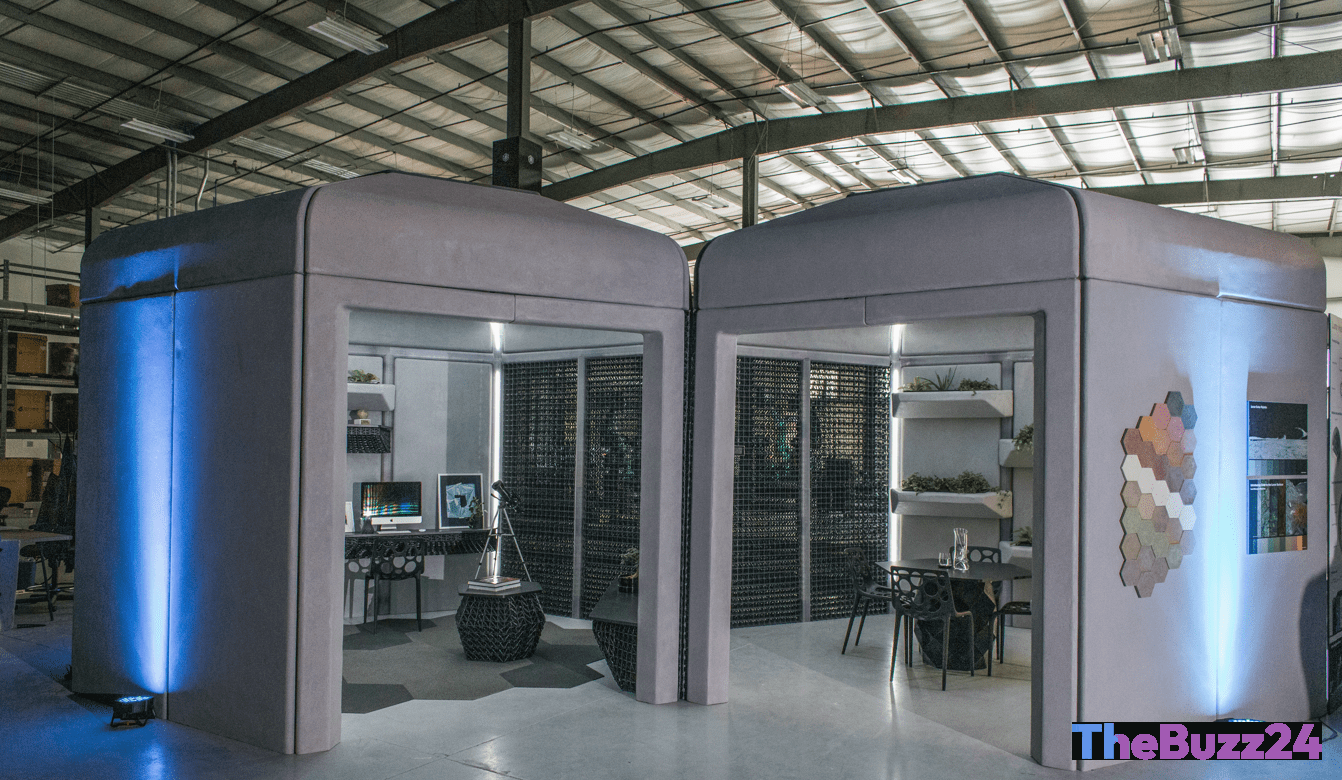
Space-Age Architecture: How NASA-Inspired 3D Printing is Reshaping Earth’s Construction Industry
A revolutionary construction methodology born from the ambition of building lunar habitats is now transforming how structures are designed and built on Earth. Chattanooga-based Branch Technology Inc. has successfully adapted its “Freeform 3D Printing” technology to create highly efficient, durable, and visually striking architectural components. Unlike conventional 3D printing, which relies on stacking solid layers of material, this innovative approach constructs complex, open-matrix lattice frameworks. These lightweight structures can then be filled or finished to create advanced modular wall panels and exterior cladding.
The roots of this terrestrial breakthrough trace back to 2017, when the company participated in NASA’s 3D-Printed Habitat Challenge, a competition aimed at developing viable housing solutions for deep space exploration. Working alongside experts like Tracie Prater at NASA’s Marshall Space Flight Center, engineers refined their extrusion nozzle systems. This collaboration resulted in a dual-capability printing head capable of transitioning seamlessly between intricate lattice patterns and solid structural layers, offering architects unprecedented creative freedom and structural control.
Beyond structural design, the partnership catalyzed significant breakthroughs in material science. Researchers originally investigated utilizing materials resembling Martian soil and recycled space mission waste to print extraterrestrial shelters. This research ultimately yielded a high-strength, basalt fiber-reinforced plastic. Now serving as a primary “ink” for Earth-bound construction, this space-derived material drastically reduces resource consumption while maximizing structural integrity, demonstrating how deep-space research can drive sustainable, modern engineering solutions.
Key Takeaways
- Branch Technology's 'Freeform 3D Printing' creates lightweight, highly efficient lattice structures instead of traditional solid layers.
- The technology was refined through NASA's 2017 3D-Printed Habitat Challenge to develop deep-space housing solutions.
- The process utilizes a specialized basalt fiber-reinforced plastic, a material inspired by research into Martian dust and recycled space waste.
Editor’s Analysis & Impact
The commercialization of space-grade 3D printing technology represents a paradigm shift for the global construction sector, which has historically struggled with high material waste and carbon emissions. By utilizing lightweight lattice structures reinforced with basalt fibers, builders can achieve superior structural strength with a fraction of the raw materials required by traditional concrete or steel methods. This transition not only addresses the urgent need for sustainable building practices but also unlocks unprecedented design freedom for architects. As urbanization accelerates and resource scarcity intensifies, the adoption of space-derived manufacturing techniques on Earth is poised to transition from a niche architectural trend to a mainstream construction standard, paving the way for faster, cheaper, and more resilient infrastructure.
Frequently Asked Questions
Q: What is Freeform 3D Printing?
A: Freeform 3D Printing is a manufacturing technique that fabricates open, lightweight lattice structures rather than solid, layer-by-layer objects. These lattices can then be filled or covered to create strong, modular building components.
Q: How did NASA influence this construction technology?
A: The technology was developed and refined during NASA's 2017 3D-Printed Habitat Challenge. Collaboration with NASA scientists helped optimize the extrusion nozzles and led to the development of durable, basalt fiber-reinforced materials originally envisioned for lunar and Martian habitats.
Q: What are the environmental benefits of this printing method?
A: By printing optimized lattice structures instead of solid blocks, the process significantly reduces material waste and resource consumption. Additionally, the use of advanced composites like basalt fiber-reinforced plastic offers a highly durable, sustainable alternative to traditional building materials.
AI Disclosure: This article is based on verified data and official reports. Our Team and AI have cross-referenced every financial detail with primary sources to ensure total accuracy.
More from this Category