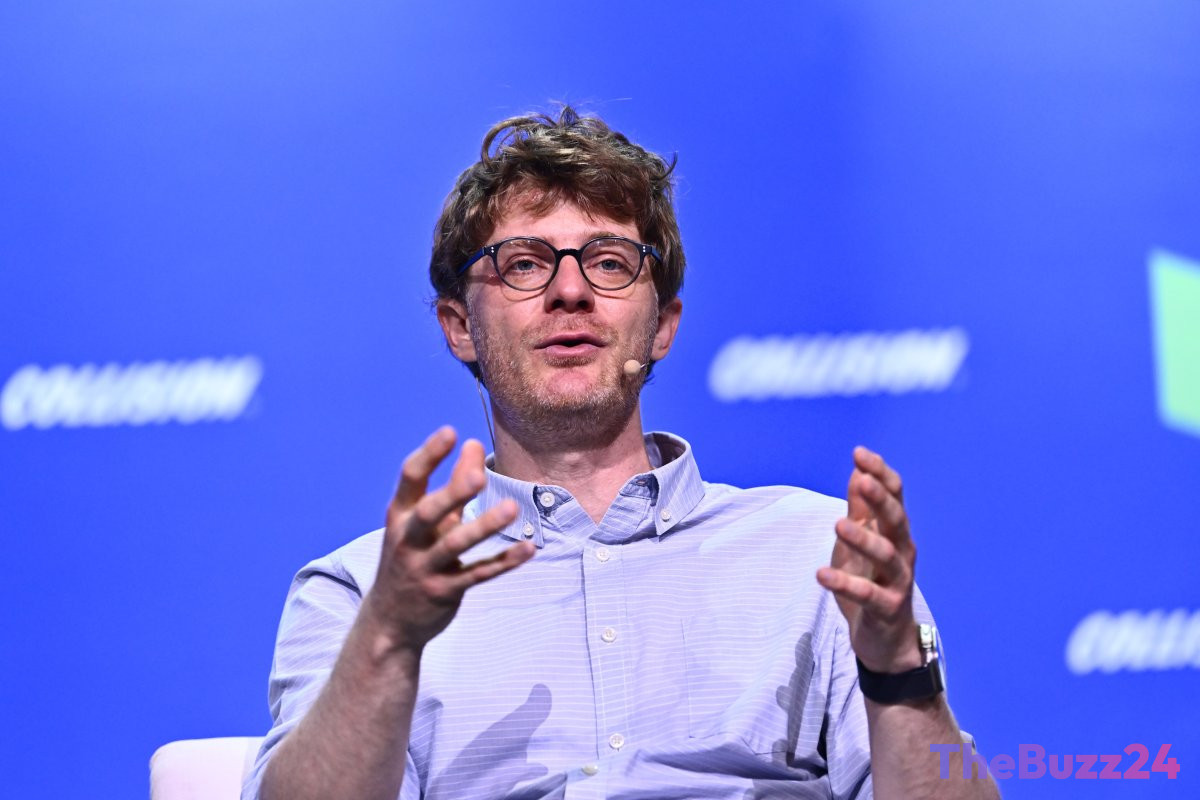
AI Pioneer Richard Socher Launches Recursive Superintelligence with $650 Million to Build Self-Evolving Systems
In a major development for the artificial intelligence sector, industry pioneer Richard Socher has officially launched his latest venture, Recursive Superintelligence. The San Francisco-based startup has emerged from stealth mode backed by a massive $650 million funding round, signaling a significant acceleration in the race toward autonomous machine intelligence. Socher, widely recognized for his foundational work on ImageNet and as the founder of You.com, is joined by a high-profile team of tech veterans, including Peter Norvig and Tim Shi, to build systems capable of independent self-improvement.
Unlike traditional, static AI models that rely heavily on human training and updates, Recursive Superintelligence is designing an “open-ended” system that mimics biological evolution. The core objective is to create an AI that can autonomously identify its own limitations, redesign its underlying architecture, and validate its own research improvements. By automating the entire research lifecycle—from initial ideation to final implementation—the startup hopes to eliminate the human bottleneck in AI development.
Looking ahead, the company plans to focus its initial efforts on accelerating the pace of AI research itself, with the ultimate goal of expanding these self-improving capabilities into broader scientific and physical domains. While the project is rooted in complex theoretical research, the leadership team, which also includes experts Tim Rocktäschel and Josh Tobin, is prioritizing practical, real-world utility. The startup expects to bring its first tangible product offerings to market within the coming months, marking a critical milestone in the pursuit of scalable superintelligence.
Key Takeaways
- Recursive Superintelligence has emerged from stealth with $650 million in funding to pioneer self-improving AI models.
- Led by tech veterans Richard Socher, Peter Norvig, and Tim Shi, the startup aims to automate the entire AI research and development lifecycle.
- The company plans to launch its first practical products within the coming months, targeting accelerated scientific and AI research.
Editor’s Analysis & Impact
The launch of Recursive Superintelligence marks a paradigm shift in the artificial intelligence landscape, transitioning from human-guided training to autonomous, self-directed evolution. Securing $650 million in initial funding underscores the immense investor confidence in the race for scalable superintelligence. If the startup successfully automates the R&D cycle, it could exponentially accelerate breakthroughs in critical fields like medicine, materials science, and climate modeling. However, this rapid shift toward recursive self-improvement introduces profound ethical and safety challenges. Managing an AI that rewrites its own code requires unprecedented guardrails to prevent unintended behaviors. The tech industry will be watching closely to see if this ambitious theoretical framework can deliver reliable, safe, and commercially viable products in the near term.
Frequently Asked Questions
Q: What is the main goal of Recursive Superintelligence?
A: The company aims to build AI systems that can autonomously identify their own limitations, redesign their architecture, and improve themselves without human intervention, mimicking biological evolution.
Q: Who is leading this new AI venture?
A: The startup was founded by AI pioneer Richard Socher, who is joined by prominent industry experts including Peter Norvig, Tim Shi, Tim Rocktäschel, and Josh Tobin.
Q: When will the company release its first products?
A: The leadership team plans to transition their theoretical research into practical applications quickly, with initial product offerings expected to launch within the next few months.
AI Disclosure: This article is based on verified data and official reports. Our Team and AI have cross-referenced every financial detail with primary sources to ensure total accuracy.
More from this Category