Global AI-Driven Disinformation Networks Target UK Public with Sophisticated Campaigns
A highly sophisticated network of social media accounts is leveraging artificial intelligence to flood the United Kingdom’s digital space with coordinated anti-immigration narratives. These operations, which have successfully reached millions of internet users, utilize fabricated personas designed to mimic concerned British citizens. Investigative findings indicate that these campaigns are coordinated globally, with digital footprints tracing back to nations such as Sri Lanka, Vietnam, the Maldives, and the United States, alongside suspected state-sponsored actors in Iran and the United Arab Emirates.
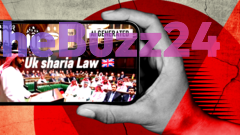
The core strategy of these campaigns relies heavily on emotionally charged, AI-manipulated visual media. This includes fabricated depictions of a dystopian future for the UK, such as altered footage of the House of Commons and grim, AI-generated portrayals of British cities in the year 2050 suffering from cultural decay. To maximize their reach and exploit platform algorithms, many of these accounts employ a “pivoting” tactic. Profiles that previously focused on benign lifestyle topics or unrelated political discussions suddenly shift to publishing highly inflammatory anti-immigration content to capture wider audiences.
Security and digital media experts warn that this trend represents a dangerous escalation in the “disinformation-for-hire” sector, making it increasingly difficult for everyday users to distinguish between organic political debate and manufactured foreign influence. London Mayor Sadiq Khan has raised concerns over the issue, warning that these digital fabrications threaten the city’s international standing and calling on major social media platforms to implement stricter algorithmic moderation and mandatory labels for AI-generated content.
Although major tech firms like Meta have committed to dismantling coordinated inauthentic behavior, the decentralized nature of these networks presents a massive enforcement challenge. Furthermore, the psychological aspect of these campaigns plays a critical role; many social media users continue to share and amplify this content even when they suspect it is fake, simply because the message aligns with their personal political beliefs. This suggests that the power of AI disinformation lies not just in its technical sophistication, but in its ability to exploit existing societal divisions.
Key Takeaways
- Sophisticated global networks are deploying AI-generated personas and media to spread coordinated anti-immigration narratives across the UK.
- Bad actors are using "account pivoting" and emotionally manipulative, dystopian imagery to bypass standard social media moderation filters.
- Addressing the threat is complicated by user psychology, as many individuals willingly share suspected AI fakes that align with their political ideologies.
Editor’s Analysis & Impact
The rise of commercialized, AI-driven disinformation networks represents a paradigm shift in geopolitical influence and digital security. By drastically lowering the cost and technical barriers of content creation, generative AI allows malicious actors to launch highly targeted, persuasive campaigns at an unprecedented scale. This evolution places social media platforms in a continuous defensive posture, struggling to update detection algorithms faster than bad actors can adapt. Beyond the immediate political fallout, the broader implication is the erosion of objective truth. As synthetic media becomes indistinguishable from reality, public trust in legitimate journalism and democratic institutions is severely undermined. Moving forward, combating this threat will require a multi-faceted approach combining advanced cryptographic watermarking, stricter platform accountability, and enhanced public digital literacy to mitigate the impact of algorithmic echo chambers.
Frequently Asked Questions
Q: What tactics do these AI disinformation campaigns use to gain trust?
A: The campaigns often use fabricated personas posing as local British citizens and employ "account pivoting," where existing accounts with established followers suddenly switch from harmless lifestyle content to political messaging.
Q: Why is it difficult for social media platforms to stop these networks?
A: The decentralized nature of these global networks makes them hard to track, and their efforts are amplified by real users who willingly share the content because it aligns with their personal political views, regardless of its authenticity.
AI Disclosure: This article is based on verified data and official reports. Our Team and AI have cross-referenced every financial detail with primary sources to ensure total accuracy.
More from this Category