Iran’s Grand Farewell: A Message of Revenge Amidst Internal Strife and Succession
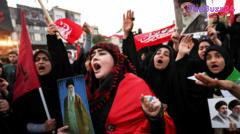
Iran recently concluded three days of public mourning for its slain Supreme Leader, Ayatollah Ali Khamenei, and four family members, reportedly killed in Israeli-American air strikes. The elaborate funeral procession, a carefully choreographed political spectacle, saw millions of mourners accompany the cortège along a 10km route in Tehran. This massive public gathering was steeped in powerful messages of resistance and calls for revenge, amplified by religious flags symbolizing blood and martyrdom, and chants of “death to America” and “death to Israel” from loyalist crowds.
Despite the overwhelming display of national unity and grief, a significant portion of the population reportedly abstained from the mourning events. Many Iranians are grappling with severe economic hardships, including spiraling inflation nearing 80% and high unemployment, compounded by the pain of recent anti-government protests. Some citizens attribute the security crackdowns, which resulted in thousands of deaths, to the former Supreme Leader. While government supporters urged foreign media to “tell the truth” about the outpouring of sorrow, dissenting voices whispered about the “real voices of revolution” heard in protests just months prior.
The nation now enters a new era with its third Supreme Leader, 56-year-old Mojtaba Khamanei, who has reportedly not been seen publicly since the air strikes that killed his father severely injured him. His absence was notably conspicuous during the ceremonies. The new leadership faces the daunting task of navigating a dire financial situation, necessitating continued negotiations for sanctions relief and the unfreezing of assets. Amidst these challenges, Iran continues to project defiance, symbolized by a colossal statue of a clenched fist in Revolution Square, intended to convey an unyielding stance against both external and internal adversaries.
Key Takeaways
- Iran orchestrated a massive public funeral for its slain Supreme Leader, Ayatollah Ali Khamenei, and four family members, reportedly killed in Israeli-American air strikes, using the event to project messages of resistance and revenge.
- The grand display of mourning was contrasted by significant internal dissent stemming from severe economic challenges, high inflation, and public anger over past government crackdowns.
- The nation transitions into a new era under its third Supreme Leader, Mojtaba Khamanei, facing critical challenges including economic recovery through sanctions relief and managing ongoing regional tensions.
Editor’s Analysis & Impact
The reported death of Ayatollah Ali Khamenei and the subsequent succession of Mojtaba Khamanei mark a pivotal moment for Iran, with significant implications for regional stability and global geopolitics. The grand funeral, while projecting an image of national unity and defiance against perceived enemies, simultaneously highlighted deep internal divisions fueled by economic hardship and political grievances. The new leadership will face immense pressure to address the country’s dire financial situation, likely necessitating a delicate balance between hardline rhetoric and pragmatic engagement to secure sanctions relief. The emphasis on revenge and resistance suggests a potential for continued regional volatility, particularly concerning relations with the United States and Israel. The transition of power, especially with the new leader’s reported injury and absence, introduces an element of uncertainty regarding future policy directions and the consolidation of authority within the Islamic Republic.
Frequently Asked Questions
Q: Who was Ayatollah Ali Khamenei, according to the article?
A: According to the article, Ayatollah Ali Khamenei was Iran's slain Supreme Leader, the highest religious and political authority in the country, who was reportedly killed along with four family members in Israeli-American air strikes.
Q: What challenges does Iran's new leadership face?
A: Iran's new leadership faces significant economic challenges, including high inflation and unemployment. They are also tasked with navigating complex regional tensions and securing much-needed economic relief through the easing of international sanctions and unfreezing of assets.
Q: What was the political message conveyed during the funeral?
A: The funeral was a carefully choreographed political spectacle designed to convey strong messages of resistance and calls for revenge against perceived adversaries, particularly the United States and Israel, while also projecting an image of national unity and defiance.
AI Disclosure: This article is based on verified data and official reports. Our Team and AI have cross-referenced every financial detail with primary sources to ensure total accuracy.
More from this Category