Shadows of Izolyatsia: Exposing the Faces Behind Ukraine’s Secret Detention System
A harrowing investigation has brought to light the identities of individuals allegedly responsible for systemic torture and sexual violence within Russian-run detention centers in occupied Ukraine. Survivors, including 64-year-old Liudmyla Huseinova, have provided chilling accounts of their time in facilities like the notorious Izolyatsia prison, describing a regime of arbitrary detention, physical abuse, and psychological trauma that has persisted for years.
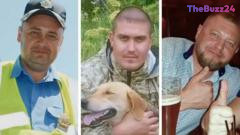
Among those identified by investigators are former law enforcement officials who transitioned into roles within the security apparatus of Russian-backed forces. Yurii Temerbek, a former traffic policeman, and Ruslan Yeriomichev, a law graduate, are among those accused of overseeing brutal conditions where detainees were subjected to electric shocks, mock executions, and forced labor. Despite the gravity of these allegations, evidence suggests these individuals have returned to relatively normal lives, often residing in Russia or occupied territories, frequently sharing images of family vacations and social gatherings on public platforms.
Data compiled from survivor testimonies, social media, and legal documents reveals a sprawling network of detention sites, with nearly 200 locations identified across occupied Ukraine and Russia. While Ukrainian authorities have initiated thousands of criminal proceedings related to the treatment of civilians, the vast majority of perpetrators remain at large. The persistence of these facilities, coupled with the difficulty of enforcing international law in conflict zones, continues to leave survivors seeking a form of justice that remains largely out of reach.
For many victims, the goal is not merely retribution but the formal documentation of these crimes to ensure that those responsible are held accountable under the law. As the conflict continues, the effort to map these detention centers and identify their operators serves as a critical, albeit painful, step toward documenting the human rights crisis that has defined the occupation for over a decade.
Key Takeaways
- Investigations have identified specific individuals accused of operating torture centers in occupied Ukraine, many of whom are now living openly in Russia.
- The detention system, including the infamous Izolyatsia facility, is characterized by systematic human rights abuses, including sexual violence and torture.
- Despite thousands of documented cases and ongoing legal proceedings by Ukrainian authorities, very few perpetrators have been successfully apprehended or imprisoned.
Editor’s Analysis & Impact
The exposure of these individuals highlights a significant failure in the international legal framework to protect civilians during prolonged occupations. The ability of alleged war criminals to reintegrate into civilian life while maintaining a digital footprint underscores the impunity often enjoyed by low-to-mid-level enforcers in conflict zones. From a market and geopolitical perspective, this ongoing human rights crisis complicates any future post-conflict reconciliation efforts. The systematic nature of these detention centers suggests a top-down directive, indicating that these abuses are not isolated incidents but part of a broader strategy of intimidation. Future international efforts will likely focus on digital forensics and open-source intelligence to build cases for international tribunals, though the immediate outlook for justice remains grim as long as the accused remain under the protection of the occupying power.
Frequently Asked Questions
Q: What is the Izolyatsia detention center?
A: Izolyatsia is a former factory and art gallery in the Donetsk region that was repurposed by Russian-backed forces into a notorious detention facility known for the systematic torture and abuse of civilians.
Q: How are investigators identifying these alleged perpetrators?
A: Investigators use a combination of survivor testimony, social media activity, public records, and documents from Ukrainian prosecutors to cross-reference identities and track the current whereabouts of individuals accused of running these facilities.
AI Disclosure: This article is based on verified data and official reports. Our Team and AI have cross-referenced every financial detail with primary sources to ensure total accuracy.
More from this Category