Tragic Collision in Bangkok: Freight Train Crashes into Bus, Leaving Eight Dead
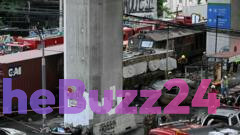
A horrific accident in central Bangkok has claimed the lives of at least eight people and left dozens injured after a freight train collided with a public bus. The tragedy unfolded on Saturday afternoon in the vicinity of the Makkasan train station, drawing an immediate and massive emergency response to the heart of the Thai capital.
Upon impact, a violent fire erupted, quickly engulfing the passenger bus and trapping several commuters inside the burning vehicle. First responders, including local firefighters and rescue personnel, rushed to the scene to extinguish the flames and extricate survivors from the mangled wreckage. Emergency crews successfully contained the fire and have since focused on securing the area against potential gas leaks while searching for any remaining victims.
Preliminary reports indicate that gridlocked traffic may have trapped the bus on the railway tracks, preventing the safety barriers from closing properly. The oncoming freight train, which was transporting heavy cargo containers, was unable to stop in time to prevent the devastating impact. Local transport authorities have launched a formal investigation to determine the exact sequence of events and address potential safety failures at the crossing.
Key Takeaways
- At least eight people were killed and dozens injured when a cargo train struck a public bus near Bangkok's Makkasan station.
- The collision sparked a severe fire that trapped passengers inside the bus, requiring urgent rescue and containment efforts.
- Initial findings suggest heavy traffic congestion left the bus stranded on the tracks, rendering the train unable to stop in time.
Editor’s Analysis & Impact
This tragic incident highlights critical vulnerabilities in urban infrastructure and traffic management within rapidly growing metropolitan areas like Bangkok. Railway crossings in densely populated zones present a persistent hazard, particularly when traffic congestion compromises safety mechanisms like automated barriers. In the wake of this disaster, municipal authorities and transit operators will likely face intense pressure to modernize crossing safety, implement smarter traffic control systems, and potentially restrict heavy freight movement through central city corridors during peak hours. Beyond the immediate human toll, the accident underscores the urgent need for comprehensive urban planning reforms to separate rail and road traffic, thereby preventing future bottlenecks from turning into fatal traps.
Frequently Asked Questions
Q: Where did the collision take place?
A: The accident occurred near the Makkasan train station in central Bangkok, Thailand.
Q: What caused the train to hit the bus?
A: Preliminary investigations suggest that heavy traffic congestion left the bus stranded on the tracks, preventing crossing barriers from lowering and leaving the freight train with insufficient time to stop.
Q: What actions are emergency services taking following the crash?
A: After extinguishing the fire and rescuing survivors, emergency crews have been cooling the site, monitoring for potential gas leaks, and conducting a thorough search of the wreckage.
AI Disclosure: This article is based on verified data and official reports. Our Team and AI have cross-referenced every financial detail with primary sources to ensure total accuracy.
More from this Category