Shifting Stance: Trump’s Rhetoric on Taiwan Challenges Long-Standing U.S. Security Policy
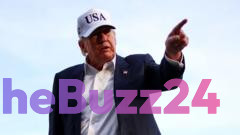
Former President Donald Trump has sparked a significant debate regarding the future of American foreign policy by publicly warning Taiwan against pursuing formal independence. Trump’s remarks, which emphasize the logistical challenges of a potential Pacific conflict, suggest a desire to minimize U.S. military entanglement in the region. These comments arrive at a delicate time, following high-level diplomatic discussions in Beijing where Chinese President Xi Jinping underscored that Taiwan remains the most volatile point of contention in U.S.-China relations.
In response to the shifting political discourse, the administration of Taiwanese President Lai Ching-te has reaffirmed its dedication to maintaining the current status quo. Officials from the Democratic Progressive Party have clarified that there are no immediate intentions to seek formal independence, a move that would require complex constitutional reforms and a national referendum. By adhering to this policy, Taipei aims to protect its de-facto autonomy while avoiding the geopolitical triggers that could lead to a military confrontation with Beijing.
The geopolitical friction is rooted in the aftermath of the 1949 Chinese civil war, with Beijing continuing to assert sovereignty over the island. Under President Xi, China has increasingly utilized gray-zone tactics, including frequent aerial and naval incursions, to pressure the island. While the 1979 Taiwan Relations Act mandates that the U.S. provide defensive support, Trump’s recent rhetoric has led experts to question the future of the long-standing policy of strategic ambiguity. This uncertainty has cast a shadow over approximately $14 billion in pending arms sales, leaving global observers to wonder if American security commitments in the Indo-Pacific are undergoing a fundamental transformation.
Key Takeaways
- Donald Trump has publicly advised Taiwan against pursuing formal independence to avoid potential military conflict with China.
- The Taiwanese government remains committed to the status quo to avoid triggering a military response from Beijing.
- Trump's recent comments have cast doubt on the future of U.S. strategic ambiguity and the status of $14 billion in pending arms sales.
Editor’s Analysis & Impact
Trump’s recent comments represent a notable departure from the traditional ‘strategic ambiguity’ that has defined U.S.-Taiwan relations for decades. By publicly cautioning Taipei and emphasizing the distance of a potential conflict, Trump may be signaling a more transactional or isolationist approach to Indo-Pacific security. This shift could inadvertently embolden Beijing to increase its military and diplomatic pressure, sensing a weakening of the American security umbrella. For the global markets, this uncertainty introduces significant risk, particularly concerning the semiconductor industry, which is heavily concentrated in Taiwan. Investors and defense contractors will be closely monitoring the status of pending arms deals, as these will serve as the primary indicator of whether the U.S. intends to maintain its role as Taiwan’s chief security guarantor or pivot toward a policy of accommodation with China.
Frequently Asked Questions
Q: What is the Taiwan Relations Act?
A: It is a 1979 U.S. law that requires the United States to provide Taiwan with the means to defend itself and treats any threat to the island's peace as a matter of grave concern.
Q: Why is formal independence a 'red line' for China?
A: Beijing views Taiwan as a breakaway province and has passed laws, such as the 2005 Anti-Secession Law, that authorize the use of force if the island moves toward legal separation.
Q: What is the 'status quo' in the Taiwan Strait?
A: It refers to the current state where Taiwan operates as a self-governing democracy without formal international recognition as a sovereign state, while China refrains from immediate military invasion.
AI Disclosure: This article is based on verified data and official reports. Our Team and AI have cross-referenced every financial detail with primary sources to ensure total accuracy.
More from this Category