Asian Markets Navigate Geopolitical Shifts and Economic Data
Asian stock markets delivered a fragmented performance this week as investors weighed a temporary cooling of geopolitical tensions against shifting regional economic data. The easing of immediate concerns regarding potential military escalation in the Middle East provided a brief reprieve for energy markets, leading to a slight softening in oil prices. This de-escalation allowed traders to pivot their focus toward domestic economic indicators and corporate performance, though the results across the continent remained uneven.
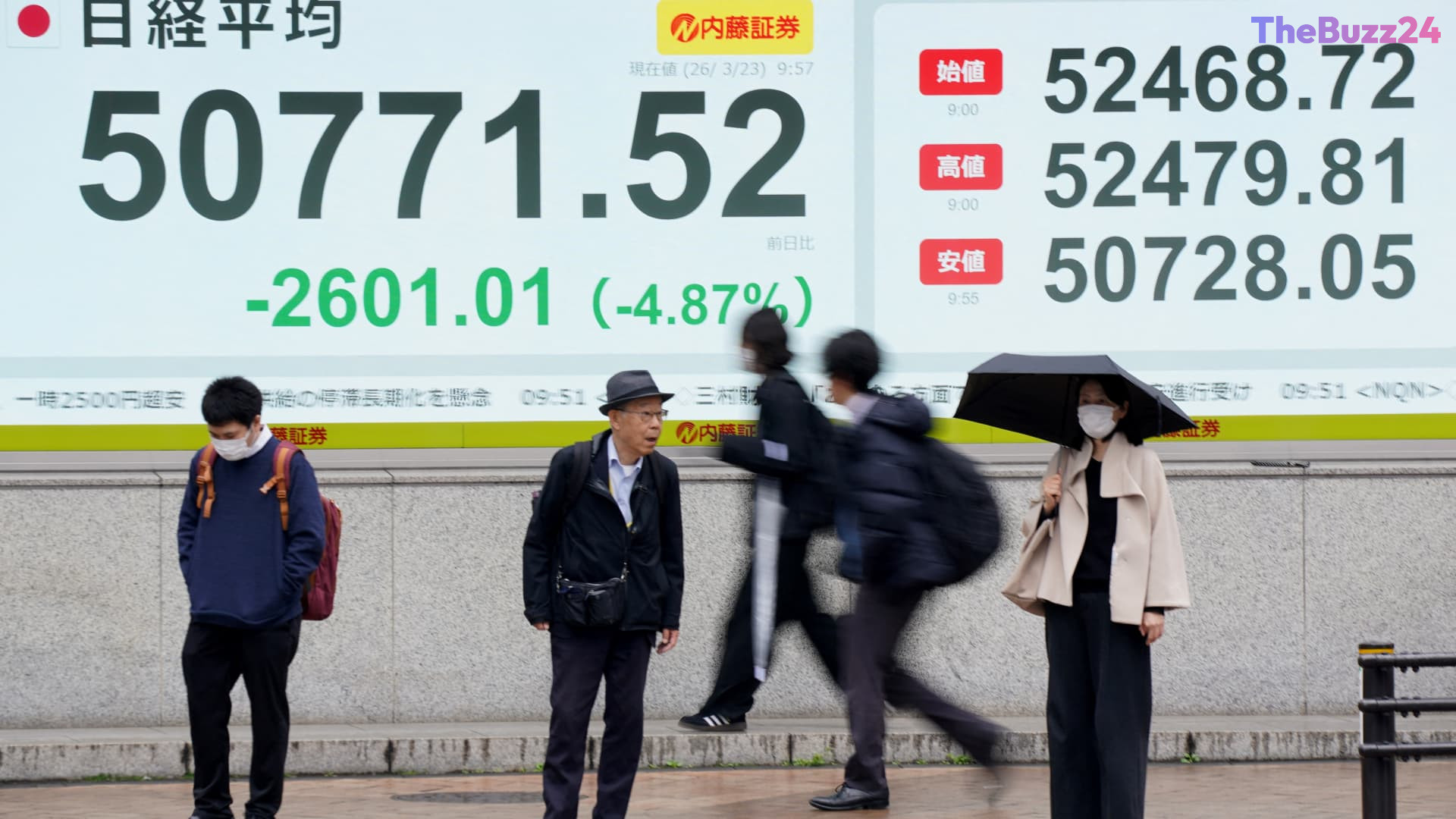
Japan provided a notable highlight, reporting a robust first-quarter GDP growth of 2.1% on an annualized basis, which comfortably outperformed analyst expectations. Despite this positive economic backdrop, the Nikkei 225 saw a minor decline of 0.45%, while the Topix index managed to secure a 0.54% gain. Meanwhile, South Korea faced a more difficult session, with both the Kospi and Kosdaq indices suffering losses exceeding 3%, highlighting the sensitivity of regional markets to local political developments.
Elsewhere in the Asia-Pacific region, Australia’s S&P/ASX 200 index climbed 1.05%, while Hong Kong’s Hang Seng index saw a modest rise of 0.41%. Corporate news served as a significant driver for individual stock movements. Standard Chartered shares in Hong Kong surged 2.54% following the unveiling of a long-term strategy that includes ambitious return-on-equity targets and a restructuring plan. In India, the Nifty 50 index rose 0.44%, bolstered by a rally in Adani-linked entities after U.S. authorities dropped fraud charges against Gautam Adani, providing a significant boost to Adani Enterprises, Adani Ports, and Adani Green.
Key Takeaways
- Asian markets displayed mixed results as a temporary reduction in Middle Eastern geopolitical tensions allowed investors to refocus on economic fundamentals.
- Japan reported stronger-than-expected Q1 GDP growth of 2.1%, though its stock indices showed divergent reactions.
- Corporate developments, including Standard Chartered's restructuring plans and the dismissal of fraud charges against Gautam Adani, significantly influenced regional market performance.
Editor’s Analysis & Impact
The current market environment reflects a delicate balance between short-term geopolitical relief and long-term structural uncertainty. While the cooling of tensions in the Middle East has provided a temporary floor for oil prices, the underlying instability in critical transit corridors like the Strait of Hormuz remains a persistent risk factor. The divergence in performance across Asian indices suggests that investors are increasingly prioritizing domestic economic health and corporate-specific catalysts over broad regional sentiment. Looking ahead, the market is likely to remain volatile as it navigates the dual pressures of potential energy price shocks and the varying success of corporate restructuring efforts. Investors should maintain a cautious stance, as the current stability is contingent upon fragile geopolitical conditions that could shift rapidly.
Frequently Asked Questions
Q: What factors contributed to the recent volatility in oil prices?
A: Oil prices have been primarily influenced by fluctuating geopolitical tensions in the Middle East, with recent price dips attributed to a temporary de-escalation in potential military actions.
Q: How did the dismissal of fraud charges impact the Indian market?
A: The dismissal of U.S. fraud charges against Gautam Adani served as a positive catalyst for the Indian market, leading to notable gains for Adani Enterprises, Adani Ports, and Adani Green.
AI Disclosure: This article is based on verified data and official reports. Our Team and AI have cross-referenced every financial detail with primary sources to ensure total accuracy.
More from this Category