Geological Spectacle: Underwater Volcano Could Birth New Island in Papua New Guinea Waters
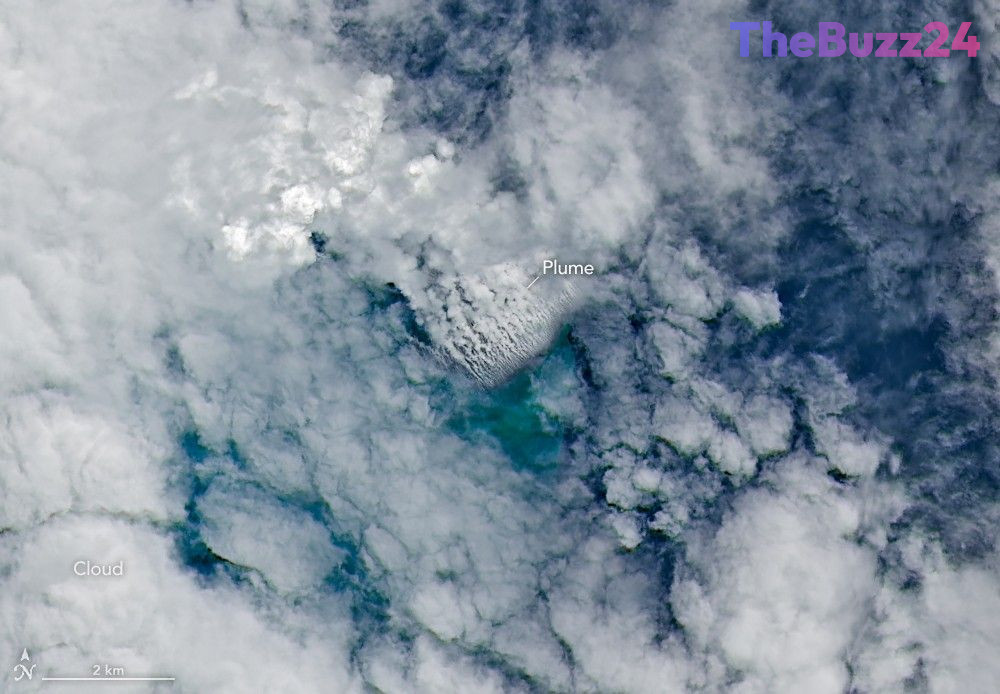
A significant submarine volcanic eruption is currently unfolding in the Central Bismarck Sea, situated north of Papua New Guinea, captivating the attention of the global scientific community. The activity commenced on May 8, 2026, following a period of heightened seismic tremors. Since then, the eruption has manifested as steam-rich plumes, dense ash clouds, and vast expanses of floating pumice. Satellite observations have further revealed thermal anomalies spanning approximately seven square kilometers, suggesting that the volcanic vent lies at a shallower depth than indicated by existing bathymetric maps.
The eruption is believed to be centered near the Titan Ridge, an area known for its complex geological features, including numerous faults and active spreading zones. While the precise origin point remains under investigation due to the limited high-resolution seafloor mapping in this remote region, experts have noted that the current activity appears less explosive compared to other major submarine eruptions observed recently. This characteristic is often attributed to the site’s location near a back-arc spreading center, which typically fosters less violent volcanic behavior than stratovolcanoes found in subduction zones.
Researchers are now intensely monitoring the site for a potentially rare and profound geological event: the emergence of a new island. Should the accumulating volcanic material breach the ocean’s surface, it would offer an unprecedented, real-time opportunity to witness the birth of a landmass and subsequently observe its colonization by biological life. Scientists are preparing to deploy advanced radar and satellite imagery to meticulously track the evolution of this underwater structure and assess its long-term stability.
The ultimate duration of this volcanic episode remains uncertain, with historical precedents in the region varying widely from a few days to several years. As the situation continues to develop, the scientific community is dedicated to gathering comprehensive data to deepen our understanding of the intricate geological processes at play within this remote and largely uncharted section of the ocean floor.
Key Takeaways
- A submarine volcanic eruption began on May 8, 2026, in the Central Bismarck Sea, north of Papua New Guinea, following seismic activity.
- The eruption is producing steam, ash, and extensive pumice rafts, with satellite data indicating a shallower volcanic vent than previously mapped.
- Scientists are closely monitoring the event for the potential formation of a new island, which would offer a unique opportunity to study landmass creation and biological colonization.
Editor’s Analysis & Impact
This submarine volcanic eruption, while not immediately impacting global markets or major industries, holds immense scientific significance. Its potential to form a new island offers a unique, real-time laboratory for geologists, oceanographers, and biologists to study the fundamental processes of landmass creation and the subsequent colonization by life. This event could drive further investment in deep-sea mapping technologies and research, particularly in under-explored regions like the Central Bismarck Sea. The data gathered will enhance our understanding of plate tectonics, volcanism, and the dynamic nature of Earth’s crust, potentially refining models for predicting future geological events. Long-term, such new landforms can alter local marine ecosystems and potentially influence regional weather patterns, though these effects would be gradual.
Frequently Asked Questions
Q: When did the submarine volcanic eruption begin?
A: The eruption commenced on May 8, 2026, following a period of seismic activity.
Q: What evidence suggests the volcano is at a shallower depth?
A: Satellite observations have detected thermal anomalies spanning approximately seven square kilometers, indicating the volcanic vent is shallower than previously mapped.
Q: Why is the potential formation of a new island significant?
A: It would provide a rare, real-time opportunity for scientists to observe the entire process of a new landmass forming and its subsequent colonization by biological life, offering invaluable insights into geological and ecological processes.
AI Disclosure: This article is based on verified data and official reports. Our Team and AI have cross-referenced every financial detail with primary sources to ensure total accuracy.
More from this Category