Deep Fission Targets $1.66 Billion Nasdaq IPO Despite Financial and Technical Roadblocks
Nuclear energy startup Deep Fission is making a bold push to enter the public markets, filing for a Nasdaq IPO with a valuation target of up to $1.66 billion. This latest attempt follows a previous, unsuccessful effort to go public via a reverse merger, which left the company as a reporting entity without active share trading. The firm is currently seeking to raise $157 million, a substantial increase in capital requirements compared to the $15 million funding round it struggled to secure just one year ago.
However, the company’s financial disclosures paint a precarious picture. Regulatory filings include a ‘going concern’ warning, highlighting the risk that the startup could deplete its cash reserves within the next twelve months if the IPO fails to gain traction. The firm’s deficit has grown significantly, rising from $56.2 million in late 2023 to $88.1 million today. While an $80 million equity investment—supported by data center developer Blue Owl—has provided a temporary lifeline, the underlying fiscal instability remains a primary concern for potential investors.
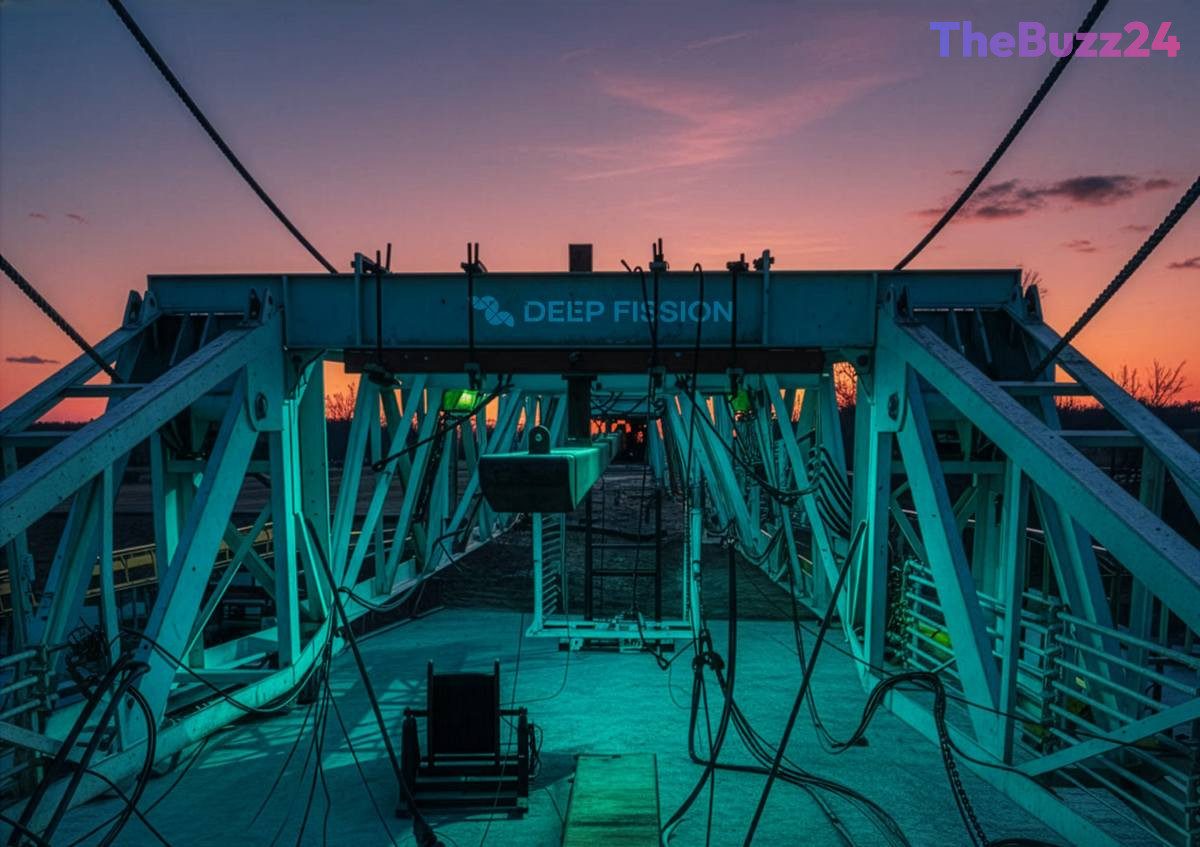
Beyond the balance sheet, Deep Fission faces significant technical hurdles. The company has officially delayed its timeline for achieving criticality in its subterranean reactors, opting to remove specific milestone estimates entirely. Current operations are limited to small-scale test drilling for geological data, a far cry from the massive, deep-borehole infrastructure required for commercial-scale energy production. Engineering teams are still grappling with the complexities of drilling boreholes that exceed standard industry dimensions, a critical design challenge that has yet to be resolved.
Market observers suggest that the aggressive valuation may be fueled by broader investor enthusiasm for the nuclear energy sector rather than the company’s current operational maturity. Unlike competitors who have advanced through regulatory licensing and revenue generation, Deep Fission remains in the early research and development phase. As the company proceeds with its public offering, stakeholders must reconcile the long-term potential of subterranean fission technology with the immediate realities of the startup’s financial and technical trajectory.
Key Takeaways
- Deep Fission is seeking a $1.66 billion valuation in a new Nasdaq IPO bid, aiming to raise $157 million.
- The company faces a 'going concern' warning, with its deficit ballooning to $88.1 million and cash reserves dwindling.
- Technical progress is stalled, with the company removing timelines for reactor criticality and struggling with the engineering requirements of deep-borehole drilling.
Editor’s Analysis & Impact
The attempt by Deep Fission to secure a multi-billion dollar valuation while still in the pre-revenue, R&D phase reflects the current ‘gold rush’ mentality surrounding nuclear energy and small modular reactors (SMRs). Investors are clearly hungry for clean energy alternatives to support the massive power demands of AI and data centers, as evidenced by the interest from firms like Blue Owl. However, the disconnect between the company’s valuation and its technical maturity creates a high-risk profile. If the IPO succeeds, it will provide the necessary capital to solve complex engineering hurdles; if it fails, the ‘going concern’ warning suggests the company may face a liquidity crisis. The broader implication is a test of market appetite: will investors continue to fund speculative, high-tech energy infrastructure, or will they demand more concrete regulatory and operational milestones before committing capital?
Frequently Asked Questions
Q: What is the primary financial risk facing Deep Fission?
A: The company has received a 'going concern' warning in its regulatory filings, indicating that it could run out of cash within the next year if the IPO is unsuccessful.
Q: Why has the company delayed its reactor criticality timeline?
A: The delay is largely due to unresolved technical challenges regarding the construction of massive, deep-borehole infrastructure that exceeds standard industry drilling capabilities.
AI Disclosure: This article is based on verified data and official reports. Our Team and AI have cross-referenced every financial detail with primary sources to ensure total accuracy.
More from this Category