Flattery or Folly? NATO Chief Rutte’s High-Stakes Diplomacy with Donald Trump
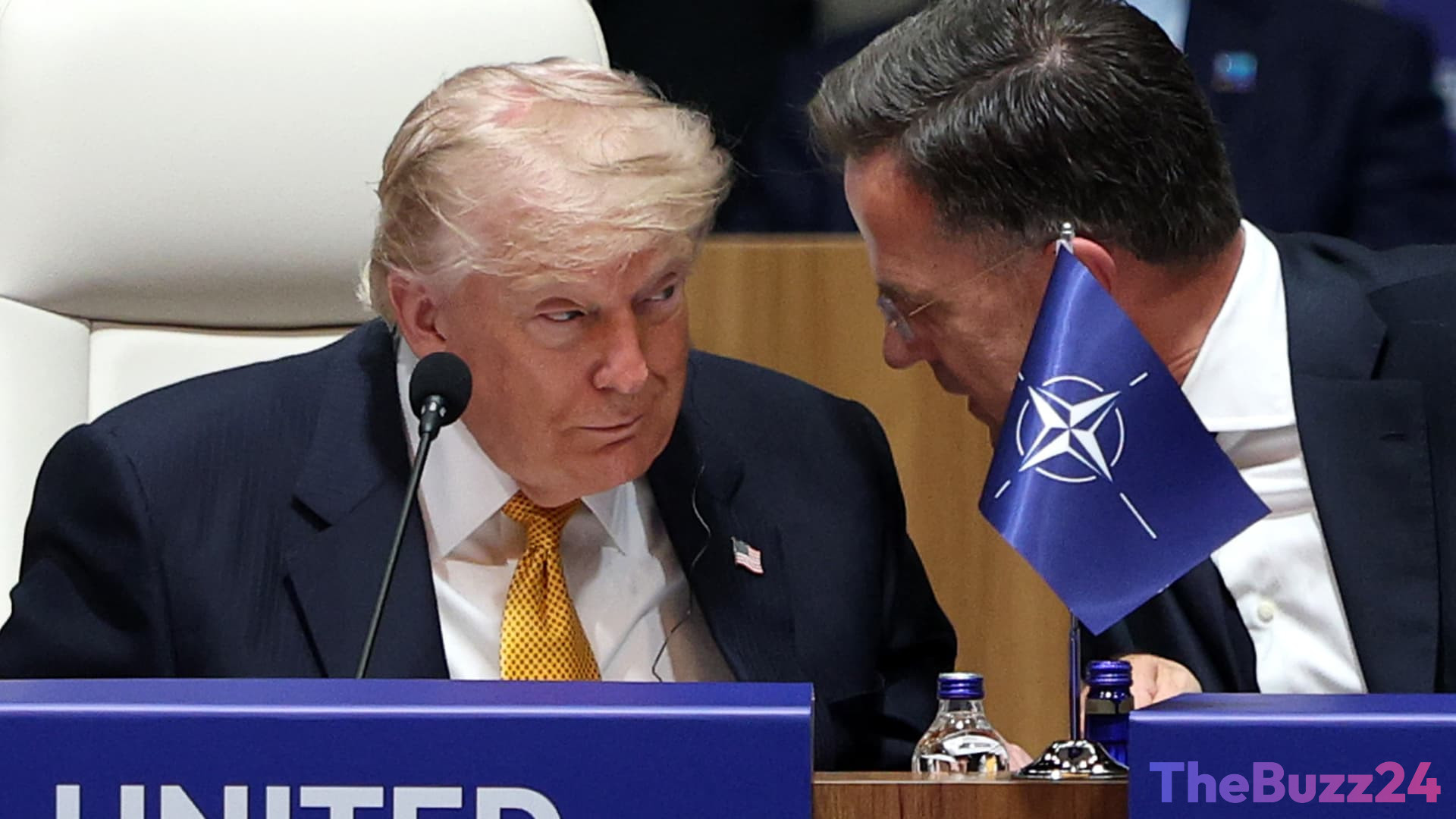
During a recent contentious NATO summit in Turkey, Secretary General Mark Rutte adopted a notably conciliatory approach towards U.S. President Donald Trump, lavishing praise on the American leader. This strategy saw Rutte describe Trump as a “great leader” and the alliance’s “biggest asset,” a sentiment reciprocated by Trump, who lauded the former Dutch prime minister.
Rutte’s diplomatic efforts were highlighted by his acknowledgment of Trump’s role in galvanizing NATO members to increase defense spending. He specifically coined the term “Trump trillion” to refer to the estimated $1.2 trillion in additional defense expenditure by Canada and European nations during Trump’s two terms. This praise came even as Trump maintained a confrontational stance throughout the summit, threatening to sever trade ties with Spain over defense spending, expressing disappointment with NATO’s response to the U.S. conflict with Iran, and reigniting his dispute with Denmark over Greenland.
The effectiveness and implications of Rutte’s strategy have sparked considerable debate among allies and international security experts. While some, like Latvian President Edgars Rinkēvičs, defended Rutte’s approach as crucial for maintaining the transatlantic relationship and the alliance’s operational integrity, others expressed reservations. Marion Messmer, a program director for international security, suggested that such flattery might not yield tangible benefits for NATO as a whole and could inadvertently send a message of weakness to adversaries, potentially undermining the alliance’s collective strength. In contrast to Rutte’s demeanor, other leaders, such as Denmark’s Prime Minister Mette Frederiksen, adopted a more defiant tone regarding Trump’s demands, particularly concerning Greenland, asserting readiness to defend all NATO territory.
Despite the varied reactions, Rutte has consistently defended his method, emphasizing the importance of acknowledging Trump’s impact on boosting defense commitments. He argued that Europe’s increased spending makes the continent a more relevant strategic partner for the United States, thereby strengthening the alliance from within. This ongoing diplomatic tightrope walk underscores the complex dynamics at play within NATO, as leaders navigate differing national interests and personalities to preserve collective security.
Key Takeaways
- NATO Secretary General Mark Rutte employed a strategy of effusive praise towards Donald Trump during a recent summit, crediting him with a "Trump trillion" in increased defense spending.
- Despite Rutte's diplomatic efforts, Trump maintained a confrontational stance, issuing threats against NATO allies regarding trade and territorial disputes.
- Rutte's approach has sparked debate among allies and experts, with some questioning its long-term benefits for NATO's cohesion and others defending it as necessary to preserve the transatlantic relationship.
Editor’s Analysis & Impact
This news highlights the ongoing geopolitical complexities facing NATO, particularly concerning the transatlantic relationship and the role of the United States. Rutte’s diplomatic strategy, while controversial, underscores the perceived necessity of managing U.S. leadership dynamics to maintain alliance stability. The debate over its effectiveness reveals deeper anxieties within NATO about burden-sharing, European strategic autonomy, and the alliance’s future direction. Should such a transactional approach become the norm, it could reshape international diplomacy and defense policy, potentially leading to a more fragmented global security landscape or, conversely, forcing European nations to accelerate their own defense integration efforts. The implications extend to defense industry spending and regional power balances.
Frequently Asked Questions
Q: What was the main point of contention at the recent NATO summit?
A: The summit was marked by a stark contrast between NATO Secretary General Mark Rutte's strategy of praising U.S. President Donald Trump for increased defense spending and Trump's confrontational approach, which included threats against allies over trade and territorial issues.
Q: What is the "Trump trillion" that Mark Rutte referred to?
A: The "Trump trillion" is a term used by Mark Rutte to describe the estimated $1.2 trillion in additional defense spending by Canada and European NATO nations during Donald Trump's two terms in office, which Rutte credited to Trump's persistent demands.
Q: How did other NATO leaders react to the summit's dynamics?
A: Reactions varied, with Denmark's Prime Minister Mette Frederiksen taking a defiant stance regarding Greenland, Finland's President Alexander Stubb advocating for a calmer "Arctic" approach, and Latvia's President Edgars Rinkēvičs defending Rutte's strategy as essential for maintaining the transatlantic alliance.
AI Disclosure: This article is based on verified data and official reports. Our Team and AI have cross-referenced every financial detail with primary sources to ensure total accuracy.
More from this Category