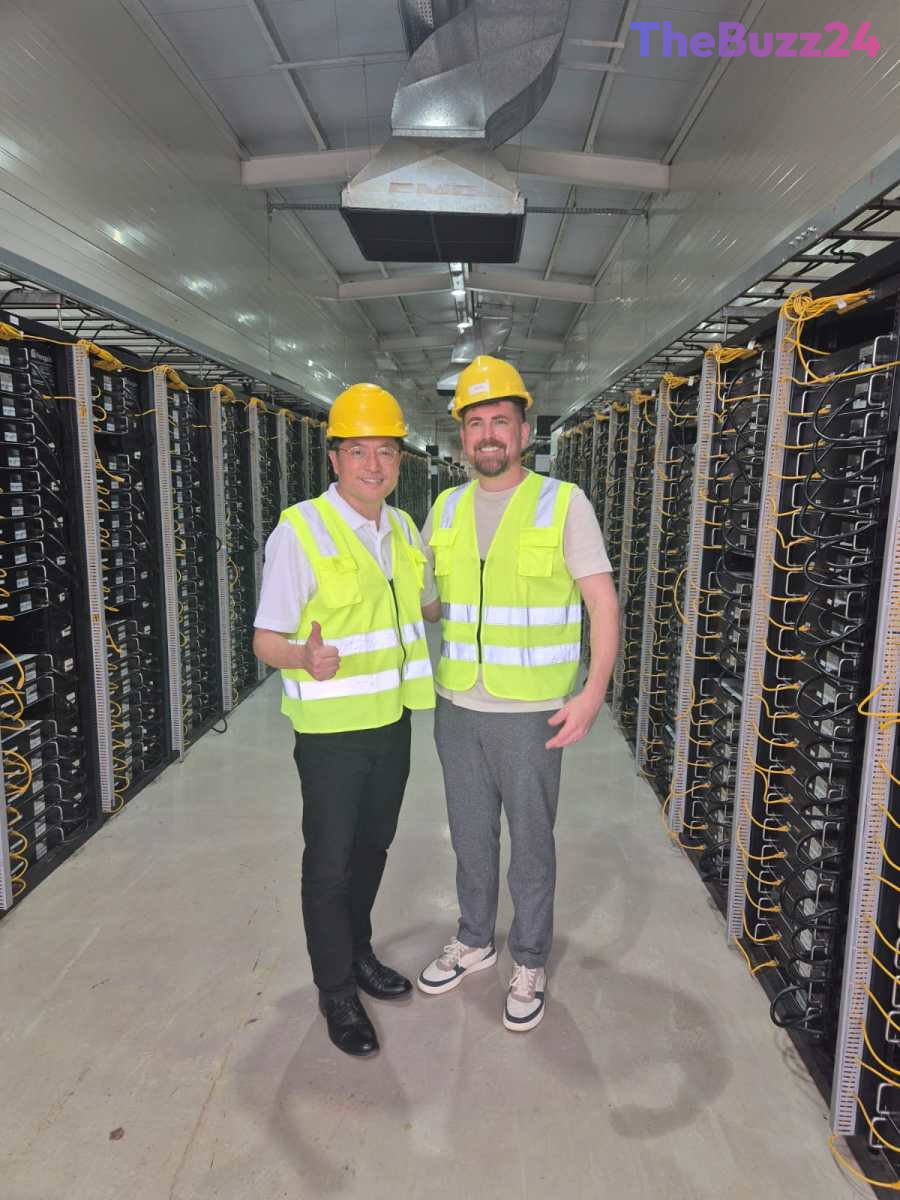
General Compute Secures $15 Million to Revolutionize AI Inference Efficiency
As the artificial intelligence sector matures, the industry is shifting its focus from the resource-heavy training phase to the critical challenge of inference—the process where AI models actively generate responses to user queries. General Compute, a burgeoning ‘inference neocloud’ startup, has emerged to address this bottleneck by deploying specialized hardware designed to maximize processing speed and operational efficiency.
The company recently announced a $15 million seed funding round, pushing its post-money valuation to $60 million. The investment, led by FUSE VC with participation from Carya Venture Partners and Village Global Ventures, will be used to scale the deployment of SambaNova hardware. Unlike standard GPUs that are primarily optimized for training large language models, the SambaNova architecture is specifically engineered for high-speed inference, promising throughput of 600 to 700 tokens per second—more than double the performance of typical industry-standard hardware.
Beyond raw speed, General Compute is prioritizing infrastructure flexibility to lower the barrier to entry for data centers. Because the SambaNova chips are air-cooled and energy-efficient, they can be integrated into existing facilities without the costly requirement of liquid cooling systems. This design choice allows the company to repurpose infrastructure, including former cryptocurrency mining sites, to rapidly expand its footprint.
This strategic focus on speed and cost-efficiency is essential for the rise of AI agents—autonomous systems that require high-throughput communication to function effectively. As the demand for real-time, agent-to-agent interaction grows, General Compute aims to provide the foundational infrastructure necessary to make these complex digital systems economically viable at scale.
Key Takeaways
- General Compute raised $15 million in seed funding to focus on high-speed AI inference hardware.
- The startup utilizes SambaNova chips, which offer significantly higher token-per-second throughput compared to traditional GPUs.
- By using air-cooled, energy-efficient hardware, the company can repurpose existing data centers and mining facilities to scale rapidly.
Editor’s Analysis & Impact
The rise of General Compute highlights a pivotal shift in the AI hardware market: the transition from ‘training-centric’ infrastructure to ‘inference-centric’ utility. While the initial AI boom was defined by the massive compute power required to build models, the current market is realizing that the long-term economic viability of AI depends on how cheaply and quickly those models can run in production. By targeting the inference bottleneck, General Compute is positioning itself to capture the growing demand for AI agents that require low-latency, high-throughput processing. The ability to repurpose existing data center infrastructure, such as former crypto-mining sites, provides a significant competitive advantage in terms of time-to-market and capital expenditure. As AI agents become more prevalent, the industry will likely see a bifurcation between training hardware and specialized inference clouds, with companies like General Compute leading the charge toward optimized, real-time digital intelligence.
Frequently Asked Questions
Q: What is the primary difference between AI training and AI inference?
A: Training is the process of teaching an AI model using massive datasets, which requires immense computational power. Inference is the phase where the trained model is deployed to process new data and generate responses in real-time.
Q: Why is General Compute using SambaNova chips instead of standard GPUs?
A: SambaNova chips are specifically architected for the unique computational demands of inference, allowing for higher token-per-second speeds and better energy efficiency compared to traditional GPUs, which are often better suited for the training phase.
AI Disclosure: This article is based on verified data and official reports. Our Team and AI have cross-referenced every financial detail with primary sources to ensure total accuracy.
More from this Category