NASA’s Roman Space Telescope Poised to Uncover 100,000 New Worlds
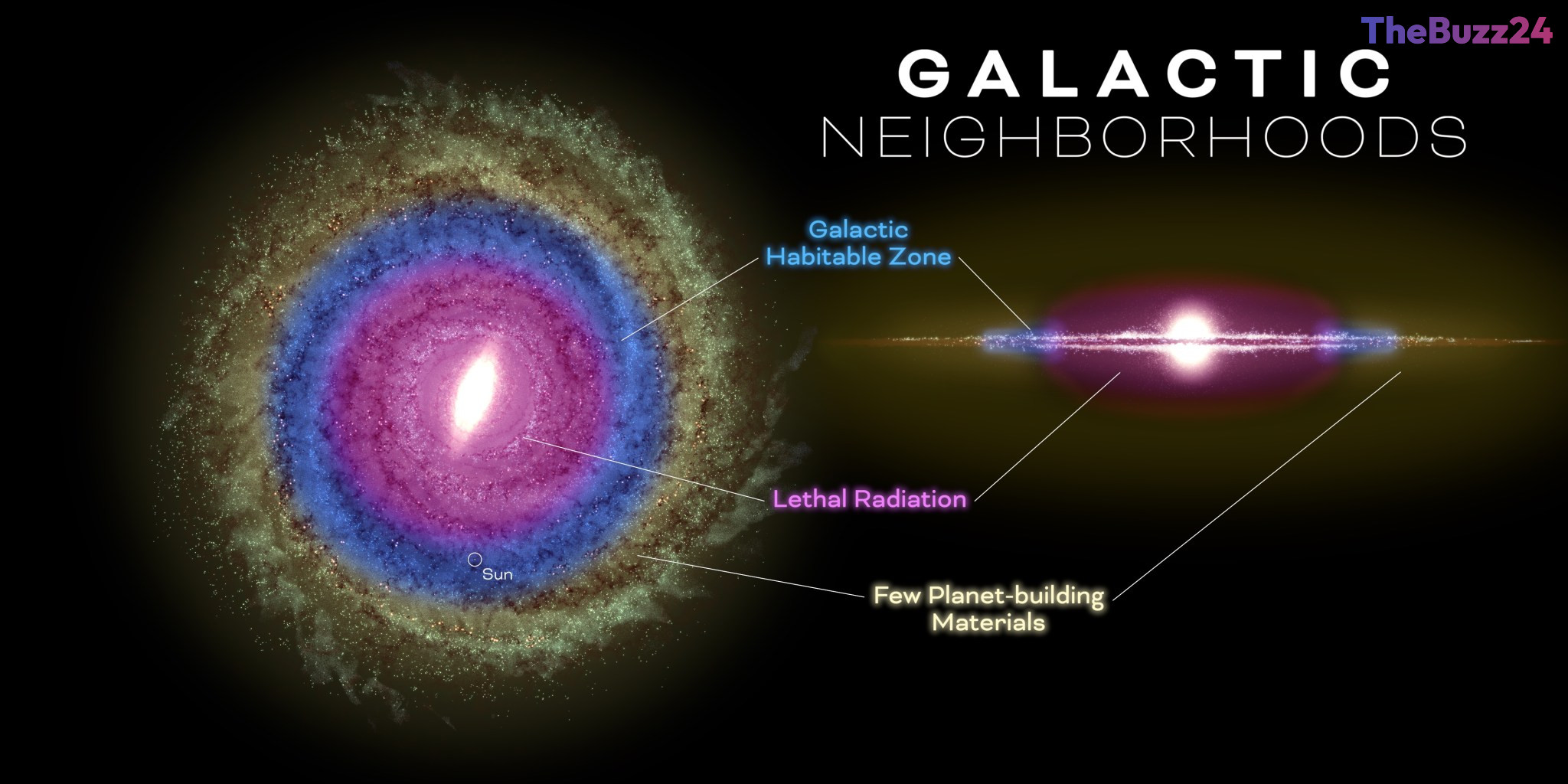
The Nancy Grace Roman Space Telescope is gearing up for a landmark mission that promises to fundamentally alter our understanding of the Milky Way. By conducting an expansive survey of the galaxy, the telescope aims to identify approximately 100,000 new exoplanets, a massive leap forward from the roughly 6,300 worlds currently cataloged by astronomers. The mission will specifically target the dense galactic bulge, an area that has remained largely underexplored, to gain deeper insights into how planetary formation differs across various galactic environments.
To capture this vast amount of data, the mission will utilize a sophisticated combination of the transit method and gravitational microlensing. While the transit method will help identify large, high-temperature planets by observing periodic dimming in stars, gravitational microlensing will allow scientists to detect smaller, Earth-like planets in wider orbits that are typically impossible to spot with current technology. This dual-detection strategy ensures a comprehensive mapping of planetary systems, stretching from the crowded center of the galaxy to its distant outer reaches.
Beyond mere discovery, the telescope is designed to perform detailed atmospheric analysis using advanced infrared technology. By studying the heat signatures and wind patterns of “hot Jupiters,” the mission will provide a statistical framework for understanding planetary climates on a galactic scale. This data will serve as a vital complement to existing observatories, such as the James Webb Space Telescope, allowing for a more holistic view of planetary evolution.
To manage the massive influx of information, researchers are currently refining machine learning models and synthetic simulations to ensure accuracy and efficiency. By monitoring hundreds of millions of stars, the Roman mission will ultimately address one of humanity’s most profound questions: whether solar systems like our own are common or rare. The resulting data will be released to the public, fostering a new era of collaborative global space exploration.
Key Takeaways
- The Roman Space Telescope aims to discover 100,000 new exoplanets, significantly expanding the current catalog of 6,300 known worlds.
- The mission will use a combination of transit and gravitational microlensing techniques to detect planets of varying sizes and orbital distances.
- Advanced infrared capabilities will allow for the study of planetary atmospheres and climates, providing a statistical overview of galactic planetary systems.
Editor’s Analysis & Impact
The Nancy Grace Roman Space Telescope represents a paradigm shift in exoplanetary science, moving from individual discovery to large-scale statistical analysis. By focusing on the galactic bulge and utilizing microlensing, the mission addresses a critical blind spot in our current astronomical data. The industry impact is significant; the sheer volume of data expected will necessitate advancements in AI and machine learning for data processing, likely creating a ripple effect in how space agencies handle ‘big data’ in astrophysics. Furthermore, by making this data publicly available, the mission democratizes space research, inviting global participation. The long-term implication is a clearer understanding of the prevalence of Earth-like planets, which is a foundational step in the search for extraterrestrial life and the broader understanding of our galaxy’s history.
Frequently Asked Questions
Q: How will the Roman Space Telescope find planets that are usually invisible?
A: The telescope uses gravitational microlensing, a technique that detects planets by observing how their gravity bends the light of a distant star, allowing for the discovery of planets in wide orbits that other methods miss.
Q: Will the data from this mission be available to the public?
A: Yes, the mission is designed to make its massive dataset publicly available, encouraging the global scientific community to participate in analyzing the findings.
AI Disclosure: This article is based on verified data and official reports. Our Team and AI have cross-referenced every financial detail with primary sources to ensure total accuracy.
More from this Category