NASA Deploys Mobile Wastewater Treatment Lab to Advance Lunar and Martian Sustainability
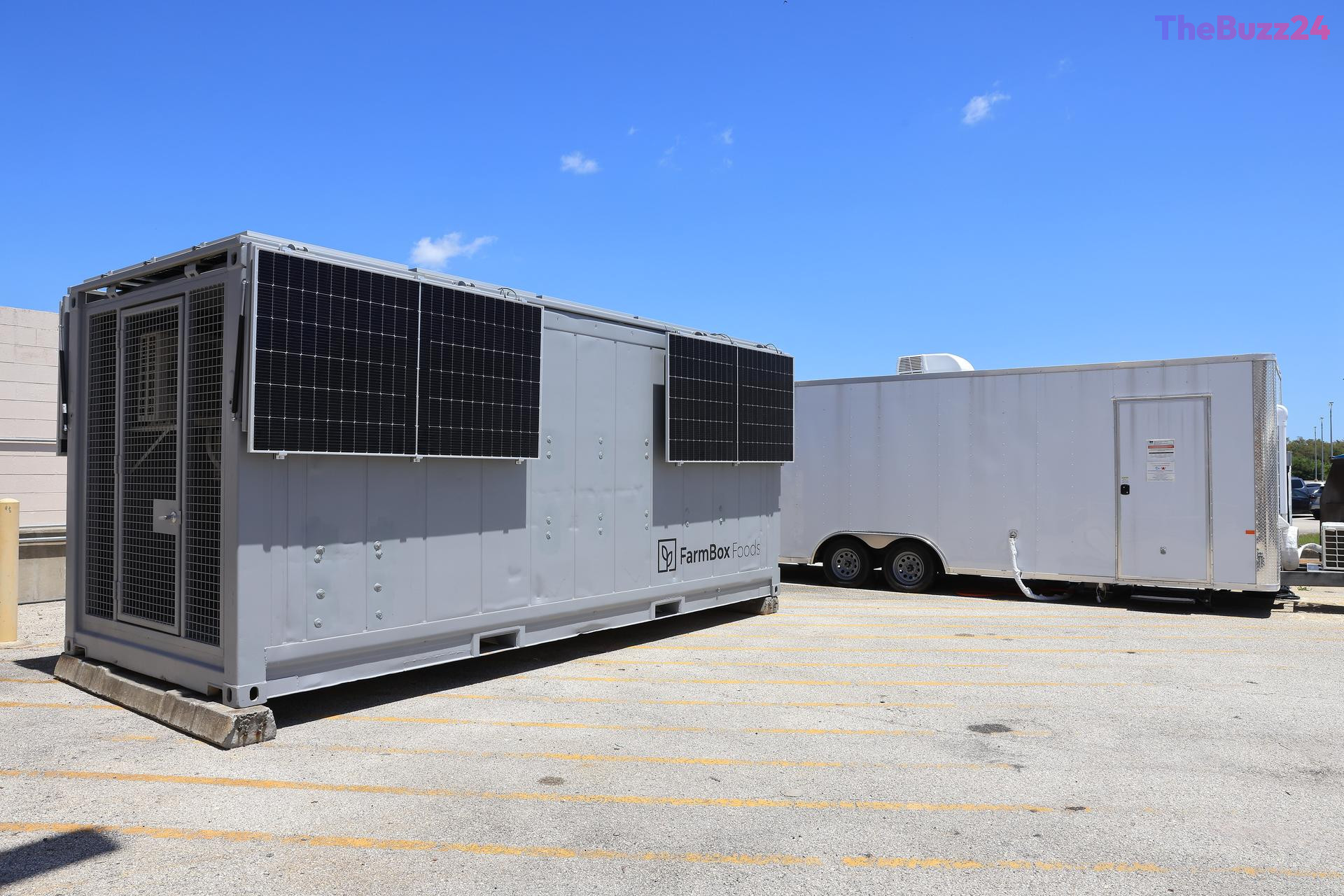
NASA has initiated a critical testing phase for its Divergent Deployable Wastewater Treatment Facility, a mobile laboratory designed to transform human waste into essential resources for long-duration space missions. The facility, which is housed within a specialized trailer, recently arrived at the University of North Dakota. There, it will be integrated into the university’s Integrated Lunar/Martian Analog Habitat to simulate the rigorous conditions astronauts will face on the Moon and Mars, where resupply missions from Earth are not feasible.
The system utilizes a unique ‘divergent’ approach, separating waste streams—such as urine, hygiene water, and food waste—at the source. By treating these streams individually through three distinct bioreactors, the facility can efficiently recover nutrients and water. These recovered nutrients are then used to support a hydroponic vertical garden, effectively closing the life support loop. This method is significantly more efficient for small crews than traditional systems, as it allows for the precise processing of highly concentrated waste.
Beyond water recovery and food production, the project explores the potential for in-space manufacturing. Researchers are investigating how nutrient-rich water can feed microbes to produce materials suitable for 3D printing, potentially allowing astronauts to create replacement parts or construction binders using lunar or Martian regolith. This circular economy model is a cornerstone of the agency’s strategy to reduce dependence on Earth-supplied consumables and establish a permanent human presence in deep space.
The ongoing collaboration with the University of North Dakota serves as a vital bridge between laboratory-scale validation and real-world application. By testing system reliability, crew training requirements, and operational limits in an analog environment, NASA aims to refine the technology for future missions. Insights gained from these trials will likely inform subsequent high-fidelity simulations, including potential integration into long-duration isolation studies at the Johnson Space Center.
Key Takeaways
- NASA's new mobile wastewater facility separates waste streams to efficiently recover water and nutrients for hydroponic crop production.
- The system is currently undergoing real-world testing at the University of North Dakota to simulate the challenges of long-duration lunar and Martian habitats.
- Beyond life support, the project explores using recovered waste to produce materials for 3D printing, supporting a circular economy for deep-space exploration.
Editor’s Analysis & Impact
The development of the Divergent Deployable Wastewater Treatment Facility represents a paradigm shift in space exploration logistics. As NASA moves toward the Artemis program and eventual crewed missions to Mars, the ‘Earth-independent’ model is no longer optional; it is a mission-critical requirement. By focusing on bioregenerative life support, the agency is effectively solving the mass-to-orbit constraint that has historically limited mission duration. The integration of 3D printing materials derived from waste streams suggests a future where habitats are not just maintained, but actively grown and repaired using local resources. This technology has significant implications for terrestrial sustainability as well, particularly in resource-scarce environments on Earth, potentially offering a blueprint for high-efficiency water and nutrient recycling systems in remote or disaster-stricken regions.
Frequently Asked Questions
Q: Why does the system treat different types of wastewater separately?
A: Treating waste streams separately allows the system to use specialized bioreactors for each type of waste, which is more efficient for small crews where waste is highly concentrated and contains varying levels of salts, solids, and nutrients.
Q: How does this facility contribute to 3D printing in space?
A: Researchers are studying how nutrient-rich water from the treatment process can feed microbes that produce lactic acid. This can be converted into polylactic acid, a material that can be used as a binder for 3D printing with lunar or Martian soil.
AI Disclosure: This article is based on verified data and official reports. Our Team and AI have cross-referenced every financial detail with primary sources to ensure total accuracy.
More from this Category