Fusion Startup Focused Energy Secures $240 Million to Advance Laser-Driven Power
Focused Energy has successfully closed an oversubscribed $240 million Series A funding round, marking a significant milestone in the race to commercialize fusion power. This latest injection of capital brings the company’s total private funding to $300 million, complemented by an additional $200 million in grants. The substantial financial backing positions the Germany-based firm as one of the most well-capitalized players in the emerging fusion sector.
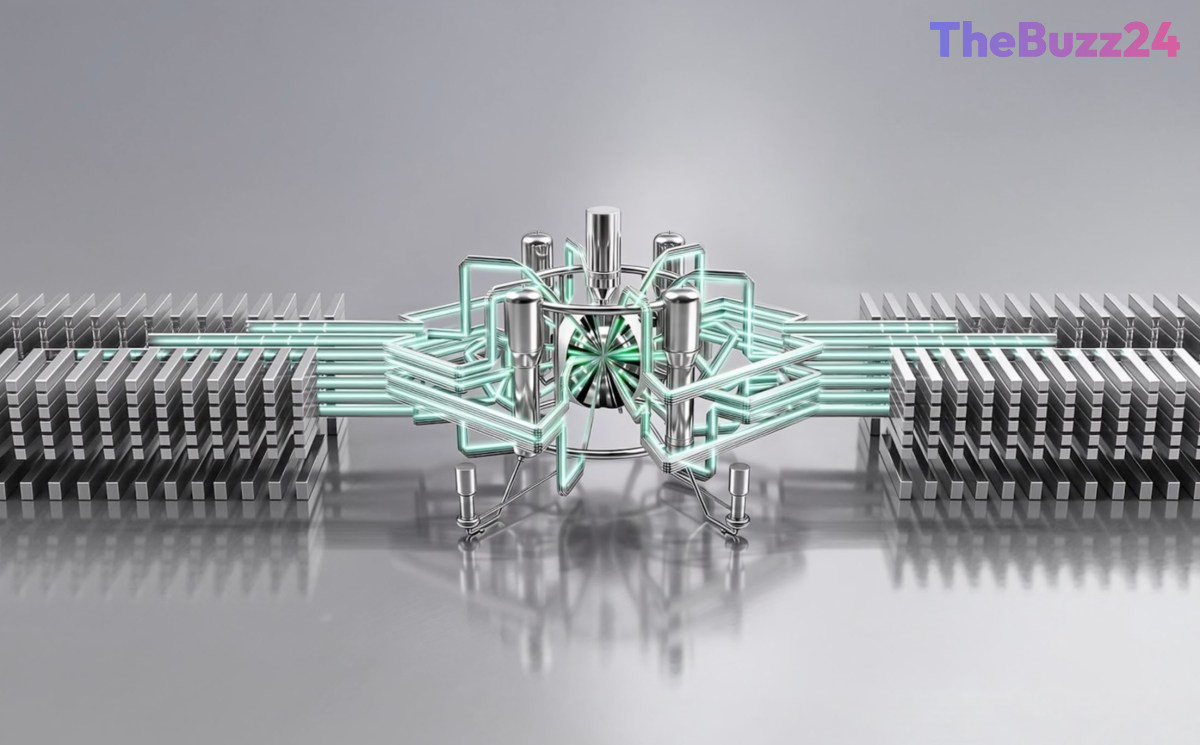
The company is pioneering an inertial confinement fusion approach, which utilizes high-powered lasers to compress fuel targets and trigger energy-releasing fusion reactions. By drawing on foundational research from the National Ignition Facility (NIF), Focused Energy is refining its technology to move beyond experimental success toward practical, high-frequency energy production. A key strategic hire, former NIF fuel target designer Debbie Callahan, is currently leading efforts to simplify target manufacturing to meet the rigorous demands of a commercial reactor.
Unlike the complex indirect-drive methods used in previous experiments, Focused Energy is developing a ‘direct drive’ system. This design eliminates the need for intermediate components like the hohlraum, allowing lasers to compress fuel pellets directly. This shift is expected to significantly enhance reactor efficiency. The company plans to deploy its first demonstration system, dubbed ‘Lighthouse,’ at a decommissioned nuclear site in Germany, with support from major utility partner RWE and various innovation-focused investment funds.
Key Takeaways
- Focused Energy raised $240 million in Series A funding, bringing total private capital to $300 million.
- The company is developing a 'direct drive' laser fusion reactor designed to operate at a frequency of 10 shots per second.
- The firm plans to build its 'Lighthouse' demonstration system at a former nuclear power plant site in Germany.
Editor’s Analysis & Impact
The fusion energy sector is currently experiencing a surge in investor confidence, evidenced by a string of massive funding rounds for companies like Focused Energy, Thea Energy, and others. This capital influx signals a transition from purely theoretical research to the engineering-heavy phase of commercialization. By focusing on direct-drive laser technology and high-frequency firing rates, Focused Energy is addressing the primary bottleneck of fusion: scalability. The involvement of established utility players like RWE suggests that the energy industry is beginning to view fusion as a viable long-term successor to traditional fission and fossil fuels. While technical hurdles regarding fuel target manufacturing and laser efficiency remain, the current momentum indicates that the timeline for a functional fusion demonstration is accelerating, potentially reshaping the global energy landscape within the next decade.
Frequently Asked Questions
Q: What is the difference between direct drive and indirect drive fusion?
A: Indirect drive uses lasers to heat a gold cylinder (hohlraum) which then emits X-rays to compress the fuel, whereas direct drive uses lasers to compress the fuel pellet directly, which is generally considered more efficient.
Q: Why is the frequency of 'shots' important for fusion reactors?
A: To generate a continuous supply of electricity, a fusion reactor must trigger fusion reactions thousands of times per day. Increasing the frequency of laser shots is essential to moving from a one-off scientific experiment to a reliable power plant.
AI Disclosure: This article is based on verified data and official reports. Our Team and AI have cross-referenced every financial detail with primary sources to ensure total accuracy.
More from this Category