Fighting Fire with Fire: How Australia’s Savanna Prescribed Burns Are Curbing Catastrophic Wildfires
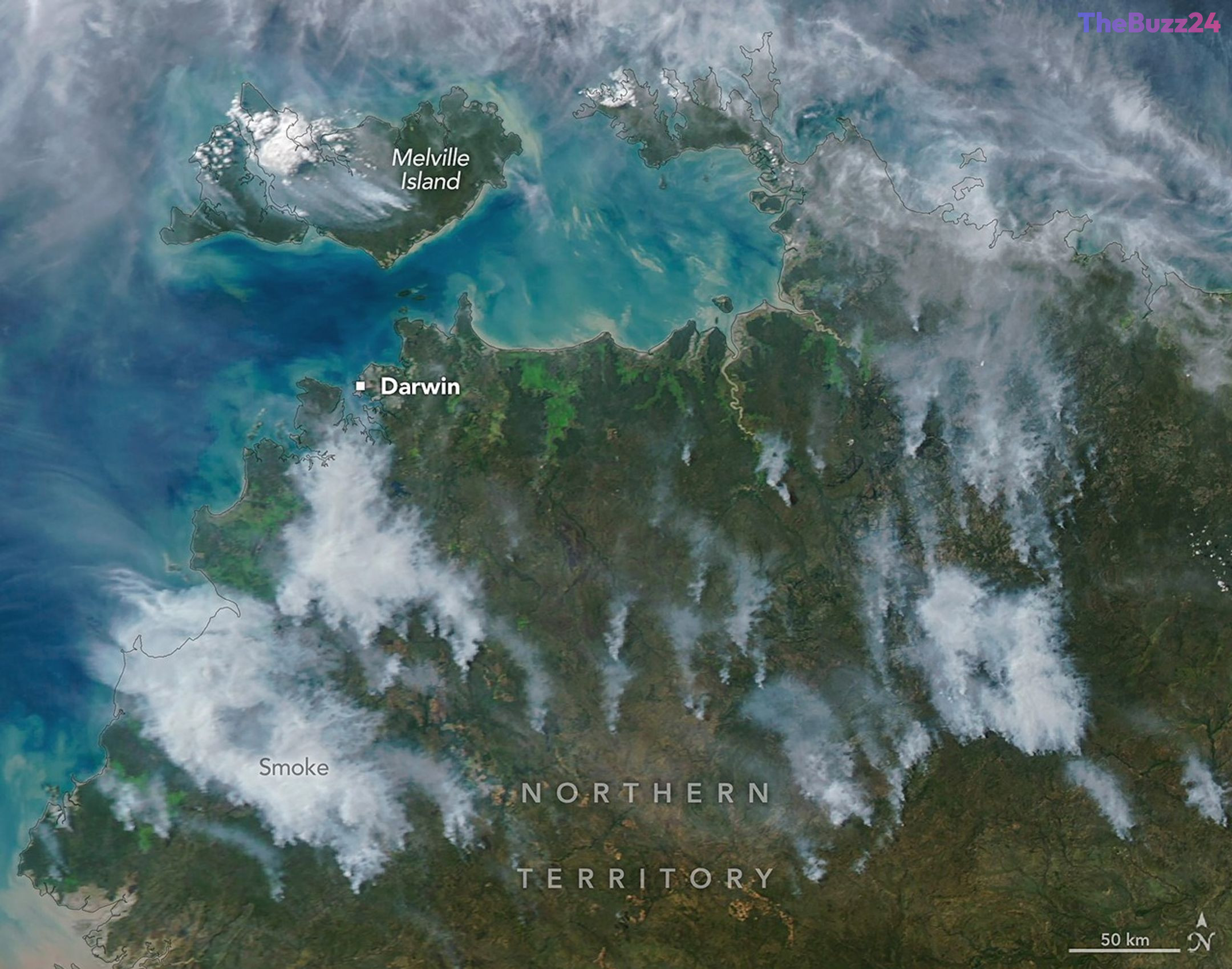
During May and June, satellite sensors regularly detect rising plumes of smoke across the Top End and Arnhem Land regions of Australia’s Northern Territory. While these blazes can appear massive and alarming from space, they are actually part of a highly coordinated, intentional effort to manage the landscape. By proactively burning fire-adapted grasses and underbrush early in the dry season, land managers are successfully mitigating the threat of catastrophic, late-season wildfires.
These prescribed burns are typically ignited in the mornings when weather conditions are cooler and more stable. As the day progresses, moderate winds carry the smoke away, creating visible plumes that can resemble natural wildfires. This strategic burning targets the region’s tropical savanna ecosystems, consuming accumulated fuel loads before the peak of the dry season, which spans from May through September.
Over the past several decades, local land managers have successfully integrated deep-rooted Indigenous land management practices with modern remote sensing technologies. Collaborative initiatives, such as the West Arnhem Land Fire Abatement (WALFA) project, empower traditional owners to plan and execute controlled burns with high precision. This combination of ancient ecological wisdom and modern satellite tracking has revolutionized regional fire management.
Recent analyses of satellite observations confirm that this preventative strategy is yielding significant environmental benefits. By shifting fire activity from the late dry season to the cooler, early dry season, the region has experienced a substantial reduction in high-intensity, destructive wildfires. Furthermore, this management shift has led to a measurable decrease in greenhouse gas emissions, proving that proactive fire management is a vital tool in combating climate change.
Key Takeaways
- Land managers in Australia's Northern Territory are utilizing early-season prescribed burns to prevent catastrophic late-season wildfires.
- The initiative successfully merges ancient Indigenous ecological knowledge with modern satellite monitoring technology.
- Data shows that shifting fire activity to the early dry season has significantly reduced high-intensity blazes and lowered overall carbon emissions.
Editor’s Analysis & Impact
As climate change accelerates, wildfire seasons worldwide are becoming longer, more intense, and increasingly destructive. The success of the Arnhem Land fire abatement projects demonstrates that proactive, culturally integrated land management is an exceptionally effective strategy for climate adaptation. By reducing late-season, high-intensity fires, these programs not only protect biodiversity but also generate valuable carbon credits by lowering greenhouse gas emissions. This model offers a highly scalable blueprint for other fire-prone regions globally, such as the western United States and Mediterranean Europe. It highlights the immense value of respecting and funding Indigenous ecological stewardship, proving that traditional practices, when paired with modern satellite data, can solve complex modern environmental crises.
Frequently Asked Questions
Q: What is the purpose of prescribed burning in Australia's Northern Territory?
A: Prescribed burning is used to intentionally clear dry underbrush and grass early in the dry season. This creates natural firebreaks and reduces the fuel load, preventing larger, uncontrollable, and highly destructive wildfires from occurring during the hotter, windier late-dry-season months.
Q: How do traditional practices play a role in this modern fire management strategy?
A: Programs like the West Arnhem Land Fire Abatement project combine thousands of years of Indigenous ecological knowledge regarding seasonal burning with modern satellite tracking and weather forecasting to optimize the timing, safety, and effectiveness of the burns.
Q: What are the environmental benefits of early-season burning?
A: Early-season fires burn at a much lower intensity, which preserves mature trees, protects wildlife habitats, and results in a significant reduction in greenhouse gas emissions compared to high-intensity late-season wildfires.
AI Disclosure: This article is based on verified data and official reports. Our Team and AI have cross-referenced every financial detail with primary sources to ensure total accuracy.
More from this Category