Apple Expands Women’s Health Features with New Perimenopause and Menopause Tracking Tools
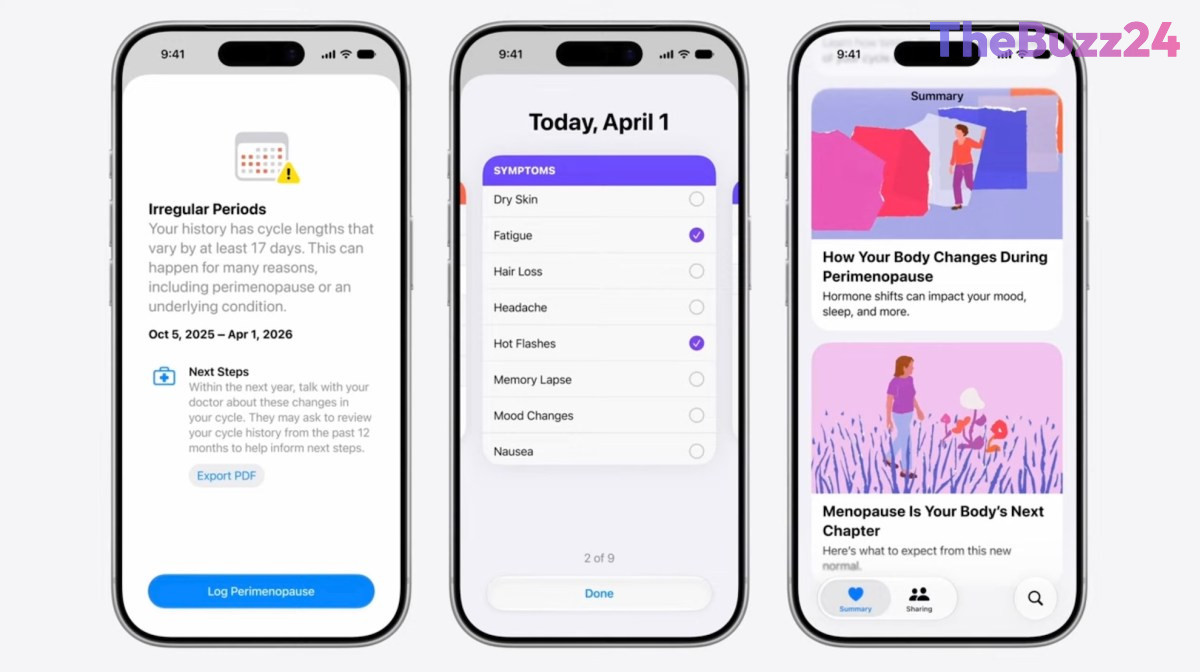
Tech giant Apple is deepening its commitment to women’s health by introducing dedicated perimenopause and menopause tracking capabilities to its Health ecosystem. Announced during the company’s annual Worldwide Developers Conference (WWDC 2026), the new features will integrate directly into the existing cycle-tracking application on iOS and Apple Watch. This update aims to help users identify the early signs of hormonal transitions by analyzing changes in their menstrual cycles over time.
Since first launching its cycle-tracking tool in 2019, Apple has steadily expanded its suite of reproductive health features. The latest update addresses a massive and historically underserved demographic. With an estimated 1.1 billion postmenopausal women globally, the market for digital health solutions tailored to midlife women’s health is experiencing unprecedented growth. This shift is also reflected in the venture capital landscape, where startups like Midi Health recently secured a $100 million Series D funding round, propelling the company to a $1 billion valuation.
Under the new update, users will receive proactive notifications when their recorded cycle patterns indicate they may be entering perimenopause. According to Stacey Ford, Apple’s Vice President of OS Product Management, the platform will also allow users to log specific symptoms and access curated educational resources. This data-driven approach is designed to empower women with actionable insights, making it easier for them to initiate informed conversations with their healthcare providers.
Key Takeaways
- Apple announced new perimenopause and menopause tracking features for its Health app and Apple Watch at WWDC 2026.
- The app will analyze menstrual cycle patterns to notify users of potential signs of perimenopause and allow them to log symptoms.
- The update taps into a rapidly growing 'femtech' market, driven by over 1.1 billion postmenopausal women globally and surging investor interest.
Editor’s Analysis & Impact
Apple’s move to integrate perimenopause and menopause tracking into its Health app marks a significant milestone for the ‘femtech’ industry. Historically, digital health tools have disproportionately focused on fertility and pregnancy, leaving older demographics underserved. By leveraging its massive hardware ecosystem—specifically the Apple Watch and iPhone—Apple is mainstreaming midlife women’s health. This transition not only enhances user retention among aging demographics but also positions Apple as a critical player in clinical conversations. The broader market implications are profound; as tech giants normalize menopause tracking, we can expect a surge in consumer demand for specialized telehealth services and personalized wellness products. This feature will likely pressure competitors like Google and Samsung to expand their own health metrics, accelerating innovation across the entire digital health sector.
Frequently Asked Questions
Q: How does Apple's new perimenopause tracking feature work?
A: The feature analyzes historical menstrual cycle data logged in the Health app. When it detects irregular patterns or changes consistent with the transition to menopause, it sends a notification to the user.
Q: What additional tools are included in this update?
A: In addition to cycle pattern notifications, users can log specific symptoms and access educational resources to help them better understand their bodies and prepare for discussions with their doctors.
Q: Why is the menopause health market growing so rapidly?
A: With over 1.1 billion postmenopausal women globally, there is a massive, underserved demographic seeking better tools to manage their symptoms. This has led to increased societal awareness and significant venture capital investment in digital health platforms.
AI Disclosure: This article is based on verified data and official reports. Our Team and AI have cross-referenced every financial detail with primary sources to ensure total accuracy.
More from this Category