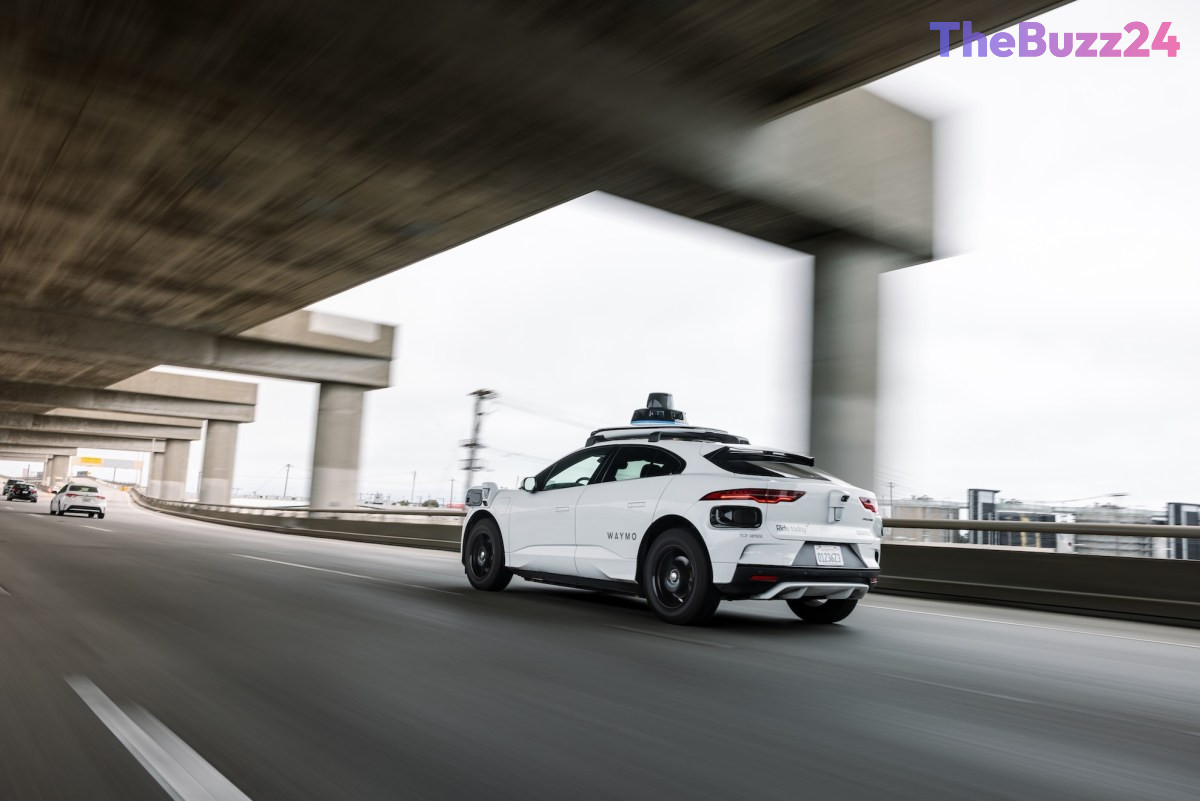
Waymo Unveils Advanced ‘Reference Driver’ Model to Benchmark Robotaxi Safety
Waymo has introduced a sophisticated computer model designed to provide a more precise comparison between autonomous driving software and human behavior. Developed in collaboration with TU Delft and detailed in a recent publication in Nature Communications, this new framework utilizes ‘active inference’—a theory suggesting that drivers continuously anticipate future scenarios to execute the safest possible maneuvers.
This innovation serves as a significant evolution from traditional crash testing. While the automotive industry has long relied on physical and virtual crash dummies to assess structural integrity, this new model acts as a behavioral benchmark. It allows engineers to simulate how a competent human driver would respond to complex traffic conflicts, moving beyond simple reactive maneuvers to capture the internal decision-making processes that occur leading up to a potential collision.
The ‘Reference Driver’ model is particularly timely as Waymo continues to expand its robotaxi operations into new urban markets. By providing a more accurate representation of human behavior, the company aims to better evaluate its systems during critical incidents. The model is capable of processing thousands of scenarios with high efficiency, offering a scalable solution for testing safety performance in virtual environments.
To foster industry-wide progress, Waymo is releasing the research code for the Reference Driver under an academic, non-commercial license. This move encourages researchers, educators, and developers to utilize the tool for scientific study and experimentation, potentially setting a new standard for how autonomous vehicle safety is measured and validated across the sector.
Key Takeaways
- Waymo developed a new 'Reference Driver' model using active inference to better simulate human decision-making in traffic.
- The model improves upon previous systems by capturing the 'internal surprise' and anticipatory behavior of human drivers before a crash occurs.
- Waymo is making the research code available under a non-commercial license to encourage broader academic and scientific collaboration.
Editor’s Analysis & Impact
The introduction of the ‘Reference Driver’ model represents a pivotal shift in the autonomous vehicle industry’s approach to safety validation. By moving away from purely reactive, last-second simulation models, Waymo is addressing a major criticism regarding how robotaxis are benchmarked against human drivers. This technological leap is essential for building public and regulatory trust as autonomous fleets scale. From a market perspective, this could force competitors to adopt similar, more nuanced behavioral benchmarks, potentially leading to a standardized industry metric for safety. Furthermore, by open-sourcing the research code, Waymo is positioning itself as a thought leader, likely aiming to influence the regulatory landscape by establishing its own methodology as the gold standard for evaluating autonomous driving performance in complex, real-world scenarios.
Frequently Asked Questions
Q: What is the 'Reference Driver' model?
A: It is a new computer model developed by Waymo and TU Delft that simulates human driving behavior using 'active inference,' allowing for a more accurate comparison between robotaxi performance and human decision-making in traffic.
Q: How is this model different from previous safety testing methods?
A: Unlike previous models that focused primarily on last-second, reactive maneuvers, the Reference Driver can simulate the anticipatory behavior and internal decision-making processes of a human driver leading up to a potential collision.
AI Disclosure: This article is based on verified data and official reports. Our Team and AI have cross-referenced every financial detail with primary sources to ensure total accuracy.
More from this Category