Global Markets Navigate Geopolitical Tensions and Tech Sector Shifts
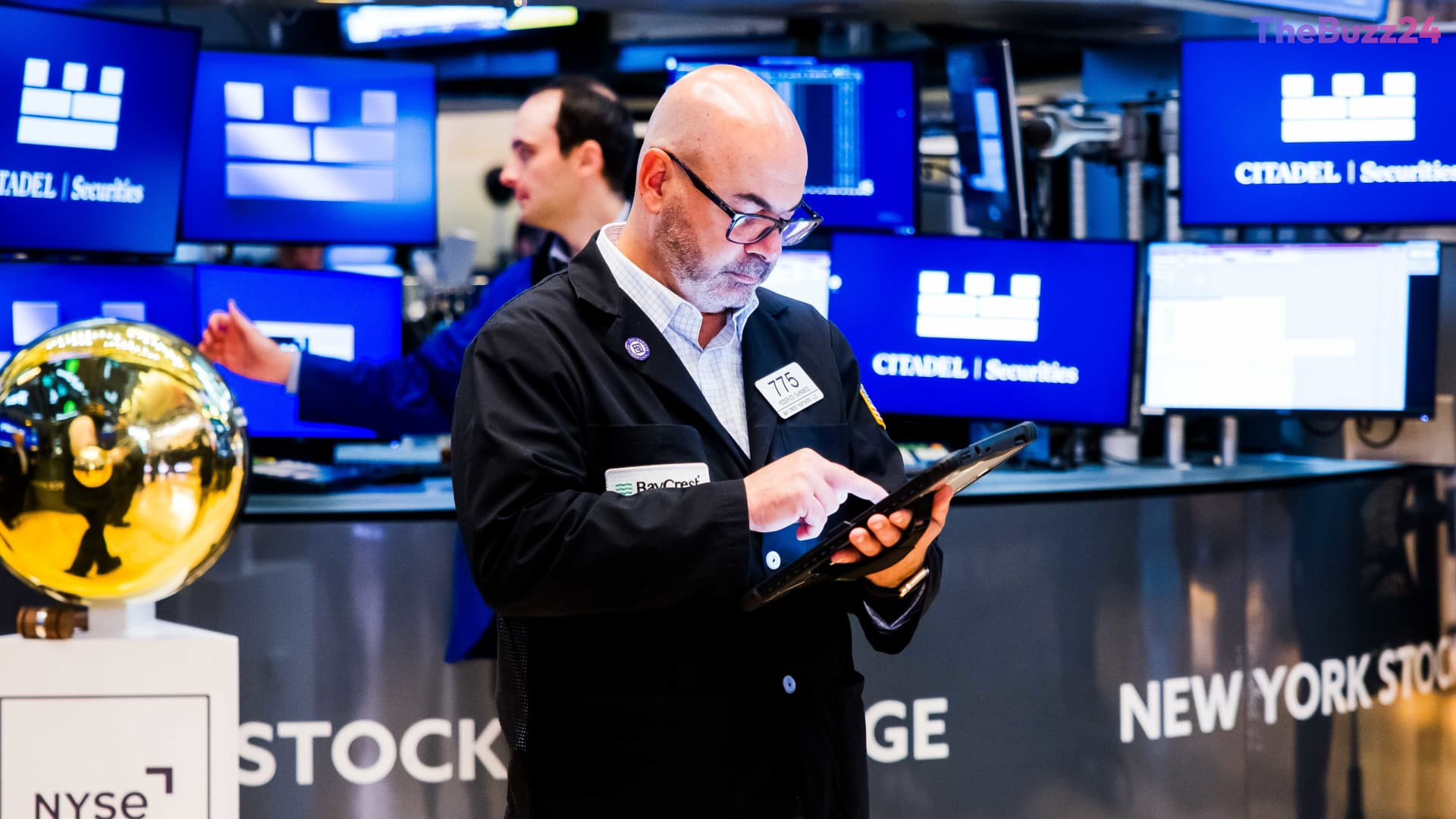
Global financial markets exhibited a mixed reaction as geopolitical developments unfolded and key corporate news emerged. U.S. stock futures saw gains early Thursday following the announcement of completed U.S. strikes against Iran, though reports from Gulf nations indicated ongoing hostile activity from Tehran. This contrasted with Wednesday’s regular trading session, which saw significant declines across the Dow, S&P 500, and Nasdaq Composite, partly attributed to escalating tensions in the Middle East and a downturn in the chip sector.
A major factor influencing market sentiment was Oracle’s performance. Shares of the software giant plummeted over 11% in extended trading after the company revealed plans to raise an additional $20 billion in equity and debt to fund its ambitious artificial intelligence buildout. This news weighed heavily on S&P 500 futures and the broader tech sector, signaling potential headwinds. Market strategists note a growing trend among investors to diversify away from the high-flying AI-driven tech trade that dominated much of the year. This rotation is channeling capital into sectors perceived as hedges, such as pharmaceuticals, biotech within healthcare, financials, and energy.
Across the globe, Asia-Pacific markets opened lower on Thursday, with South Korea’s Kospi experiencing a notable drop of 4.1%, while Japan’s Nikkei 225 declined by 2.3%. Australia’s S&P/ASX 200 also saw losses. Conversely, European stocks edged higher, with the pan-European Stoxx 600 gaining ground, primarily driven by a rise in oil and gas stocks as crude prices advanced nearly 3% amid the heightened Middle East conflict. West Texas Intermediate crude futures traded around $92 a barrel.
Beyond market fluctuations, several other significant developments captured attention. OpenAI CEO Sam Altman is scheduled to visit South Korea next week to engage with Samsung executives regarding potential AI cooperation, building on previous discussions about global AI infrastructure. Meanwhile, South Korean retail giant Coupang faced a record fine of 624.7 billion won ($409 million) for a massive data breach affecting over 37 million users and for the unauthorized collection of online user activities. The country’s privacy regulator attributed the incident to Coupang’s inadequate safety measures. In the cryptocurrency space, Lily Liu, president of public blockchain platform Solana, emphasized that the sector is still in its nascent stages, with Wall Street increasingly embracing digital assets as a new distribution channel.
Investors are also closely monitoring upcoming economic indicators, including May’s producer price index (PPI) reading and initial jobless claims, which will provide further insights into inflationary pressures and labor market health. Amidst this global economic and geopolitical landscape, investment firms are advising clients to prioritize high-quality assets in their fixed-income portfolios, citing increased fragmentation and the surging cost of complacency in a rapidly changing world.
Key Takeaways
- Global stock markets showed mixed reactions to U.S.-Iran tensions, with U.S. futures rising while Asian markets declined, and oil prices advanced.
- Oracle's plan to raise $20 billion for AI development led to a significant stock drop, highlighting investor sensitivity to tech sector financing and valuations.
- A notable market rotation is occurring, with investors shifting capital from tech into sectors like healthcare, financials, and energy as a hedge against volatility.
Editor’s Analysis & Impact
The current market landscape reflects a complex interplay of geopolitical risks, technological advancements, and shifting investor sentiment. The immediate rise in U.S. futures post-strikes suggests a short-term relief rally, but underlying tensions continue to fuel volatility, particularly in oil prices. Oracle’s stock decline, despite strong overall performance, underscores a growing investor scrutiny of AI-related expenditures and a potential re-evaluation of tech valuations. This, coupled with the observed rotation out of tech into more traditional sectors, indicates a broader market recalibration. The emphasis on high-quality fixed income by investment firms further highlights a cautious outlook amidst global fragmentation and inflationary pressures, suggesting a period of increased selectivity and risk aversion among investors.
Frequently Asked Questions
Q: What caused Oracle's stock to drop despite positive earnings?
A: Oracle's shares fell significantly after the company announced plans to raise $20 billion in equity and debt to fund its artificial intelligence initiatives. While the company reported an overall beat on its financial forecasts, the substantial capital raise for AI buildout appears to have concerned investors, leading to a sell-off.
Q: How are geopolitical tensions impacting global markets?
A: Heightened geopolitical tensions, particularly involving the U.S. and Iran, are creating volatility across global markets. While U.S. stock futures saw a temporary rise after the completion of strikes, Asian markets experienced declines. The conflict has also driven up oil prices, which in turn influences energy sector stocks and broader inflation concerns.
Q: What is the 'market rotation' mentioned in the article?
A: The market rotation refers to a trend where investors are shifting their capital out of certain sectors, primarily the high-growth technology sector that has been heavily driven by artificial intelligence enthusiasm, and into other areas. This includes sectors like pharmaceuticals, biotech within healthcare, financials, and energy, which are seen as potential hedges against tech volatility or as undervalued opportunities.
AI Disclosure: This article is based on verified data and official reports. Our Team and AI have cross-referenced every financial detail with primary sources to ensure total accuracy.
More from this Category