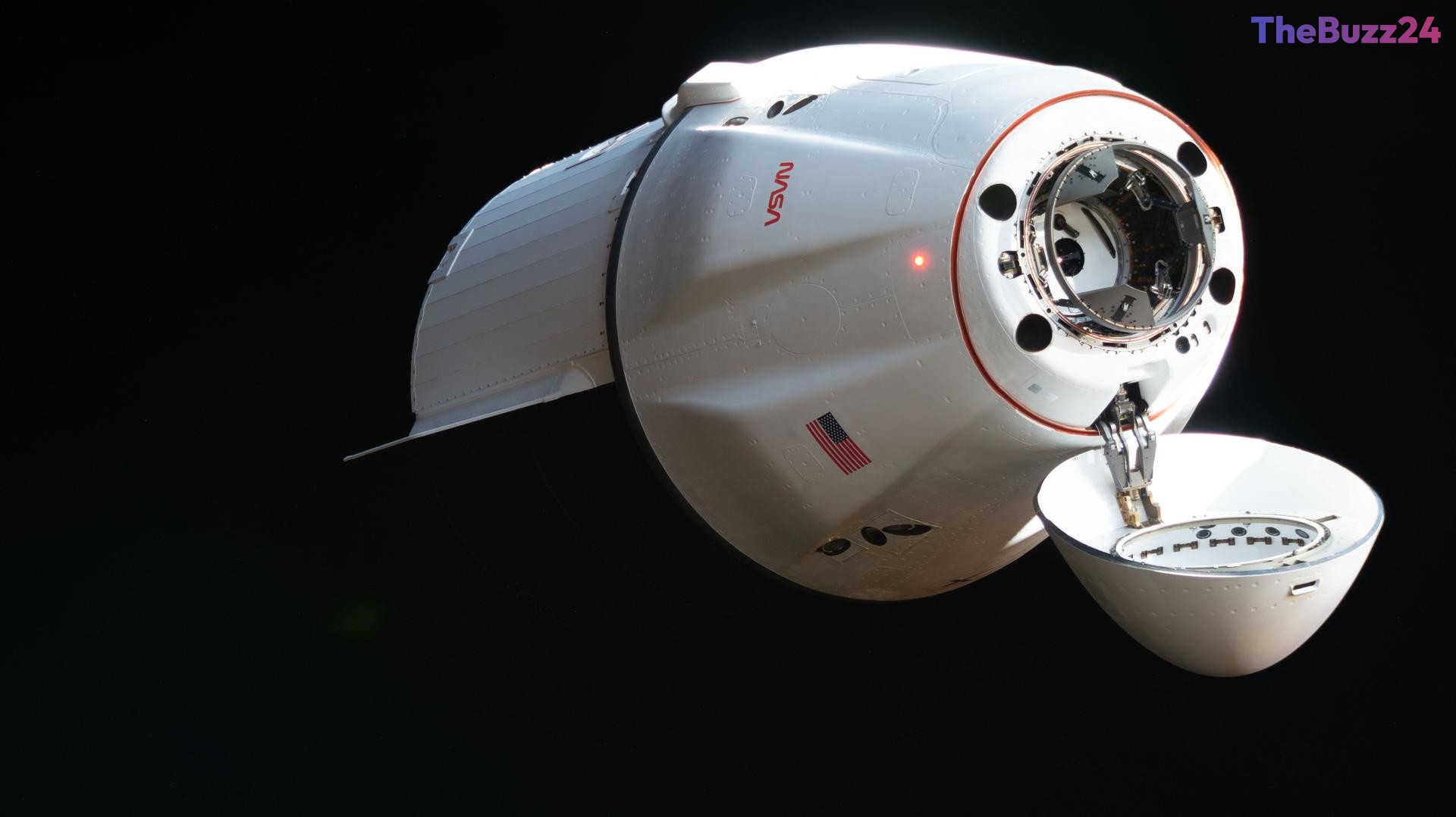
SpaceX Dragon Set for Return Mission from International Space Station
A SpaceX Dragon cargo spacecraft is preparing to depart the International Space Station on Tuesday, June 16, marking the conclusion of the 34th commercial resupply mission. The vessel, which arrived at the orbiting laboratory in mid-May with approximately 6,500 pounds of supplies, is scheduled to undock from the Harmony module at 12:05 p.m. EDT. Following its departure, the spacecraft will execute a series of thruster burns to safely distance itself from the station before beginning its descent back to Earth.
The mission is set to conclude with a splashdown off the coast of California on Wednesday, June 17, at approximately 5:08 a.m. PDT. This return flight is critical for the scientific community, as the Dragon is carrying a significant payload of research samples and hardware that have been utilized by the Expedition 74 crew. Among the items returning are bioprinted organ and cartilage tissues, data regarding cryogenic fuel storage, and DNA-inspired materials intended to assist in the development of new cancer treatments.
Beyond biological and medical research, the spacecraft is transporting essential hardware back to Earth for analysis. This includes an ocular imaging device used to monitor the eye health of astronauts, an air filtration system, and components from the station’s waste and hygiene compartment. The successful recovery of these materials is vital for ongoing efforts to refine long-duration spaceflight capabilities, supporting the broader goals of the Artemis program and future human exploration of Mars.
Key Takeaways
- The SpaceX Dragon spacecraft is scheduled to undock from the International Space Station on June 16, 2026.
- The mission is returning critical research, including bioprinted tissues and data for potential cancer treatments, to Earth.
- The cargo includes specialized hardware used for monitoring astronaut health and maintaining station life-support systems.
Editor’s Analysis & Impact
The 34th SpaceX commercial resupply mission underscores the increasing efficiency and necessity of the public-private partnership model in low Earth orbit. By utilizing the Dragon spacecraft for both delivery and retrieval, researchers can conduct complex experiments in microgravity that would be impossible to replicate on Earth. The specific focus on bioprinting and cancer research highlights how the International Space Station is evolving from a purely exploratory outpost into a high-tech laboratory for pharmaceutical and medical breakthroughs. As NASA shifts its focus toward the Artemis program and lunar exploration, the ability to rapidly cycle hardware and biological samples back to Earth becomes a cornerstone of long-duration mission readiness. This logistical capability is essential for mitigating the health risks associated with deep-space travel and optimizing life-support systems for future Mars expeditions.
Frequently Asked Questions
Q: What is the primary purpose of the returning SpaceX Dragon mission?
A: The mission is returning scientific research samples, including bioprinted tissues and medical data, along with hardware used for station maintenance and astronaut health monitoring.
Q: Where will the SpaceX Dragon spacecraft land?
A: The spacecraft is scheduled to splash down off the coast of California on June 17, 2026.
AI Disclosure: This article is based on verified data and official reports. Our Team and AI have cross-referenced every financial detail with primary sources to ensure total accuracy.
More from this Category