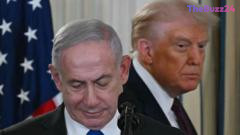
Netanyahu Faces Political Crisis Following US-Brokered Iran Ceasefire
Israeli Prime Minister Benjamin Netanyahu is navigating a precarious political landscape following the announcement of a US-brokered ceasefire agreement with Iran. The deal has effectively challenged the foundational pillars of Netanyahu’s long-standing political identity, specifically his self-styled role as a master of Washington diplomacy and his reputation as Israel’s ultimate guarantor of national security. With the agreement demanding a cessation of military operations in Lebanon, Netanyahu finds himself caught between the expectations of his primary international ally and the demands of his own hardline governing coalition.
The political fallout is intensifying as the October general election approaches. Opposition leaders have framed the situation as a binary failure, forcing the Prime Minister to choose between a direct confrontation with the United States or a perceived surrender of Israeli strategic interests. Public criticism from US leadership regarding recent military strikes has further emboldened domestic rivals, while members of the Likud party and far-right cabinet ministers have openly signaled their refusal to be bound by an agreement they believe compromises Israel’s safety.
Beyond the immediate political friction, the ceasefire has exposed the limitations of Netanyahu’s aggressive security doctrine. Despite extensive military campaigns in Gaza and beyond, the core objective of neutralizing regional threats remains elusive. With Israeli military resources stretched thin and the diplomatic path forward appearing increasingly narrow, the Prime Minister’s traditional narrative of strength is being tested. Analysts suggest that the current situation necessitates a fundamental reassessment of Israel’s strategy toward Tehran, as the traditional avenues for bypassing White House policy through US congressional support appear significantly diminished.
Key Takeaways
- The US-brokered ceasefire with Iran has created a significant diplomatic and political rift between the Netanyahu administration and the United States.
- Netanyahu faces a domestic political dilemma, caught between adhering to international agreements and satisfying his far-right coalition partners ahead of upcoming elections.
- The effectiveness of Israel's current aggressive security doctrine is under scrutiny as military resources face strain without achieving the total neutralization of regional threats.
Editor’s Analysis & Impact
The current geopolitical shift marks a pivotal moment for Israeli foreign policy. For decades, Netanyahu’s political capital was built on the premise of unique influence in Washington and an uncompromising security posture. The recent ceasefire suggests a waning of that influence, signaling that the US is prioritizing regional stability and de-escalation over the specific strategic preferences of the current Israeli government. This creates a ‘strategic trap’ for Netanyahu: if he defies the US, he risks isolation from his most critical security partner; if he complies, he risks losing his base to more hawkish elements within his coalition. Looking ahead, Israel will likely be forced to adopt a more restrained and realistic regional strategy, as the era of unilateral military action without US oversight appears to be closing.
Frequently Asked Questions
Q: Why is the US-Iran ceasefire considered a political problem for Benjamin Netanyahu?
A: The ceasefire limits Israel's ability to conduct military operations in Lebanon, which contradicts Netanyahu's security-focused campaign promises and puts him at odds with his own far-right cabinet ministers.
Q: How has the relationship between the US and Israel changed in this context?
A: The current situation indicates a shift where the US is exerting more direct control over regional security outcomes, leaving the Israeli government with less autonomy to pursue its own military objectives against Iran and its proxies.
AI Disclosure: This article is based on verified data and official reports. Our Team and AI have cross-referenced every financial detail with primary sources to ensure total accuracy.
More from this Category