Hope Blooms Amidst Tragedy: Ebola Survivors Celebrate Recovery in DRC
In the heart of the Democratic Republic of Congo’s Ituri province, the epicenter of a recent Ebola outbreak, moments of profound joy are emerging amidst the devastation. Healthcare workers and recovering patients are celebrating successful treatments, offering a beacon of hope in a region grappling with the deadly Bundibugyo species of the virus. This species has claimed over 140 lives since the outbreak was declared just over a month ago, with a mortality rate of approximately 20% among confirmed cases.
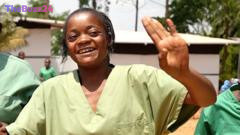
One such celebration marked the recovery of Daniel Kitambala, a 49-year-old who spent three weeks at an Ebola treatment center in Mongbwalu. After receiving two negative Ebola tests, Kitambala was escorted out by jubilant healthcare workers, who sang songs of praise. “That disease is terrible. I was feeling very ill [when I came here]. But God is great, I am well now,” Kitambala expressed, his relief palpable as he walked between the designated exit lanes. His recovery, and that of others like pastor Deogratias Kasereka, the first to be discharged, are crucial in combating local myths that hinder treatment efforts.
The outbreak has been complicated by deeply ingrained local beliefs, including the notion of a “coffin curse” and skepticism towards treatment centers. These myths have fueled violence, with treatment facilities being targeted and set ablaze, echoing past incidents in neighboring provinces. Dr. Richard Lukodu, medical director of Mongbwalu hospital, noted a significant shift in community behavior following early recoveries: “We have seen a huge difference in the community since the first patient recovered and returned home. More people are coming here now seeking treatment.” The establishment of a local laboratory has also expedited diagnosis, reducing waiting times for results from over a week to a single day.
Despite the progress and the visible signs of hope, health officials caution that the fight is far from over. The successful tracing and monitoring of all individuals who have come into contact with infected persons remain critical to containing the virus. While every recovery offers a much-needed morale boost, the potential for the virus to spread undetected means that optimism must be tempered with continued vigilance and robust public health interventions. The dedication of healthcare workers, who themselves are at high risk, and the growing trust in treatment centers are vital components in overcoming this challenging epidemic.
Key Takeaways
- Despite a significant death toll from the Bundibugyo Ebola strain in DRC's Ituri province, successful patient recoveries are fostering hope and encouraging more people to seek treatment.
- Local myths and misinformation, such as the 'coffin curse,' have complicated outbreak control efforts, leading to violence against treatment centers, but community trust is slowly being rebuilt.
- While recoveries are a positive sign, health officials emphasize the ongoing need for comprehensive contact tracing and vigilance to fully contain the outbreak.
Editor’s Analysis & Impact
This outbreak in the Democratic Republic of Congo highlights the persistent challenges in combating viral epidemics in resource-limited settings. The interplay between public health interventions, community trust, and the spread of misinformation is a critical factor. The success of treatment centers, despite facing violence and skepticism, underscores the resilience of healthcare workers and the potential for recovery. However, the reliance on traditional beliefs and the difficulty in tracing contacts demonstrate the need for culturally sensitive communication strategies and sustained international support. The economic impact, though not detailed, is likely significant due to fear, disruption of daily life, and the cost of containment efforts. Future outlook depends heavily on continued efforts to build trust and improve diagnostic capabilities.
Frequently Asked Questions
Q: What is the Bundibugyo species of Ebola?
A: The Bundibugyo virus is one of the species of the Ebola virus. It was first identified in 2007 in Uganda and has been responsible for outbreaks in the region, known for its significant mortality rate.
Q: Why is misinformation a problem during Ebola outbreaks?
A: Misinformation can lead to fear, distrust of healthcare workers and facilities, and resistance to life-saving treatments and preventative measures. This can include beliefs that the disease is a curse or that treatment centers are harmful, which hinders containment efforts and can lead to violence.
Q: How is Ebola treated and what is the recovery process?
A: Ebola treatment focuses on supportive care, including rehydration, symptom management, and maintaining oxygen levels. Patients are isolated to prevent spread. Recovery requires two negative Ebola tests, spaced a certain period apart, to confirm the virus has been cleared from the body.
AI Disclosure: This article is based on verified data and official reports. Our Team and AI have cross-referenced every financial detail with primary sources to ensure total accuracy.
More from this Category