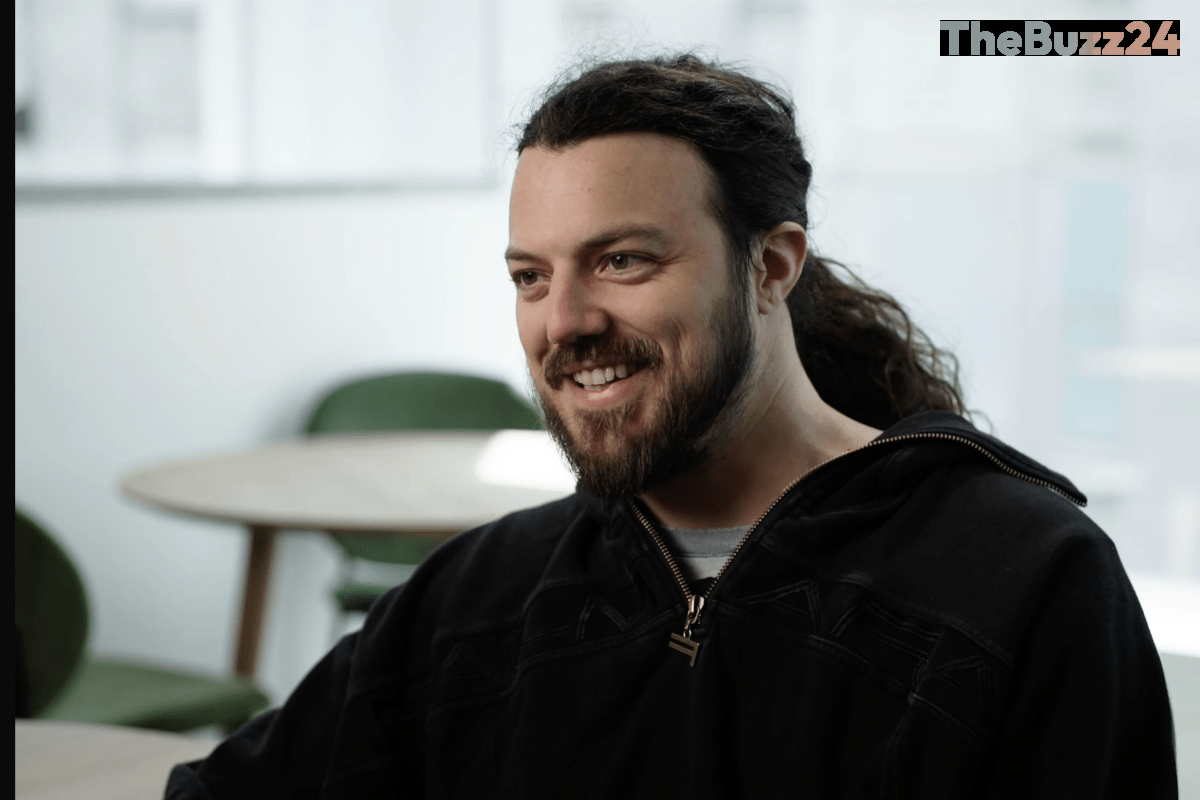
Probably Secures $9M to Tackle AI Hallucinations with Deterministic Validation
The persistent challenge of AI hallucinations—where large language models (LLMs) generate plausible but factually incorrect information—has prompted a new approach from the startup Probably. The company recently announced a $9 million seed funding round led by Andreessen Horowitz to develop a more rigorous framework for ensuring AI accuracy. By aiming for a 99.99% success rate, the firm is challenging the industry standard of accepting occasional errors in generative AI outputs.
Probably’s initial offering is a specialized data science tool designed to extract insights from complex datasets. Unlike standard LLMs that rely on probabilistic generation, this system utilizes a ‘data science mech suit’—a harness of deterministic validators that cross-reference AI-generated answers against raw data. If an output fails to align with the underlying facts, the system rejects it, forcing the model to refine its response. This methodology effectively treats AI engineering as an exercise in reducing ambiguity rather than relying solely on the model’s internal knowledge.
One of the most significant advantages of this architecture is its efficiency. Founder Peter Elias notes that by optimizing the surrounding validation harness, the system can function effectively on significantly smaller, less powerful models. Because the tool does not require the massive computational power of frontier-level models, it can operate on local hardware, such as a standard desktop computer. This shift not only lowers the barrier to entry for high-precision tasks but also drastically reduces the token costs that have become a major pain point for enterprises integrating AI into their workflows.
Looking ahead, the company plans to expand this validation-first engine beyond data science into other high-stakes sectors, including accounting and medical services. By prioritizing precision over raw model scale, Probably aims to provide a reliable alternative for industries where factual accuracy is non-negotiable. This approach stands in contrast to the current trajectory of major AI labs, which often benefit financially from the high token usage associated with iterative model corrections.
Key Takeaways
- Probably raised $9 million in seed funding to build a validation-based system that eliminates AI hallucinations.
- The company's 'data science mech suit' uses deterministic validation to ensure AI answers match raw data with 99.99% accuracy.
- By refining the context and validation harness, the system can run on smaller, local models, significantly reducing operational token costs.
Editor’s Analysis & Impact
The emergence of Probably signals a critical shift in the AI industry: a move away from the ‘bigger is better’ mentality toward specialized, high-precision engineering. As enterprises grapple with the high costs and reliability issues of frontier models, the demand for ‘deterministic AI’—systems that prioritize factual grounding over creative generation—is likely to surge. By decoupling accuracy from model size, Probably is positioning itself to disrupt the expensive status quo of AI infrastructure. If successful, this approach could force a broader industry reassessment of how we deploy LLMs in sensitive sectors like finance and healthcare, where the cost of a hallucination is far higher than the cost of implementing a robust validation harness.
Frequently Asked Questions
Q: How does Probably prevent AI hallucinations?
A: Probably uses a deterministic validation system that checks AI-generated answers against raw data. If the answer does not match the dataset, it is rejected, ensuring only verified information is presented.
Q: Why is running AI on smaller models an advantage?
A: Smaller models are cheaper to run, require less computational power, and can often be hosted on local hardware rather than expensive data centers, which significantly reduces token costs for businesses.
AI Disclosure: This article is based on verified data and official reports. Our Team and AI have cross-referenced every financial detail with primary sources to ensure total accuracy.
More from this Category