From Hardship to the Stars: The Inspiring Rise of NASA Engineer Rohit Goeptar
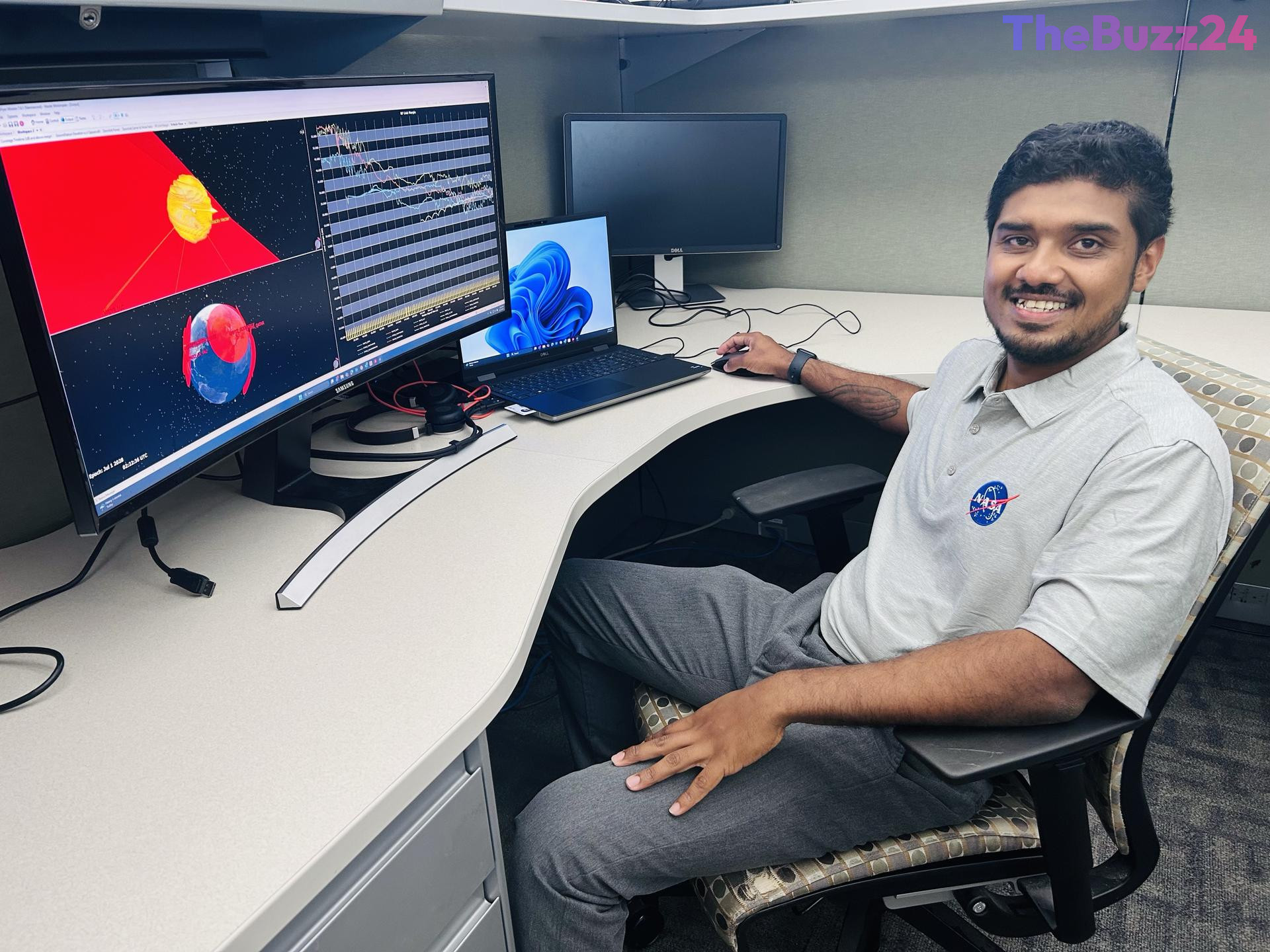
The journey to the stars is often paved with personal challenges, and for NASA electromagnetic and radio frequency analyst Rohit Goeptar, the path to the Kennedy Space Center was anything but conventional. Born into poverty in Suriname, Goeptar’s early life was marked by frequent moves between South America and California. After serving six years in the U.S. Marine Corps, where he developed critical communication skills during humanitarian missions, Goeptar faced significant personal adversity, including periods of homelessness. However, with the support of his wife and a relentless drive to succeed, he transitioned from a life of instability to a career at the forefront of space exploration.
While balancing the responsibilities of raising three children and pursuing dual degrees in computer and electrical engineering, Goeptar’s persistence paid off. An impromptu job interview while driving led to an internship at the Kennedy Space Center. His technical acumen quickly became apparent; within his first year, he identified a critical gap in the team’s radio frequency analysis models. By accounting for the pitch, yaw, and roll of rockets during flight, Goeptar developed a solution that significantly improved data synchronization for NASA and its commercial partners.
Today, as a civil servant within NASA’s Launch Services Program, Goeptar plays a vital role in ensuring the success of complex missions, including the Nancy Grace Roman Space Telescope and the Interstellar Mapping and Acceleration Probe. His work focuses on electromagnetic compatibility and ensuring that mission-critical systems communicate flawlessly with ground control. Beyond his professional contributions, Goeptar is currently pursuing a master’s degree in electrical engineering, driven by a desire to serve his country and inspire his children, one of whom dreams of becoming an astronaut.
Reflecting on his trajectory, Goeptar views his role at NASA as the ultimate way to give back to the nation that provided him with a second chance. His story serves as a testament to the power of resilience, highlighting how diverse experiences and a unique perspective can drive innovation in the aerospace industry. As he continues to advance his education and contribute to high-stakes space missions, Goeptar remains committed to the future of American space exploration and the success of the next generation.
Key Takeaways
- Rohit Goeptar overcame significant personal hardships, including homelessness and family tragedy, to become a civil servant at NASA.
- Goeptar improved NASA's radio frequency analysis by identifying and correcting inaccuracies in how rocket movement data was processed.
- His work currently supports major missions such as the Nancy Grace Roman Space Telescope and the Interstellar Mapping and Acceleration Probe.
Editor’s Analysis & Impact
The career trajectory of Rohit Goeptar underscores a broader shift in how major government agencies like NASA are prioritizing the recruitment of individuals with diverse, non-traditional backgrounds. By integrating professionals who possess both technical expertise and real-world resilience, the agency enhances its problem-solving capabilities. Goeptar’s specific contribution—correcting analytical models to account for dynamic rocket movement—demonstrates the value of ‘outside-the-box’ thinking in high-stakes engineering environments. As the commercial space sector continues to expand, the demand for analysts who can ensure seamless communication between disparate systems will only grow. This narrative also highlights the importance of workforce development programs that transition contractors into permanent civil service roles, ensuring that institutional knowledge and specialized talent are retained within the public sector for long-term mission success.
Frequently Asked Questions
Q: What is Rohit Goeptar's primary role at NASA?
A: Goeptar serves as an electromagnetic and radio frequency analyst, ensuring that electronic systems on rockets and satellites do not interfere with each other and maintaining reliable communication with ground control.
Q: How did Goeptar improve NASA's data analysis?
A: He identified that existing models failed to account for the pitch, yaw, and roll of a rocket during flight. He developed a solution to incorporate these movements, resulting in more accurate data synchronization.
AI Disclosure: This article is based on verified data and official reports. Our Team and AI have cross-referenced every financial detail with primary sources to ensure total accuracy.
More from this Category