NASA’s ERNEST Rover Prototype Shatters Speed Records in Desert Field Trials
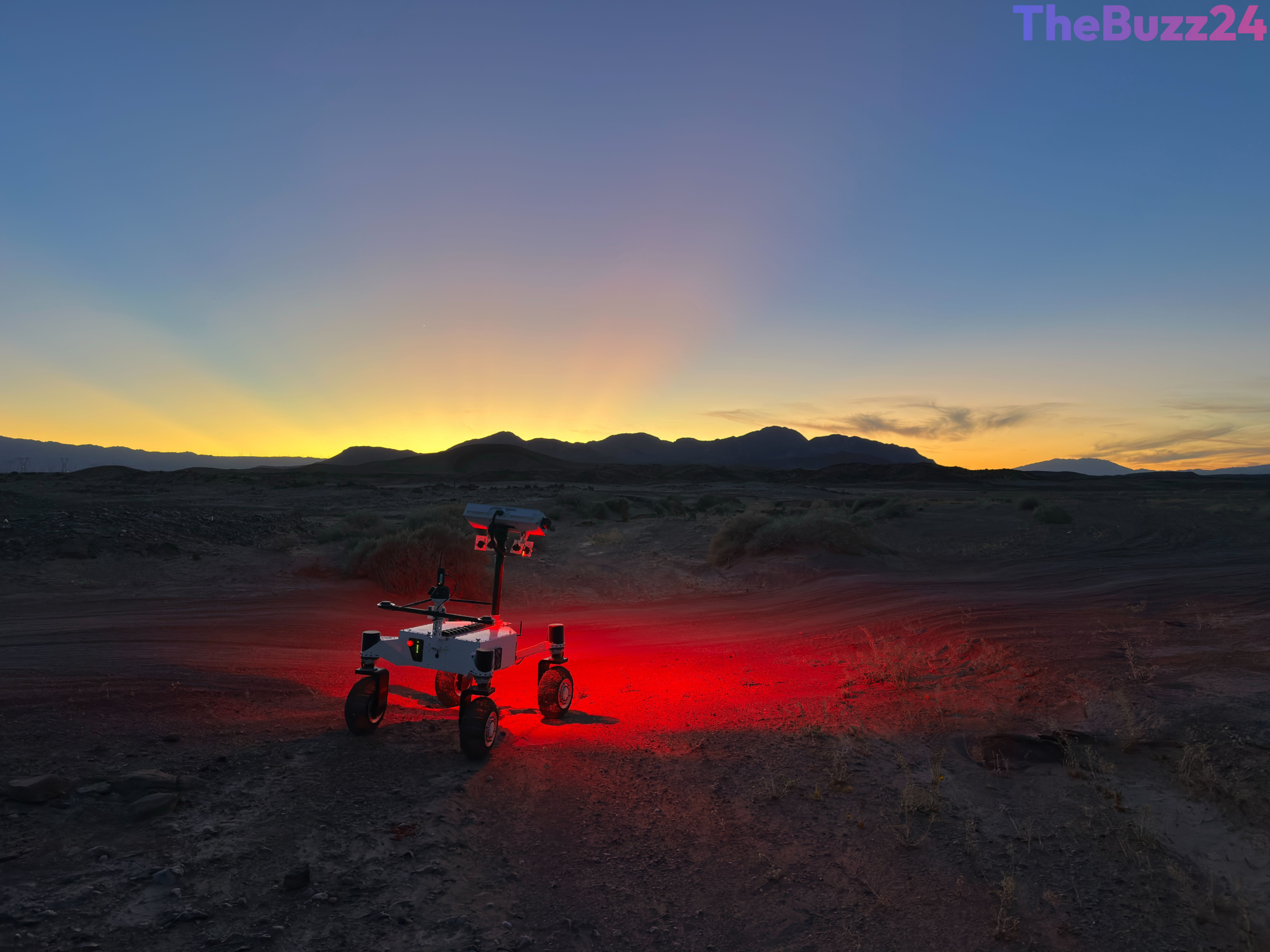
NASA’s Jet Propulsion Laboratory has successfully completed a rigorous field test of its latest robotic innovation, the Exploration Rover for Navigating Extreme Sloped Terrain (ERNEST). Conducted in the Colorado Desert near Plaster City, California, the trial focused on evaluating the rover’s advanced mobility and autonomous navigation capabilities in challenging, uneven environments.
During the 37-hour testing phase, ERNEST demonstrated a significant leap in performance, covering approximately 16 miles of rugged terrain. This achievement marks a tenfold increase in speed compared to the navigation capabilities of the Perseverance rover currently operating on Mars. By pushing the boundaries of speed and distance, the prototype serves as a critical testbed for autonomy software designed to support future lunar missions that demand rapid traversal across vast, unexplored landscapes.
Beyond speed, the engineering team prioritized testing the rover’s performance under varying lighting conditions. By operating during dusk, dawn, and throughout the night, researchers simulated the extreme shadows and visibility challenges common in the Moon’s polar regions. These tests ensure that the rover’s autonomous systems can reliably navigate high-contrast environments where traditional sensors might struggle.
Development of the ERNEST project began in 2022, initially supported by internal research funds before gaining backing from NASA’s Mars Exploration Program and the Exploration Science Strategy Integration Office. As the agency looks toward future lunar and planetary exploration, the success of this prototype provides a blueprint for more efficient, high-speed robotic missions that could fundamentally change how we map and study extraterrestrial surfaces.
Key Takeaways
- The ERNEST rover prototype achieved a travel speed ten times faster than the current Mars Perseverance rover.
- Field tests in the California desert successfully simulated the challenging lighting and shadow conditions of lunar polar regions.
- The project aims to develop autonomous software capable of high-speed, long-distance navigation for future lunar exploration missions.
Editor’s Analysis & Impact
The development of the ERNEST rover represents a strategic shift in NASA’s approach to planetary exploration. Historically, rover missions have prioritized safety and precision over speed, often resulting in slow, incremental progress across planetary surfaces. By successfully testing high-speed autonomous navigation, NASA is signaling a move toward more ambitious, large-scale exploration goals, particularly for the Moon’s polar regions where time-sensitive operations may be required. This technology has significant implications for future commercial and government space endeavors, as increased mobility directly correlates to higher scientific return per mission. If these autonomous systems prove robust, they could drastically reduce the time and cost associated with mapping lunar resources, potentially accelerating the timeline for sustainable human presence on the Moon and beyond.
Frequently Asked Questions
Q: What is the primary purpose of the ERNEST rover?
A: ERNEST is designed to test advanced mobility and autonomous software that allows for much higher speeds and greater mileage than current planetary rovers, specifically for future lunar missions.
Q: Why was the rover tested at night and during dawn/dusk?
A: Testing during these times simulated the extreme terrain shadows found in the Moon's polar regions, ensuring the rover's navigation systems can function reliably in high-contrast lighting.
AI Disclosure: This article is based on verified data and official reports. Our Team and AI have cross-referenced every financial detail with primary sources to ensure total accuracy.
More from this Category