US Withdraws Major HIV Funding from South Africa Amid Diplomatic Rift
The United States government is set to discontinue its substantial financial contributions to South Africa’s critical HIV and AIDS programs. This significant decision, which impacts a nation with the world’s largest population living with HIV, is reportedly linked to Washington’s concerns regarding Pretoria’s alleged failure to safeguard its white-minority Afrikaner community. The move marks a notable escalation in diplomatic tensions between the two countries.
For years, the U.S. has been a pivotal supporter of South Africa’s efforts to combat the virus, providing an estimated $400 million annually through the President’s Emergency Fund for AIDS Relief (Pepfar) until 2025. This funding constituted approximately one-fifth of South Africa’s total expenditure on HIV initiatives. While a “bridge plan” offered a temporary reprieve last October, a phased drawdown of Pepfar funding has now been confirmed. South Africa’s health ministry, though reportedly not formally notified of the decision, has indicated it has been developing a “self-reliance plan” for some time. The ministry also clarified that the provision of life-saving antiretroviral drugs is largely funded by the South African government itself, separate from Pepfar contributions.
The U.S. administration has cited South Africa’s “failure to make demonstrable progress on policy requests” as a key reason for the withdrawal. Beyond the Afrikaner community claims, which include allegations of policies dismantling equal opportunities and fueling violence against landowners, Washington has also highlighted South Africa’s stance against Israel at the International Court of Justice and its perceived links to Iran. The White House previously stated that “unjust and immoral practices” would preclude further aid. Furthermore, the U.S. has expressed an intent to foster self-reliance, asserting that South Africa, as a middle-income country, is capable of funding its own health programs.
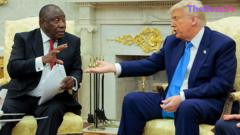
Relations between the two nations have notably deteriorated since the inauguration of former President Donald Trump. Trump had previously issued an executive order making broad allegations about South African policies and falsely claimed a “white genocide” was occurring, leading to a unique refugee program for Afrikaners in the U.S. Attempts to mend relations, including a high-profile White House meeting between Trump and South African President Cyril Ramaphosa, have proven unsuccessful. The U.S. also boycotted a G20 meeting hosted by South Africa last November, further underscoring the diplomatic rift. South Africa’s government, for its part, disputes the U.S. claims, arguing its Black Economic Empowerment policy is essential to address economic inequalities stemming from the apartheid era.
Key Takeaways
- The U.S. is ending its significant financial support for South Africa's HIV/AIDS programs, which previously amounted to approximately $400 million annually through Pepfar.
- The decision is primarily attributed to U.S. concerns over South Africa's alleged failure to protect its Afrikaner minority and broader policy disagreements, including its stance on Israel and Iran.
- South Africa, home to the world's largest HIV-positive population, states it has been preparing a self-reliance plan and largely funds its antiretroviral drug provision independently.
Editor’s Analysis & Impact
This funding withdrawal carries significant implications for global health initiatives and international relations. For South Africa, while the health ministry asserts a degree of self-reliance, the loss of $400 million annually, representing a fifth of its HIV program budget, will undoubtedly strain resources and potentially impact the scale and reach of critical services in a country with over eight million people living with HIV. It could force a reallocation of domestic funds or a search for alternative international partners.
From a broader perspective, this move signals a potential shift in U.S. foreign aid policy, particularly concerning nations whose domestic or foreign policies diverge from Washington’s interests. It could set a precedent for linking humanitarian aid to political compliance, potentially complicating global health efforts in other regions. The diplomatic rift also highlights the challenges of maintaining stable international partnerships amidst differing political ideologies and priorities.
Frequently Asked Questions
Q: What is Pepfar and what was its role in South Africa?
A: Pepfar (President's Emergency Fund for AIDS Relief) is a U.S. government initiative to address the global HIV/AIDS epidemic. In South Africa, it provided an estimated $400 million annually, contributing about one-fifth of the country's total spending on HIV programs.
Q: Why is the U.S. withdrawing this funding?
A: The U.S. cites South Africa's alleged failure to protect its white-minority Afrikaner community and its "failure to make demonstrable progress on policy requests." Other factors mentioned include South Africa's stance against Israel at the International Court of Justice and its links to Iran. The U.S. also stated an intent to foster self-reliance, noting South Africa's status as a middle-income country.
Q: How will this impact South Africa's fight against HIV/AIDS?
A: While South Africa's health ministry has a self-reliance plan and largely funds antiretroviral drugs independently, the loss of $400 million annually will create a significant funding gap. This could strain resources and potentially affect the scale and reach of other critical HIV prevention, treatment, and care services in a country with the world's largest HIV-positive population.
AI Disclosure: This article is based on verified data and official reports. Our Team and AI have cross-referenced every financial detail with primary sources to ensure total accuracy.
More from this Category