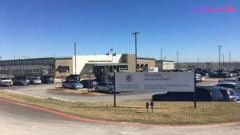
Texas Court Hands Down Massive Sentences to Eight Following Violent Immigration Facility Riot
A federal judge has sentenced eight individuals to a combined 450 years in prison for their roles in a violent riot at an immigration detention center in Prairieland, Texas. The incident, which occurred on the Fourth of July, involved the use of explosives, vandalism of federal property, and the shooting of a law enforcement officer. Prosecutors successfully argued that the defendants, identified as members of a North Texas cell, engaged in a coordinated assault on the facility.
Benjamin Hanil Song, identified by authorities as the leader of the group, received the harshest penalty of 100 years in prison after being convicted of the attempted murder of a police officer. Other defendants received sentences ranging from 30 to 70 years for charges including rioting, the use of weapons, and providing material support to extremist activities. The Department of Justice characterized the group as part of a broader network seeking to undermine law enforcement and government institutions.
While the prosecution framed the event as a calculated act of domestic terrorism, the defendants and their supporters have contested the severity of the sentencing. Some participants claimed the gathering was intended to be a peaceful demonstration in support of detained immigrants, and defense representatives have argued that the actions were misinterpreted or exaggerated. With additional defendants awaiting sentencing in July, the case remains a significant point of contention regarding the legal classification of political protest versus violent extremism.
Key Takeaways
- Eight individuals received a collective 450-year prison sentence for a violent riot at a Texas immigration facility.
- The group's leader, Benjamin Hanil Song, was sentenced to 100 years for the attempted murder of a law enforcement officer.
- The Department of Justice labeled the defendants as part of an extremist cell, while supporters argue the sentences are disproportionately harsh.
Editor’s Analysis & Impact
The sentencing of these individuals marks a significant escalation in the federal government’s approach to handling civil unrest and political violence. By securing such lengthy prison terms, the Department of Justice is signaling a ‘zero-tolerance’ policy toward attacks on federal facilities and law enforcement, regardless of the underlying political motivation. This case highlights the growing tension between the right to protest and the legal boundaries of criminal conduct in the United States. Moving forward, this precedent may influence how future demonstrations are policed and prosecuted, particularly those involving groups labeled as domestic terrorist organizations. The disparity between the prosecution’s narrative of organized subversion and the defense’s claim of peaceful protest underscores a deepening polarization in the American judicial and political landscape, likely leading to further legal challenges regarding the definition of domestic terrorism.
Frequently Asked Questions
Q: What were the primary charges against the defendants?
A: The defendants were convicted on various charges, including rioting, the use of weapons and explosives, obstruction, and providing material support to terrorist activities.
Q: How did the defendants characterize their presence at the facility?
A: Some of the defendants and their supporters claimed they were present for a 'noise demonstration' to support detained immigrants and denied the intent to commit violence.
AI Disclosure: This article is based on verified data and official reports. Our Team and AI have cross-referenced every financial detail with primary sources to ensure total accuracy.
More from this Category