US and Iran Agree to De-escalate Tensions in Strait of Hormuz
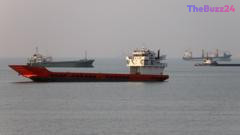
The United States and Iran have reached a tentative agreement to stand down following a volatile series of military exchanges that threatened to destabilize the critical Strait of Hormuz. The de-escalation comes shortly after both nations accused one another of violating a ceasefire agreement established earlier this month. Officials indicate that maritime traffic through the vital waterway is expected to resume without further interference, as diplomatic efforts to secure a lasting peace continue.
The recent friction follows a 14-point Memorandum of Understanding signed on June 17, which mandated an immediate cessation of military operations. Despite this commitment, hostilities reignited last Thursday when an Iranian projectile struck a commercial cargo vessel. The United States responded with retaliatory strikes against Iranian targets, prompting Iran to launch counter-attacks on US bases in Kuwait and Bahrain. Fortunately, military reports confirm that these counter-strikes resulted in no casualties or significant infrastructure damage.
Beyond the immediate maritime conflict, the broader regional landscape remains fragile. While the US recently mediated a framework agreement between Israel and Lebanon, the situation remains precarious as Hezbollah leadership has rejected the terms. Tensions were further exacerbated on Sunday when the Israeli military targeted a Hezbollah tunnel network in southern Lebanon. As diplomatic channels remain open, Tehran maintains that a comprehensive regional ceasefire is contingent upon the stabilization of the situation in Lebanon.
Key Takeaways
- The US and Iran have agreed to a de-escalation of military strikes to ensure the safe passage of commercial vessels through the Strait of Hormuz.
- Recent hostilities included an Iranian strike on a cargo ship and subsequent US retaliation, followed by failed Iranian attempts to hit US bases in Kuwait and Bahrain.
- Regional stability remains threatened by ongoing conflicts in Lebanon, where Hezbollah has rejected a US-mediated framework agreement with Israel.
Editor’s Analysis & Impact
The recent exchange of fire between the US and Iran highlights the extreme volatility of the Strait of Hormuz, a global economic artery for oil and gas. While the current ‘stand down’ provides a temporary reprieve for commercial shipping, the underlying geopolitical tensions remain unresolved. The failure of the June 17 Memorandum of Understanding to hold for even two weeks suggests that both parties are struggling to maintain control over their respective military actions or that the agreement lacked sufficient enforcement mechanisms. The broader implications are significant: as long as the conflict in Lebanon remains active and Hezbollah continues to operate independently of the Lebanese government, the risk of a wider regional conflagration persists. Investors and global markets should expect continued volatility in energy prices until a more robust, long-term diplomatic framework is established.
Frequently Asked Questions
Q: Why is the Strait of Hormuz significant to the current conflict?
A: The Strait of Hormuz is a critical global waterway for oil and gas shipments. Its closure or instability directly impacts global energy supplies and market prices.
Q: What was the primary goal of the June 17 Memorandum of Understanding?
A: The MoU aimed to establish an immediate and permanent termination of military operations on all fronts and ensure the safe, free passage of commercial vessels for at least 60 days.
AI Disclosure: This article is based on verified data and official reports. Our Team and AI have cross-referenced every financial detail with primary sources to ensure total accuracy.
More from this Category