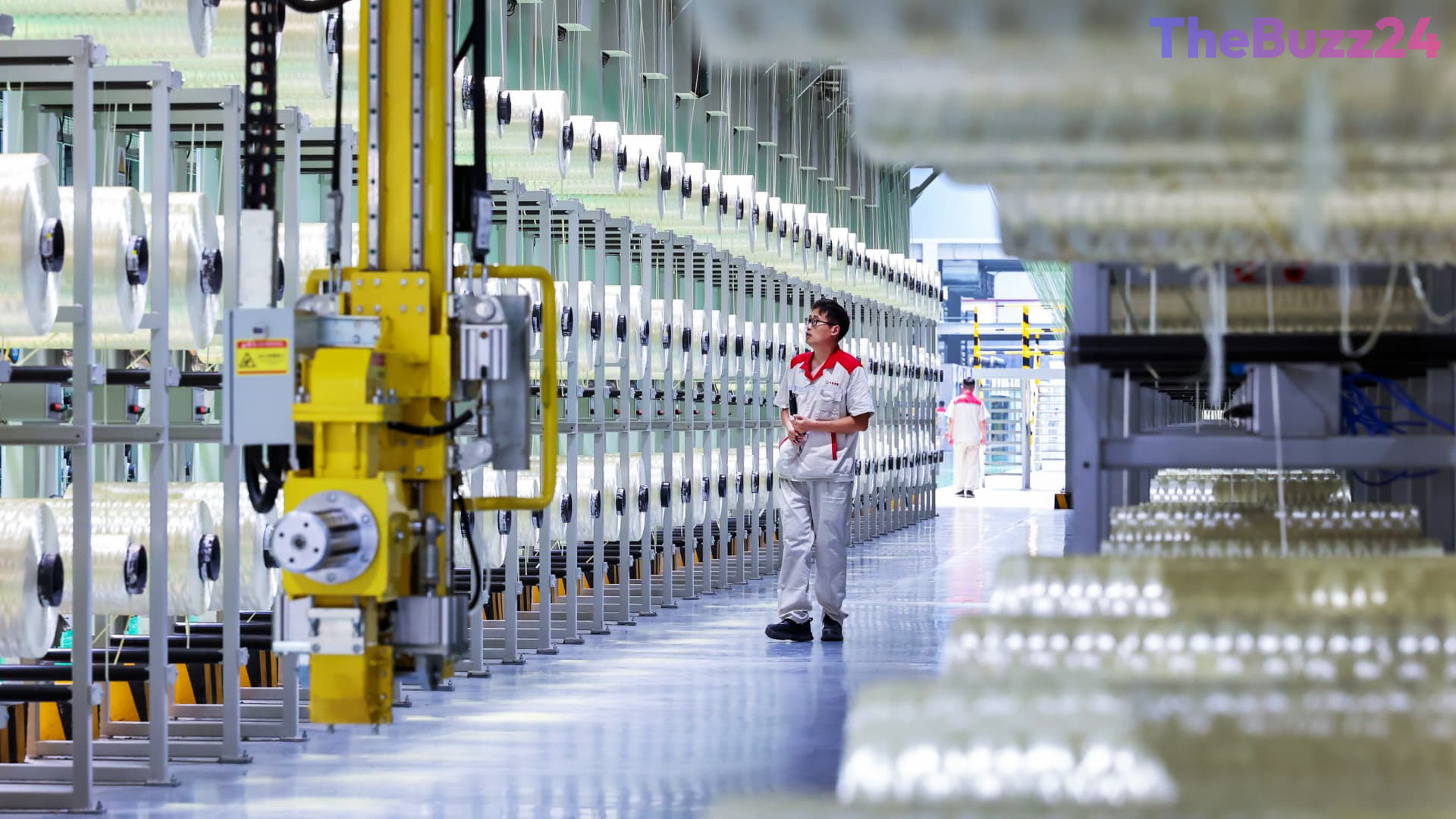
China’s Manufacturing Sector Rebounds Driven by AI and Tech Export Surge
China’s manufacturing sector returned to growth in June, surpassing expectations as a surge in high-tech production and global demand for artificial intelligence-related components offset persistent domestic weaknesses. The official purchasing managers’ index (PMI) climbed to 50.3, moving back into expansionary territory above the 50-point threshold, up from 50.0 in May. This performance outperformed analyst forecasts, which had predicted a more modest reading of 50.1.
The recovery was largely fueled by a rebound in new export orders, which hit 50.1, signaling a stabilization in international trade. High-tech equipment manufacturing emerged as a standout performer, recording a PMI of 53.5. This growth is attributed to the global investment boom in AI and renewable energy technologies, which has provided a critical lifeline to the Chinese industrial engine even as the domestic property market and consumer goods sectors continue to struggle.
Despite the positive manufacturing data, the broader economic picture remains uneven. The non-manufacturing PMI, which tracks services and construction, saw only a marginal increase to 50.2, with construction activity remaining in contraction at 49.0. Furthermore, while exports are thriving, domestic demand remains muted, leading to concerns about long-term economic rebalancing. Policymakers have largely avoided aggressive stimulus measures, opting instead for a cautious approach as they monitor the impact of global trade dynamics and industrial output.
Looking ahead, the divergence between robust export-oriented industries and the sluggish domestic market presents a complex challenge for the world’s second-largest economy. While sectors like renewable energy and AI hardware are expected to maintain strong growth trajectories, the ongoing downturn in real estate and soft retail sales suggest that the recovery remains fragile and heavily dependent on external market conditions.
Key Takeaways
- China's official manufacturing PMI rose to 50.3 in June, signaling a return to expansion driven by high-tech and AI-related exports.
- The construction sector continues to contract, highlighting a persistent imbalance between strong industrial output and weak domestic demand.
- Economists note that while exports are performing well, the lack of significant government stimulus and a struggling property market remain major headwinds for the Chinese economy.
Editor’s Analysis & Impact
The latest data from China underscores a ‘two-speed’ economy. The manufacturing sector is successfully pivoting toward high-value, tech-centric exports, effectively capitalizing on the global AI and green energy transition. This shift is providing a necessary buffer against the structural decline of the domestic real estate market. However, the reliance on exports leaves the economy vulnerable to shifting geopolitical trade policies and potential tariffs. The lack of aggressive domestic stimulus suggests that Beijing is prioritizing industrial upgrading over short-term consumption boosts. Moving forward, the sustainability of this growth will depend on whether the high-tech sector can generate enough domestic momentum to compensate for the ongoing property sector drag, or if the economy will remain tethered to the volatility of global demand.
Frequently Asked Questions
Q: What is the significance of the 50-point mark in the PMI index?
A: A PMI reading above 50 indicates an expansion in manufacturing activity compared to the previous month, while a reading below 50 indicates a contraction.
Q: Why is China's high-tech sector outperforming other industries?
A: The high-tech sector is benefiting from a global surge in investment toward artificial intelligence, renewable energy equipment, and electric vehicles, which has created strong international demand for Chinese-manufactured components.
AI Disclosure: This article is based on verified data and official reports. Our Team and AI have cross-referenced every financial detail with primary sources to ensure total accuracy.
More from this Category