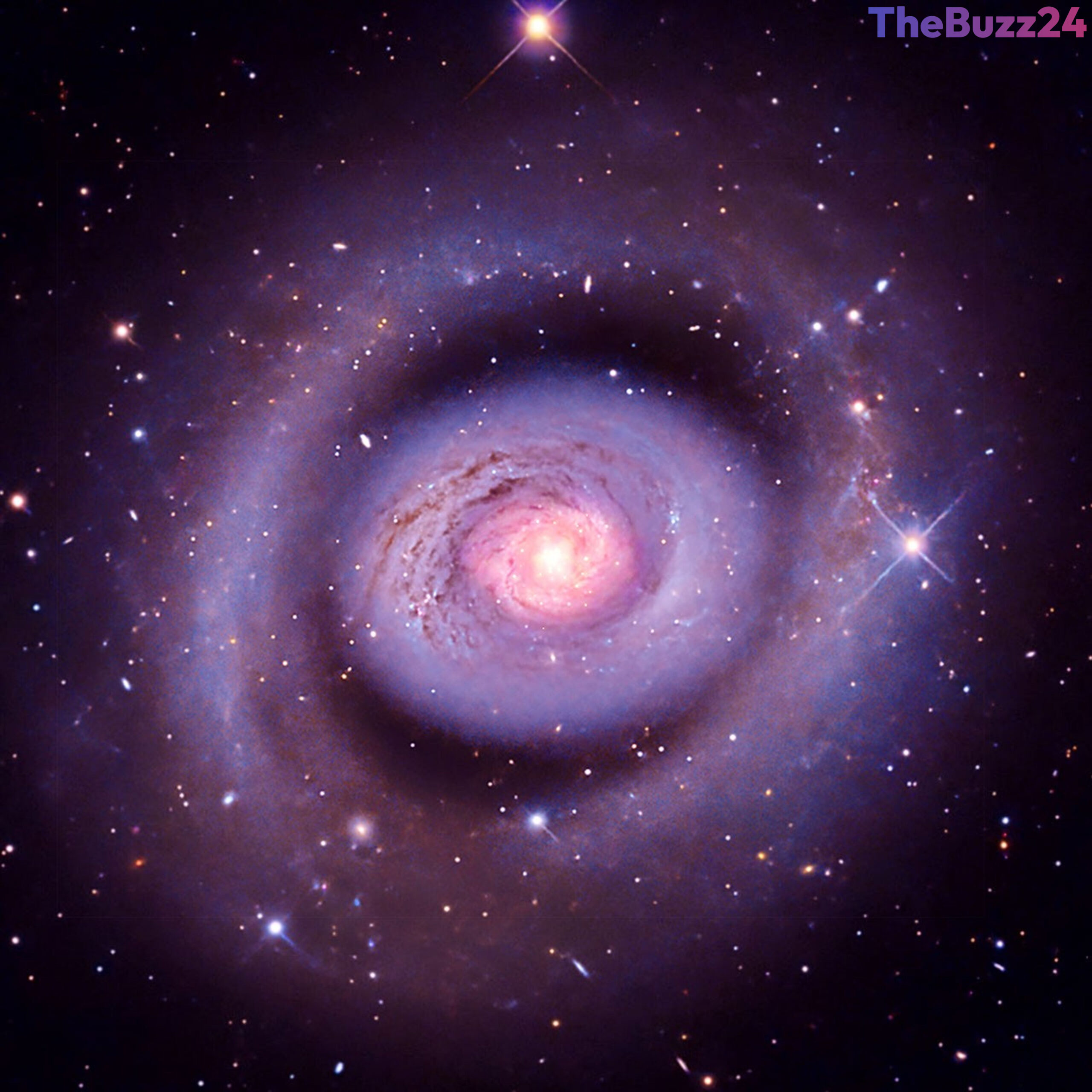
Celestial Celebration: NASA’s Chandra Observatory Paints the Cosmos in Red, White, and Blue
To mark the upcoming 250th anniversary of the United States, NASA’s Chandra X-ray Observatory has unveiled a striking collection of four cosmic images, each rendered in patriotic red, white, and blue. These vibrant portrayals offer a glimpse into the universe’s profound wonders, combining Chandra’s unique X-ray vision with data from other powerful observatories like the James Webb Space Telescope and the Hubble Space Telescope. Accompanying these visual marvels are a trio of new sonifications, transforming complex astronomical data into an immersive auditory experience.
The celestial quartet begins with Cassiopeia A, a prominent supernova remnant. Chandra’s X-ray observations, depicted in blue and purple, vividly trace the blast wave that tore through the star and highlight elements such as iron, calcium, and oxygen within the debris field. This X-ray data is seamlessly integrated with infrared imagery from the James Webb Space Telescope, which adds layers of red and white, revealing the expanding shell of material from the explosion and cosmic dust dispersed throughout the remnant.
Further expanding this cosmic gallery are the nebula NGC 3603 and the galaxy NGC 4736, also known as Messier 94. NGC 3603, a massive star cluster nestled within the Milky Way, is presented with Chandra’s X-ray data (red and white) showcasing diffuse emissions near its center and numerous point-like X-ray sources. Optical, infrared, and ultraviolet light from the Hubble Space Telescope (red-orange, green, blue, and yellow) illuminate the central stars and surrounding dust and gas, creating a predominantly red, white, and blue tableau of stellar birth. Meanwhile, Messier 94, a spiral galaxy, features Chandra’s multi-wavelength X-rays (red, orange, and blue) layered over visible light from ground-based telescopes. This composite highlights a bright inner “starburst ring” where new stars are actively forming, potentially fueled by gas channeled through a unique oval structure.
The final piece in this commemorative collection is ZwCl 0024+1652, a distant galaxy cluster. Here, specially processed data from Hubble (blue) provides compelling evidence for the presence of dark matter, while another Hubble image reveals the individual galaxies within the cluster as yellow and white specks. Chandra’s X-ray data, shown in red, unveils an enormous reservoir of superheated gas permeating the cluster, possessing significantly more mass than all its constituent galaxies combined. The accompanying sonifications for NGC 3603, NGC 4736, and ZwCl 0024+1652 allow the public to “hear” the universe, with different data points translated into distinct musical tones and sounds, offering a multi-sensory journey through these cosmic landscapes.
Key Takeaways
- NASA's Chandra X-ray Observatory released four cosmic images, rendered in red, white, and blue, to commemorate the United States' 250th birthday.
- The images combine X-ray data from Chandra with observations from the James Webb Space Telescope and Hubble Space Telescope, revealing intricate details of a supernova remnant, star-forming nebulae, a spiral galaxy, and a distant galaxy cluster.
- New sonifications accompany three of the images, translating complex astronomical data into an auditory experience, offering a unique way to engage with cosmic phenomena.
Editor’s Analysis & Impact
This initiative by NASA’s Chandra X-ray Observatory represents a significant effort in public science communication and engagement. By presenting complex astronomical data in an accessible, visually striking, and even audibly immersive format, it broadens the appeal of space exploration beyond the scientific community. The “red, white, and blue” theme, tied to a national anniversary, provides a culturally resonant hook, potentially inspiring a wider audience, particularly younger generations, towards STEM fields. This approach underscores the ongoing value of long-duration missions like Chandra, Hubble, and Webb, demonstrating how their combined data continues to yield new insights and foster a deeper appreciation for the universe’s grandeur. Such outreach efforts are crucial for maintaining public support for scientific research and technological advancement.
Frequently Asked Questions
Q: What is the primary purpose of rendering these cosmic images in red, white, and blue?
A: The images are rendered in red, white, and blue to celebrate the upcoming 250th birthday of the United States, offering a patriotic visual theme to highlight the wonders of the universe explored by NASA.
Q: Which major space telescopes contributed data to these new images?
A: The images combine X-ray data from NASA's Chandra X-ray Observatory with infrared data from the James Webb Space Telescope and optical, infrared, and ultraviolet light data from the Hubble Space Telescope, along with some ground-based observations.
Q: How do the new sonifications enhance the experience of astronomical data?
A: Sonifications translate astronomical data, such as the brightness or position of cosmic objects, into distinct sounds and musical tones. This allows listeners to experience the universe through an auditory medium, providing a multi-sensory and more accessible way to engage with scientific observations.
AI Disclosure: This article is based on verified data and official reports. Our Team and AI have cross-referenced every financial detail with primary sources to ensure total accuracy.
More from this Category