New X-Ray Data Reveals Milky Way Spiral Arms Are Further Than Previously Thought
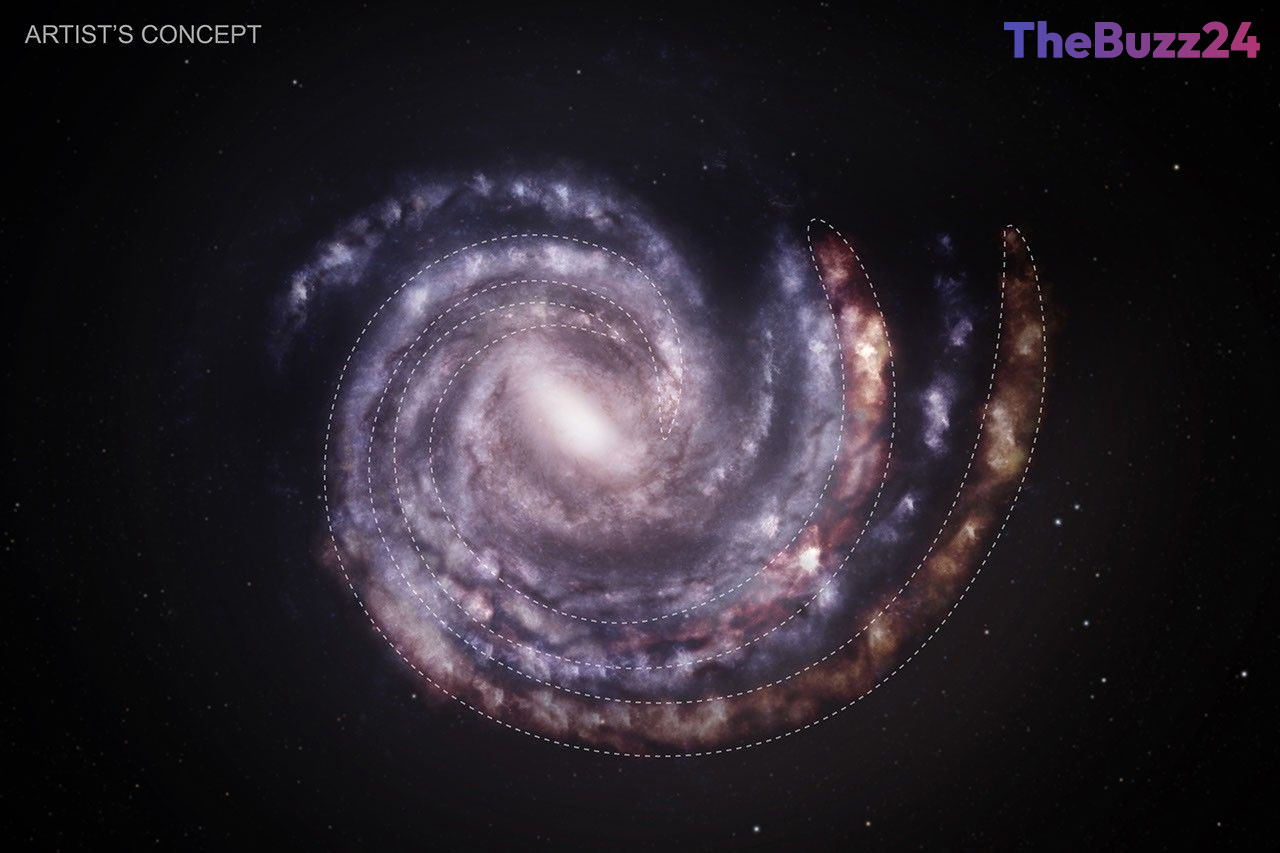
Astronomers have uncovered new insights into the structure of the Milky Way, suggesting that the galaxy’s outer spiral arms are positioned further from the center than earlier models indicated. By utilizing advanced X-ray data from the Chandra X-ray Observatory and the XMM-Newton mission, researchers have refined the map of our home galaxy, providing a more accurate geometric understanding of its outer reaches.
The research team achieved these findings by analyzing ‘light echoes’—a phenomenon where X-rays from distant, high-energy gamma-ray bursts bounce off dust clouds located within the Milky Way’s spiral arms. By measuring the diameter of the resulting X-ray rings, scientists were able to calculate precise distances to these dust clouds. This geometric approach bypasses the traditional reliance on assumptions regarding galactic rotation, which often lead to significant uncertainties when mapping the galaxy’s periphery.
Focusing on three specific spiral arms—the Perseus, the Outer, and the Outer Scutum-Centaurus—the study revealed that the two outermost arms are approximately 10% more distant than previously estimated. These findings suggest that the Milky Way may be more expansive than once believed. While the data provides a clearer picture of the galaxy’s architecture, researchers noted that the rarity of suitable gamma-ray bursts makes this specific measurement technique difficult to replicate frequently, though they remain committed to monitoring for future events to further refine these galactic coordinates.
Key Takeaways
- New X-ray data indicates the Milky Way's two outermost spiral arms are about 10% further from the galactic center than previously thought.
- Researchers used 'light echoes' from gamma-ray bursts to calculate distances using geometry rather than relying on uncertain galactic rotation models.
- The findings suggest a need to revise current estimates of the galaxy's total mass and structural dimensions.
Editor’s Analysis & Impact
This discovery represents a significant shift in galactic cartography. By moving away from rotation-based models—which are inherently speculative in the outer regions of the galaxy—toward a purely geometric measurement, astronomers have established a more reliable baseline for understanding the Milky Way’s scale. The implications of this study extend beyond mere positioning; if the spiral arms are further out, it necessitates a recalibration of the galaxy’s total mass and gravitational dynamics. While the sample size of gamma-ray bursts is currently limited, the methodology sets a new standard for precision in astrophysics. As observational technology improves, this shift in perspective will likely influence future research into how galaxies form, evolve, and maintain their structural integrity over billions of years.
Frequently Asked Questions
Q: What are light echoes in the context of this study?
A: Light echoes occur when X-rays from a distant, bright source like a gamma-ray burst reflect off dust clouds within our galaxy, creating rings that allow scientists to calculate the distance to those clouds.
Q: Why is it difficult to map the Milky Way's spiral arms?
A: Mapping is challenging because Earth is located inside one of the arms, and large amounts of interstellar dust and gas obscure our view of the rest of the galaxy.
AI Disclosure: This article is based on verified data and official reports. Our Team and AI have cross-referenced every financial detail with primary sources to ensure total accuracy.
More from this Category