Beyond the Hype: How Mistral AI is Redefining European Sovereignty in Tech
Mistral AI has emerged as a central figure in the global artificial intelligence landscape, often mischaracterized simply as a European alternative to American tech giants. While the Paris-based company develops sophisticated large language models (LLMs), its core business strategy diverges significantly from the consumer-facing models popularized by its U.S. counterparts. Instead of focusing solely on viral chatbot popularity, Mistral has adopted a ‘Palantir-style’ approach, embedding forward-deployed engineers within government agencies and large corporations to tailor AI solutions for specific, high-stakes operational needs.
This strategic focus on enterprise and sovereign infrastructure has fueled rapid financial growth. With annual recurring revenue climbing from $20 million to over $400 million in a single year, the company is positioning itself as a critical provider of commodity AI technology. By prioritizing custom model training through its ‘Forge’ platform and investing heavily in its own data center infrastructure across France and Sweden, Mistral aims to provide organizations with a secure, independent supply of AI capabilities that are not subject to the centralized control of foreign states or corporations.
Leadership at Mistral, headed by CEO Arthur Mensch, emphasizes that while they continue to push the boundaries of foundational research, their primary mission is accessibility and utility. The company is actively expanding its ecosystem through strategic partnerships with industry titans like Nvidia, Microsoft, and ASML, while simultaneously acquiring infrastructure startups like Koyeb to build a robust, independent AI cloud. As the company eyes a potential future IPO, its trajectory suggests a shift toward becoming a foundational pillar of European industrial and governmental digital sovereignty.
Despite the intense competition in the AI sector, Mistral continues to diversify its offerings, ranging from multimodal and reasoning models to specialized tools for edge devices. By maintaining a balance between open-weight research and bespoke enterprise deployments, the company is carving out a unique niche that prioritizes long-term institutional integration over short-term consumer trends.
Key Takeaways
- Mistral AI focuses on enterprise-grade, sovereign AI solutions rather than just consumer-facing chatbots.
- The company has seen explosive revenue growth, with ARR scaling from $20 million to over $400 million in one year.
- Strategic partnerships with major hardware and software firms, combined with investments in data center infrastructure, aim to secure European independence in AI technology.
Editor’s Analysis & Impact
Mistral AI represents a critical shift in the AI market, moving away from the ‘winner-take-all’ consumer model toward a B2B and government-centric infrastructure play. By positioning itself as a sovereign, reliable provider for European institutions, Mistral is effectively insulating itself from the volatility of the U.S.-centric AI race. The company’s focus on ‘commodity AI’—treating intelligence as a utility rather than a luxury—is a savvy move that aligns with the growing geopolitical demand for digital autonomy. If Mistral successfully executes its plan to build a proprietary AI cloud and continues its aggressive expansion into industrial sectors, it will likely become the primary infrastructure backbone for European enterprise, significantly reducing reliance on Silicon Valley. The path to an IPO remains the logical conclusion for its massive venture backing, provided they can maintain their current growth velocity.
Frequently Asked Questions
Q: Is Mistral AI planning to develop its own hardware?
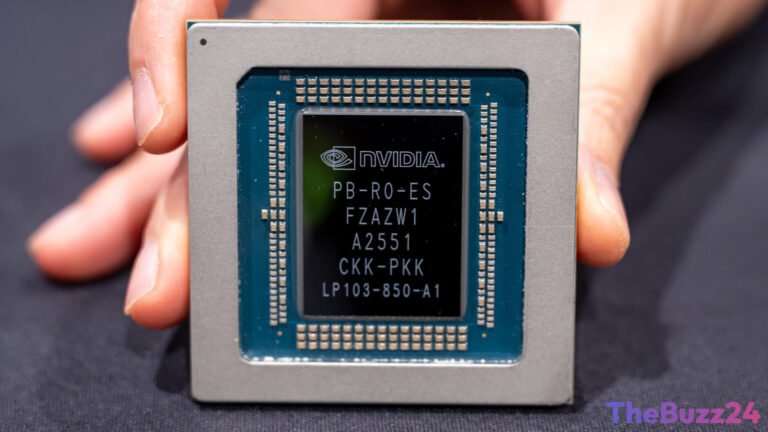
A: While the company currently relies on Nvidia for its computing needs, CEO Arthur Mensch has indicated that developing or owning their own chips is a possibility for the future.
Q: What is the primary goal of Mistral AI's 'Forge' platform?
A: Forge is designed to allow enterprise customers to train and customize AI models using their own proprietary data, ensuring the models are tailored to specific business use cases.
AI Disclosure: This article is based on verified data and official reports. Our Team and AI have cross-referenced every financial detail with primary sources to ensure total accuracy.
More from this Category