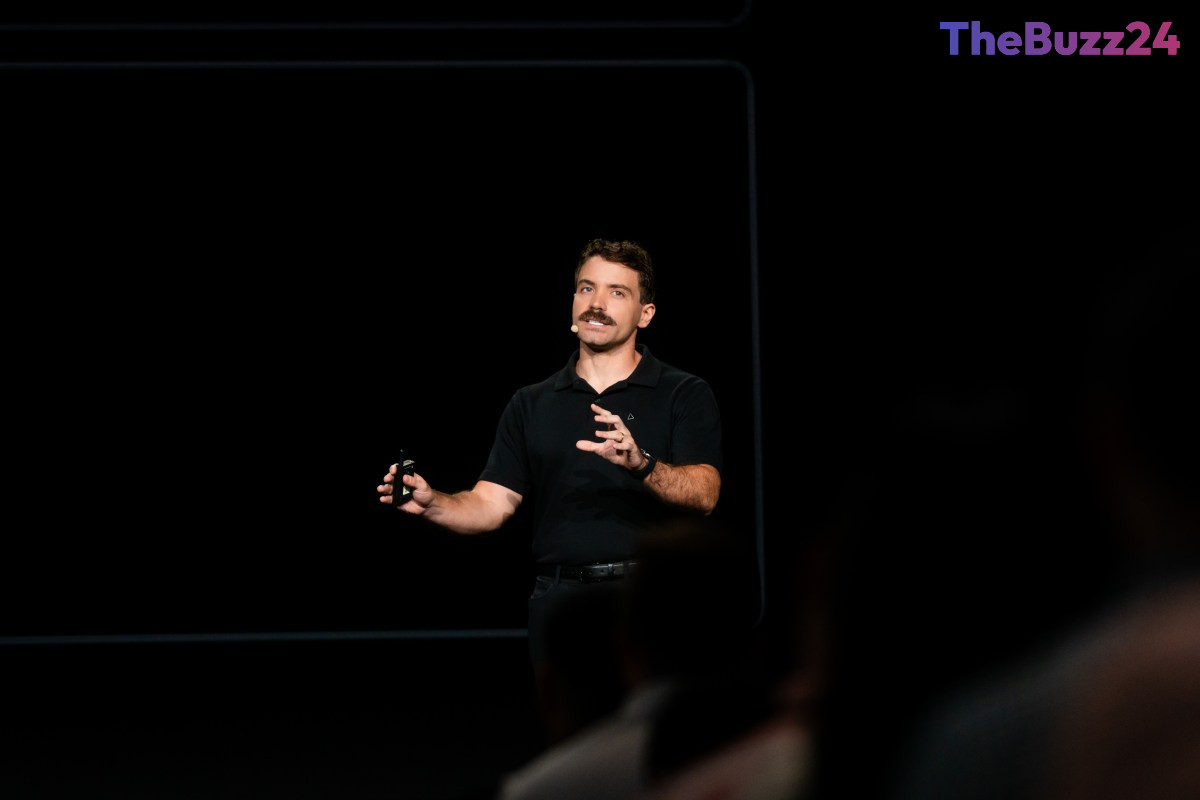
Vercel CEO Guillermo Rauch on the Evolution of AI Agents and Infrastructure
As the artificial intelligence landscape shifts from experimental prototyping to production-grade deployment, Vercel has emerged as a critical infrastructure provider. With 6 million daily deployments and over 1 trillion tokens processed through its AI gateway, the company is at the forefront of how businesses integrate intelligent agents into their workflows. CEO Guillermo Rauch notes that the industry has moved past the initial hype cycle, focusing now on the practical realities of security, data control, and operational efficiency.
According to Rauch, the current market is defined by two primary use cases: coding agents that automate software development and internal corporate agents that streamline business operations. To address the risks associated with these tools—such as the accidental exposure of proprietary code or sensitive data—Vercel has introduced frameworks like Eve and the Vercel Sandbox. These tools allow organizations to define agent instructions in natural language while enforcing strict policies on data access, ensuring that intelligence does not come at the cost of security.
Furthermore, the relationship between enterprises and AI labs is undergoing a significant transformation. Rather than relying on a single model provider, companies are increasingly adopting a modular, plug-and-play approach. By treating models as interchangeable components, businesses can optimize for price and performance, leveraging offerings from OpenAI, Anthropic, Google’s Gemini, and various open-source models. This shift toward modularity mirrors traditional software engineering, positioning infrastructure providers as the essential layer that decouples intelligence from the underlying hosting environment.
Looking ahead, the industry is grappling with whether AI models and agents should remain tightly coupled or function as independent, interoperable building blocks. Vercel is positioning itself to support the latter, advocating for open protocols that allow developers to build flexible, secure, and scalable AI-driven applications without being locked into a single ecosystem.
Key Takeaways
- The AI industry is shifting from experimental prototyping to production-focused deployments that prioritize security and data governance.
- Vercel is addressing enterprise risks through sandboxing and policy-based frameworks that prevent sensitive data leakage during agent operations.
- Enterprises are moving away from single-provider dependencies, favoring a modular 'plug-and-play' architecture that allows for the integration of multiple AI models.
Editor’s Analysis & Impact
The transition from ‘AI as a novelty’ to ‘AI as infrastructure’ marks a pivotal moment for the software industry. Vercel’s strategy highlights a broader trend: the commoditization of AI models. As model performance converges, the competitive advantage shifts toward the orchestration layer—the platforms that manage data flow, security, and deployment. By positioning itself as the ‘AWS of the AI generation,’ Vercel is betting that businesses will prioritize control and interoperability over proprietary vendor lock-in. This approach is likely to force major AI labs to either open their ecosystems or risk being relegated to mere utility providers. The long-term implication is a more robust, modular software stack where AI is treated as a standard service rather than a monolithic black box, ultimately lowering the barrier for enterprise-wide AI adoption.
Frequently Asked Questions
Q: What is the purpose of the Vercel Sandbox?
A: The Vercel Sandbox is designed to provide a secure environment for AI agents, allowing them to perform tasks while enforcing strict policies on what data they can access and what information can be exported.
Q: Why are companies moving away from using a single AI lab partner?
A: Companies are shifting to a modular approach to optimize for price and performance, allowing them to swap between different models like OpenAI, Anthropic, Gemini, or open-source alternatives depending on the specific needs of their production environment.
AI Disclosure: This article is based on verified data and official reports. Our Team and AI have cross-referenced every financial detail with primary sources to ensure total accuracy.
More from this Category