High-Flying History: Veteran Photographer Captures America’s Semiquincentennial Flyover from NASA F-18
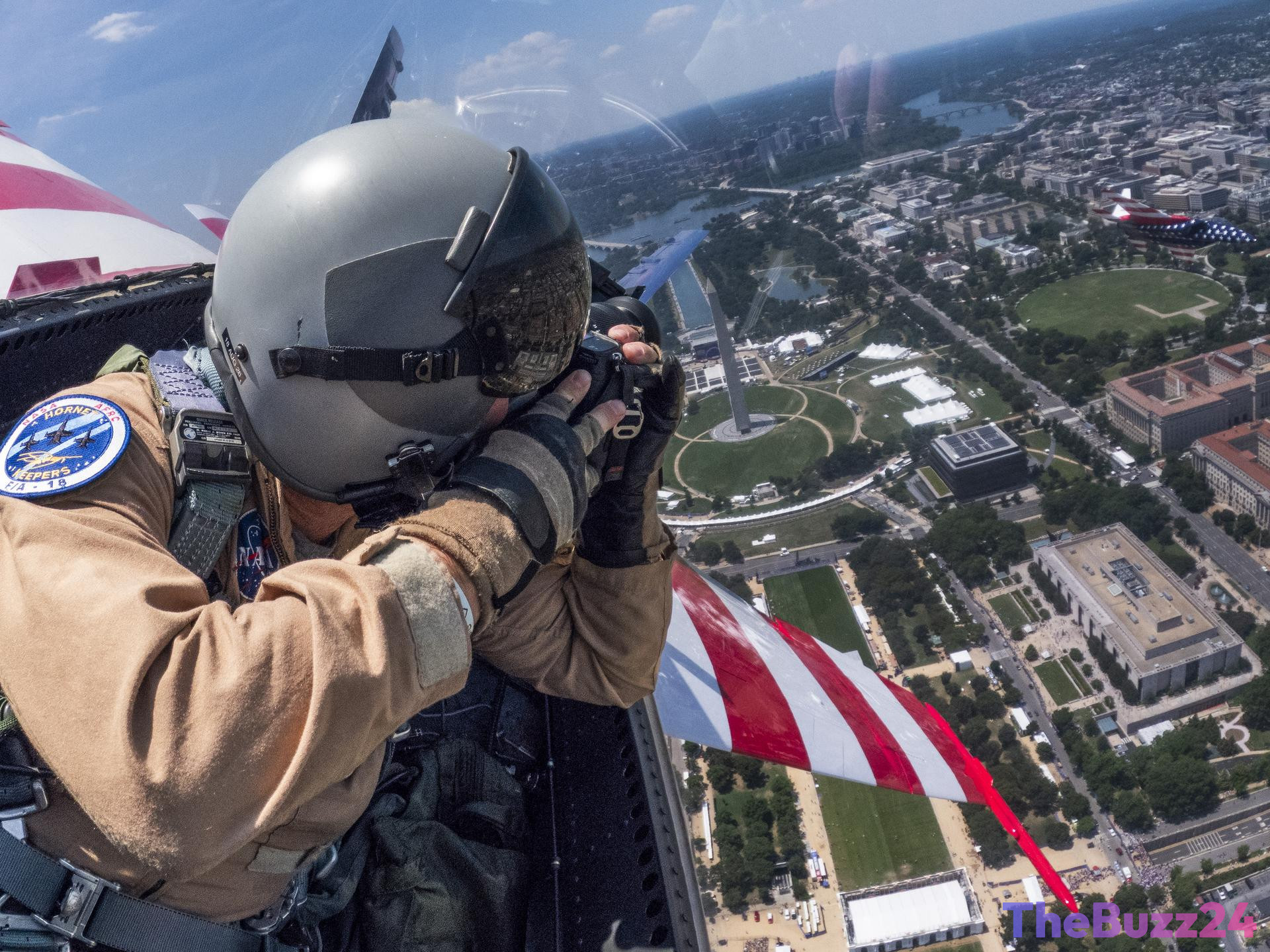
During the historic celebrations of America’s 250th birthday on July 4, 2026, a spectacular aerial flyover graced the skies of Washington, D.C. High above the National Mall and the Washington Monument, veteran flight photographer Jim Ross captured the momentous occasion from the rear seat of a NASA F-18 aircraft. The flight, which originated from the Armstrong Flight Research Center in Edwards, California, was part of a coordinated flyover featuring multiple NASA and military aircraft, including an accompanying F-15.
Ross, who has served as the photography lead at the Armstrong Flight Research Center since 1997, has spent nearly 37 years documenting some of the most significant milestones in modern aviation and space exploration. His extensive portfolio includes capturing early SR-71 Blackbird flights, the final ferry flight of the Space Shuttle Endeavour to Los Angeles, and the inaugural flights of the X-59 quiet supersonic research aircraft. Reflecting on his journey from a small-town childhood in Bozeman, Montana, Ross expressed profound gratitude for the rare opportunity to document history from such an extraordinary vantage point.
Flight photographers play a critical role in documenting aerospace research and development, providing both technical data for engineers and a front-row seat for the public. The images captured during the July 4th flyover not only commemorate a national milestone but also highlight the ongoing operational capabilities of research aircraft. By capturing these high-speed, high-altitude moments, photographers bridge the gap between complex aerospace missions and public engagement.
Key Takeaways
- Veteran photographer Jim Ross documented America's 250th birthday flyover over Washington, D.C., from the cockpit of a NASA F-18 aircraft.
- Ross has spent nearly 37 years capturing historic aviation milestones, including the Space Shuttle Endeavour's transit and the X-59 supersonic jet's first flights.
- The aerial demonstration featured multiple aircraft from the Armstrong Flight Research Center, showcasing the intersection of historical celebration and active aerospace technology.
Editor’s Analysis & Impact
This event highlights the enduring power of flight photography in shaping public perception of aerospace achievements. Beyond the aesthetic appeal of capturing Washington, D.C. from an F-18, these missions serve a dual purpose: they document critical technical milestones for engineering analysis while fostering public enthusiasm for aerospace science. Photographers like Jim Ross act as vital storytellers, translating complex, high-risk operations into accessible, inspiring visual narratives. As the aerospace sector transitions into a new era of supersonic travel and deep-space exploration, maintaining this visual record remains essential for historical preservation and inspiring the next generation of scientists, pilots, and engineers. The seamless execution of the 250th-anniversary flyover also underscores the operational readiness and versatility of research fleets.
Frequently Asked Questions
Q: Who is Jim Ross and what is his role?
A: Jim Ross is a veteran aviation photographer who has served as the photo lead at the Armstrong Flight Research Center since 1997, documenting historic aerospace milestones for nearly 37 years.
Q: What aircraft were involved in the 250th birthday flyover?
A: The flyover featured a NASA F-18 and an F-15 from the Armstrong Flight Research Center, alongside other military and agency aircraft.
Q: Why does NASA employ flight photographers?
A: Flight photographers capture critical visual data for research and engineering purposes while providing the public with a unique, behind-the-scenes look at aerospace missions and historical milestones.
AI Disclosure: This article is based on verified data and official reports. Our Team and AI have cross-referenced every financial detail with primary sources to ensure total accuracy.
More from this Category