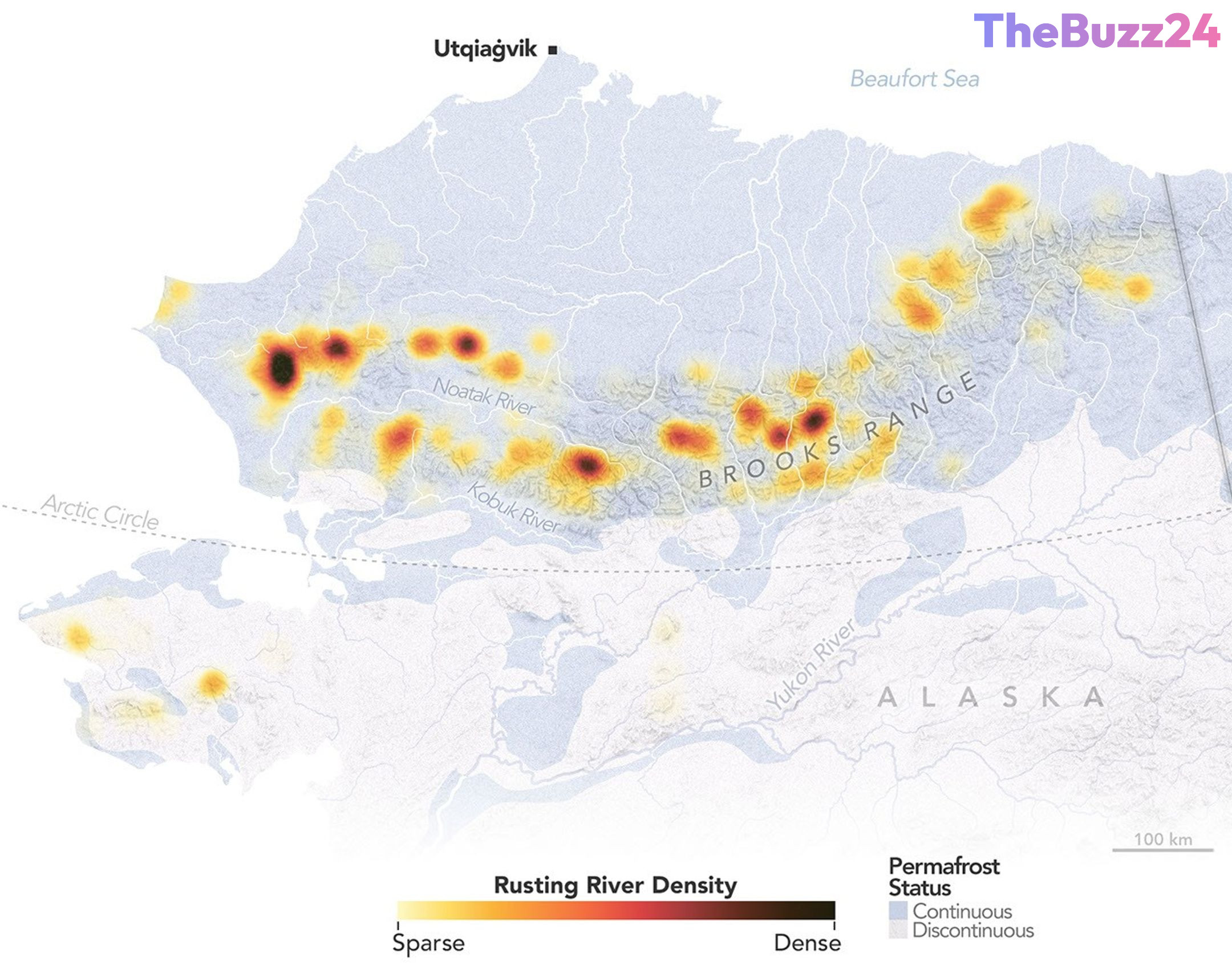
Arctic Transformation: Why Alaska’s Rivers Are Turning Bright Orange
A startling environmental shift is unfolding across Alaska’s Brooks Range, where hundreds of streams and rivers are rapidly changing from clear to a vibrant, rusty orange. Researchers have identified more than 200 watersheds affected by this phenomenon, with the vast majority of these color shifts occurring within the last decade. This transformation, which has been documented through a combination of satellite imagery and ground-based surveys, signals a significant and abrupt change in the Arctic landscape.
Scientists believe the primary driver of this discoloration is the thawing of permafrost. As rising air and ground temperatures penetrate deeper into the soil, water is interacting with previously frozen bedrock and mineral deposits. This process leaches iron, sulfuric acid, and various trace metals into the water column, creating a chemical reaction similar to acid mine drainage. In addition to mineral weathering, microbial activity in the thawing soil may be contributing to the process by releasing soluble iron that oxidizes upon contact with oxygen in the flowing water.
The implications of this shift extend beyond mere aesthetics. The discoloration is often accompanied by a decline in aquatic biodiversity, raising concerns for local ecosystems and the communities that rely on these waterways for drinking water and subsistence fishing. Researchers are now working to map the full extent of the toxicity and determine how these chemical changes impact migratory fish spawning grounds. As the Arctic continues to warm, this phenomenon serves as a stark indicator of the unforeseen consequences associated with the loss of the cryosphere.
Key Takeaways
- Over 200 streams in Alaska's Brooks Range have turned orange due to iron and mineral leaching caused by thawing permafrost.
- The phenomenon has accelerated significantly over the past 10 to 12 years, coinciding with rising regional temperatures.
- The chemical changes in the water are negatively impacting aquatic biodiversity and threatening local water sources and subsistence fisheries.
Editor’s Analysis & Impact
The ‘rusting’ of Arctic rivers represents a critical tipping point in climate-driven environmental degradation. While the greening of the tundra has been a well-documented trend, the rapid chemical alteration of freshwater systems introduces a new layer of complexity to Arctic management. From an industry perspective, this creates significant challenges for environmental monitoring and resource protection. The potential for heavy metal contamination in previously pristine watersheds suggests that future infrastructure and conservation projects in the Arctic will face increased regulatory scrutiny. Furthermore, the loss of biodiversity in these streams could disrupt local food chains, leading to broader ecological instability. As this phenomenon likely mirrors similar processes occurring in other permafrost-heavy regions globally, it serves as a warning that climate change is not just a matter of temperature, but a fundamental shift in the chemical composition of our planet’s natural resources.
Frequently Asked Questions
Q: Why are the rivers turning orange?
A: The orange color is caused by iron and other metals leaching into the water from thawing permafrost and bedrock, a process that creates a chemical reaction similar to acid mine drainage.
Q: Is the water in these rivers safe to drink?
A: Researchers are currently investigating the toxicity levels of these streams. Because the water contains elevated levels of iron, sulfuric acid, and trace metals, it poses potential risks to both aquatic life and human consumption.
AI Disclosure: This article is based on verified data and official reports. Our Team and AI have cross-referenced every financial detail with primary sources to ensure total accuracy.
More from this Category