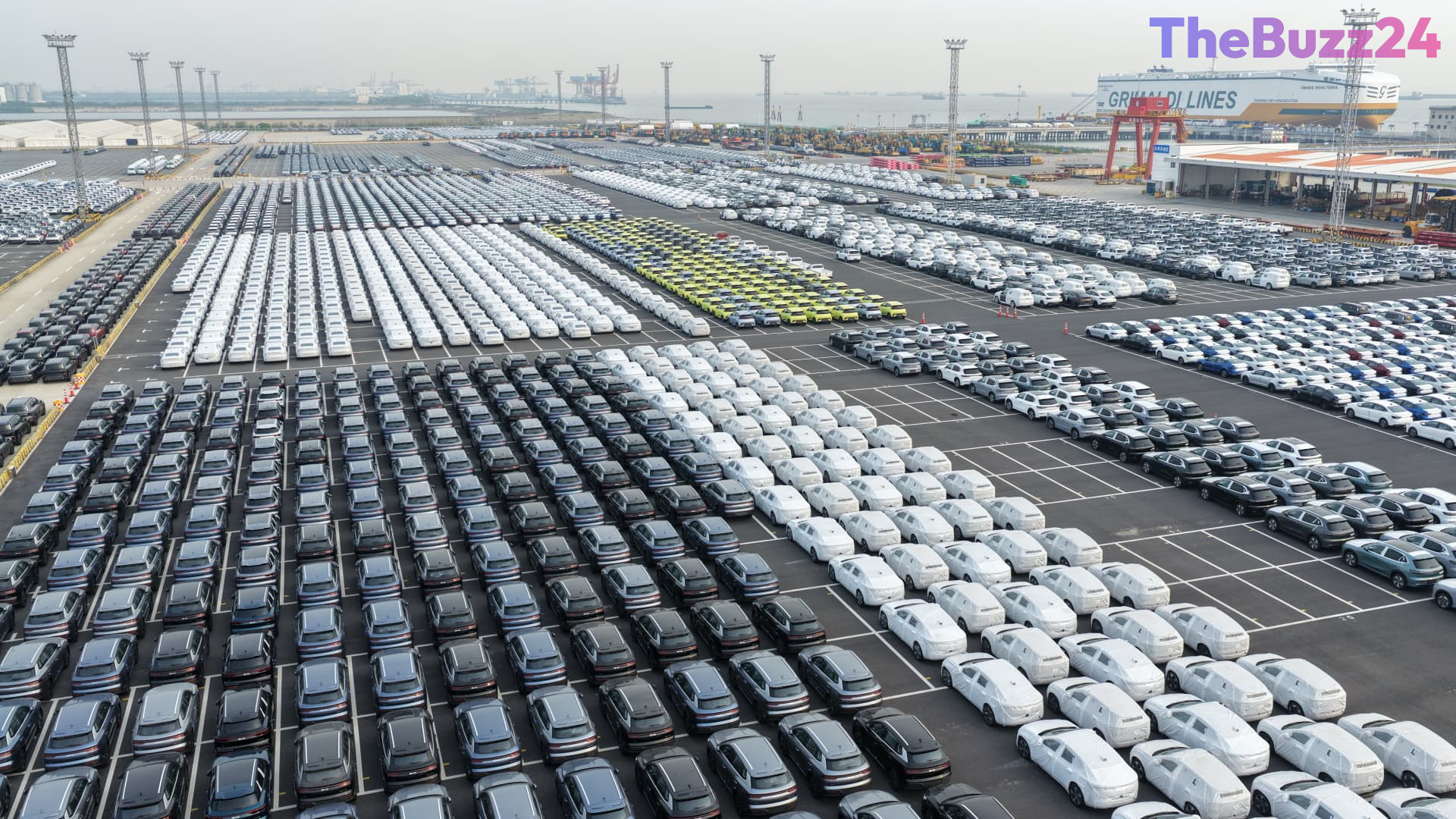
Chinese EV Manufacturers Forge Global Dominance, Outpacing U.S. Rivals in Overseas Investment
Chinese electric vehicle (EV) manufacturers are significantly outspending their American counterparts in foreign investments, a trend driven by a saturated domestic market and robust global demand for affordable EVs. This aggressive international expansion is rapidly establishing Chinese firms as formidable players on the world stage.
Data compiled by Atlas Public Policy, a think tank tracking clean technology investments, reveals that Chinese companies announced nearly $101 billion in overseas EV and battery investments between 2019 and 2025. In stark contrast, U.S. companies invested just over $38 billion during the same period. While some analysts, such as Armand Meyer of Rhodium Group, suggest that the actual materialized investments might be lower than announced figures, the overarching trend of Chinese dominance in foreign direct investment has been evident since 2021. Kyle Chan, a fellow at the Brookings Institution, observes that companies like BYD are emerging as the “new GMs and Fords of the EV era,” benefiting from global supply chains and long-term investments worldwide.
Several key factors are fueling this surge in Chinese overseas investment. Firstly, China’s domestic car market is intensely competitive and saturated, marked by fierce price wars and excess factory capacity, making profitability challenging. This pushes manufacturers to seek growth and profits in international markets. Secondly, there is strong overseas demand for Chinese EVs, particularly in regions like Latin America, where 80% of electric vehicles sold are Chinese, and growth is also accelerating in developed economies such as Europe and Australia. Thirdly, the imposition of trade barriers and tariffs by many countries has incentivized Chinese manufacturers to build factories locally, thereby gaining market access without incurring additional duties. For instance, a Chinese factory in Hungary provides direct access to the European Union market, circumventing tariffs.
This global expansion offers Chinese automakers numerous strategic advantages, including increased market share, the establishment of comprehensive supply chains and distribution networks, and a head start in developing related technologies like software and sensors. This strategic investment also serves as a form of “industrial diplomacy,” forging deeper economic and political ties with host countries. While American automakers have historically focused more on their domestic market and possess existing international facilities, the accelerating pace of Chinese investment could lead to long-term market dependencies and solidify China’s leadership in the global EV sector, potentially leaving U.S. firms less competitive internationally.
Key Takeaways
- Chinese EV manufacturers are significantly outspending U.S. automakers in overseas investments, with figures showing over $100 billion from China versus $38 billion from the U.S. since 2019.
- This global expansion is driven by China's saturated domestic market, robust international demand for affordable EVs, and the strategic circumvention of trade barriers through local factory construction.
- The surge in Chinese foreign direct investment is establishing them as dominant global players, potentially leading to long-term market leadership and creating dependencies in host countries.
Editor’s Analysis & Impact
This trend signifies a major power shift in the global automotive industry, particularly in the burgeoning EV sector. Chinese manufacturers are leveraging their domestic scale and competitive pricing to establish a formidable international presence, challenging traditional Western dominance. The focus on building overseas factories, rather than just exporting, indicates a long-term strategic play to embed themselves within key markets.
The future points towards increased competition for U.S. and European automakers, who may find themselves playing catch-up in global market share and supply chain integration. This could lead to further consolidation or strategic partnerships as companies vie for position. Beyond economics, this represents a form of “industrial diplomacy,” strengthening China’s geopolitical influence through economic ties. It also highlights the evolving nature of global trade, where tariffs increasingly drive direct foreign investment rather than deter it, reshaping global manufacturing footprints and supply chains.
Frequently Asked Questions
Q: Why are Chinese EV makers investing so heavily overseas?
A: Chinese EV manufacturers are driven by a highly saturated and competitive domestic market, strong international demand for affordable electric vehicles, and the need to circumvent trade barriers and tariffs by establishing local production facilities in key markets.
Q: How do Chinese overseas EV investments compare to those from U.S. automakers?
A: From 2019 to 2025, Chinese companies announced approximately $101 billion in overseas EV and battery investments, significantly outpacing U.S. firms, which invested just over $38 billion in the same period.
Q: What are the long-term implications of China's global EV expansion?
A: The long-term implications include Chinese companies solidifying their position as global market leaders in the EV sector, potentially creating economic dependencies in host countries, and reshaping global supply chains and trade dynamics as manufacturing shifts to avoid tariffs.
AI Disclosure: This article is based on verified data and official reports. Our Team and AI have cross-referenced every financial detail with primary sources to ensure total accuracy.
More from this Category