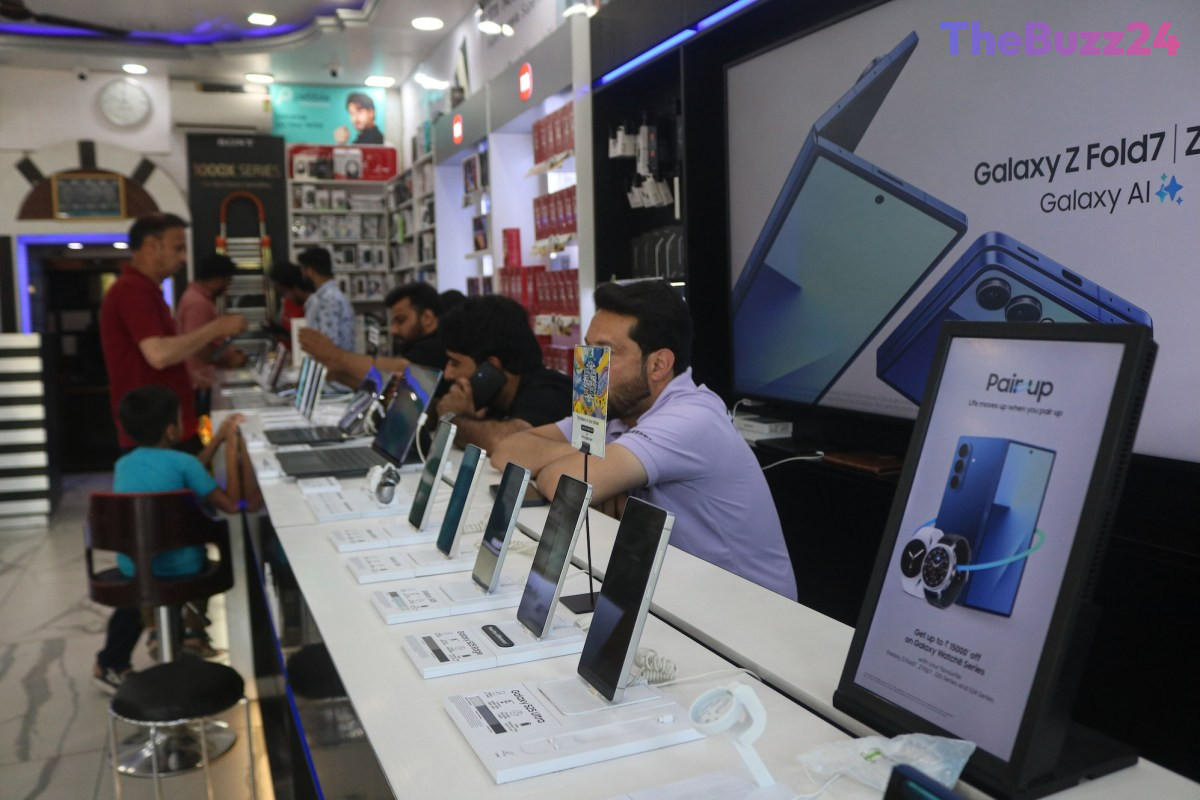
AI’s Memory Demand Reshapes India’s Smartphone Landscape, Driving Up Prices
The global surge in demand for memory chips, fueled by the artificial intelligence boom, is significantly impacting the consumer electronics sector, with India’s smartphone market emerging as a key indicator of this disruption. Manufacturers such as Samsung, SK Hynix, and Micron have strategically reallocated production capacity towards high-bandwidth memory (HBM) – specialized chips crucial for AI accelerators – due to their substantially higher profitability compared to standard memory components used in devices like smartphones and laptops. This shift has led to reduced availability and increased costs for conventional memory, directly affecting the pricing of everyday consumer gadgets.
India, the world’s second-largest smartphone market, experienced a notable 10% year-over-year decline in smartphone shipments during the April-June quarter, marking the steepest drop for that period in six years. This downturn is largely attributed to the escalating memory costs pushing up handset prices. The impact has been particularly acute in India compared to markets like China, which saw only a 2% decline, primarily because approximately 60% of India’s smartphone market is concentrated in the sub-₹20,000 (under $210) segment, where price increases have the most significant effect on consumer purchasing power.
This economic pressure is reshaping competition and consumer behavior. While premium brands like Apple and Samsung have shown greater resilience, with Samsung even recording a 2% shipment growth in India during Q2, the lower end of the market has suffered considerably. Shipments in the sub-₹15,000 (under $150) segment plummeted by 45% year-over-year, severely impacting Chinese brands heavily reliant on entry- and mid-tier devices. Consequently, their combined market share reached its lowest point for a second calendar quarter since 2020. Consumers are now delaying smartphone upgrades, extending replacement cycles from 3.5 to around four years, and increasingly relying on financing options to afford higher-priced devices.
The tightening margins are also prompting strategic adjustments among manufacturers. For instance, Chinese smartphone brand OnePlus recently announced it would cease new product launches in Europe and North America, opting to maintain its focus on the Indian market. This move underscores a broader trend where budget-focused brands may retreat to more profitable regions as economic pressures intensify. Experts anticipate that memory shortages and elevated smartphone prices will persist until at least the end of 2027, with a weaker Indian currency further exacerbating import costs and margin pressures for market players, ultimately passing these costs onto consumers.
Key Takeaways
- AI's demand for high-bandwidth memory chips is diverting production, increasing costs for standard memory used in smartphones.
- India's smartphone market saw a 10% shipment decline in Q2, with lower-end segments hit hardest by rising prices, leading consumers to delay upgrades.
- The shift is reshaping market competition, benefiting premium brands while pressuring budget-focused manufacturers and driving strategic retreats.
Editor’s Analysis & Impact
The current memory crunch, driven by insatiable AI demand, signals a significant paradigm shift in the global electronics supply chain. For the smartphone industry, particularly in price-sensitive markets like India, this means a sustained period of higher prices and slower growth in unit shipments. Manufacturers will increasingly focus on value-added segments and optimize their product portfolios, potentially leading to fewer budget-friendly options. This trend could accelerate consolidation among smaller brands unable to absorb rising component costs. The long-term outlook suggests a market driven more by value than volume, with innovation potentially shifting towards premium features and financing models becoming integral to consumer accessibility. This also highlights the broader economic implications of AI’s rapid expansion, as its resource demands ripple through diverse industries.
Frequently Asked Questions
Q: Why are smartphone prices increasing in India?
A: Smartphone prices are rising primarily due to the increased cost of memory chips (RAM and storage components). Manufacturers are prioritizing the production of more profitable high-bandwidth memory (HBM) for AI data centers, leading to reduced supply and higher prices for standard memory used in consumer electronics.
Q: How is the AI boom connected to smartphone prices?
A: The AI boom is driving massive demand for specialized high-bandwidth memory (HBM) chips used in AI accelerators. Memory chip manufacturers are shifting their production capacity to meet this demand, which is more profitable, thereby reducing the capacity available for producing standard memory chips used in smartphones and other consumer devices.
Q: What impact is this having on Indian consumers?
A: Indian consumers are facing higher smartphone prices, with some models seeing increases of 4% to 68%. This is causing many to delay upgrading their phones, extending replacement cycles, or turning to the secondhand market. Financing options are becoming increasingly crucial for affordability.
AI Disclosure: This article is based on verified data and official reports. Our Team and AI have cross-referenced every financial detail with primary sources to ensure total accuracy.
More from this Category